

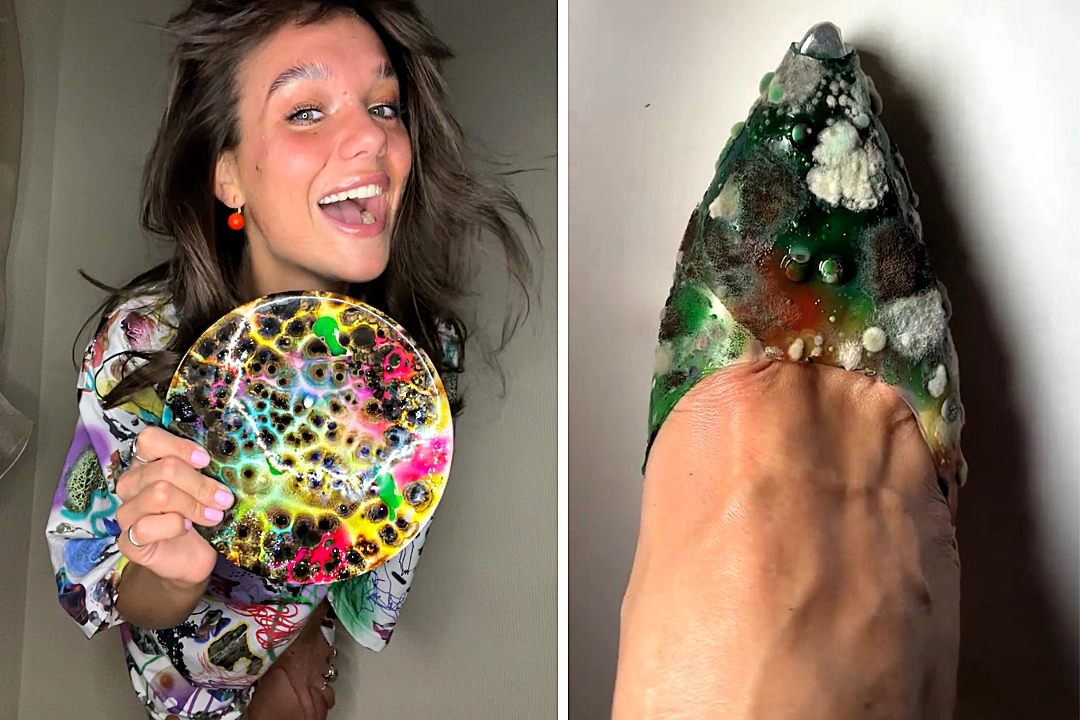

Dasha Plesen put her foot into an open-toed heel covered entirely in green and white mould, with patches of pink and red growing across the surface.
She filmed it. Over 310,000 people follow her for exactly this kind of thing.
The 29-year-old bio-artist spends her days cultivating microorganisms, observing how they grow and turning the results into art that most people’s first instinct is to recoil from.
READ MORE: I asked ChatGPT to show me my face without tattoos – I absolutely DESPISED what I saw
She also works with human skin microbiome samples. She has a waitlist.
From medical school to mould

Plesen, who is Russian-born, was originally drawn to medicine. Surgical atlases, medical instruments and the clinical atmosphere of examining life up close fascinated her. When she chose art school instead, the fascination came with her.
“I began experimenting with biological materials and realised that microbial growth could form incredibly complex visual structures,” she told CreatorZine.
“At the microscopic level, mold and fungi create textures, colours, and spatial compositions that resemble landscapes, abstract paintings, or even cosmic imagery.”
She started working with biological materials as a student in 2015 and has not stopped. She now travels the world to collect samples.
The organisms are co-authors
Plesen’s process starts with preparing a nutrient medium and setting environmental conditions for growth.
She can influence colour, temperature and the composition of the medium, but from there, the microorganisms take over.
“The organisms themselves always remain co-authors of the work,” she said.
“Their growth depends on time, humidity, density of microorganisms, and many other factors. Because of this every piece develops its own form and cannot be reproduced exactly.”
The work takes different shapes depending on the project: petri dish compositions that look like microscopic landscapes, sculptural pieces, or photographic documentation of living processes.
The mould heels, which picked up over 7,500 likes, are among her most accessible creations, if only because people immediately understand what they are looking at and cannot quite believe it.
‘When someone calls my work disgusting, I understand’
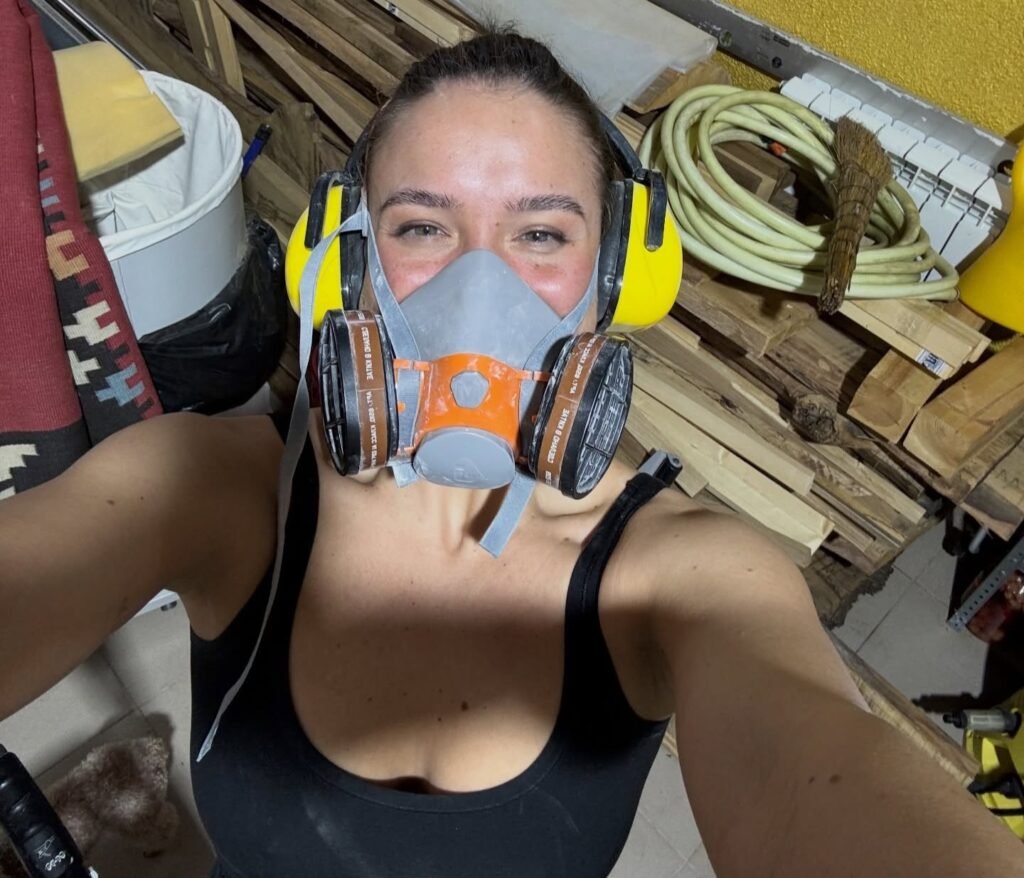
Plesen is matter-of-fact about the polarised reactions. Mould and bacteria trigger something deep and cultural in most people, and she does not expect that to switch off because the context is a gallery rather than a kitchen.
“Some people feel immediate fascination, while others experience strong rejection,” she said.
“When someone calls my work disgusting, I understand that response. It reflects how we are culturally trained to react to microorganisms.
But if a person looks a little longer, very often curiosity begins to replace rejection.
That shift in perception is actually an important part of the work for me.”
The comment section on the heels video confirmed the split. “Redefining foot fungus,” wrote one viewer.
“YUCKY! I LOVE IT!!” said another. Someone else simply wrote: “There’s so much to be said about this,” and then said nothing more.
Why it matters

Plesen occupies a rare position in the creator economy: a working artist whose medium is genuinely unlike anything else on the platform.
Most art content competes on skill, speed or aesthetic appeal. Plesen competes on the fact that her materials are alive, unpredictable and make a significant number of viewers feel physically uncomfortable.
That is extremely difficult to replicate, which is why she has a waitlist despite working in a medium that many people find revolting.
For creators in any niche, the principle is the same. The most defensible audience is the one built around something nobody else can easily copy.
Growing mould into high heels is about as defensible as it gets.
She says her work is about making invisible ecosystems visible. The internet mostly wants to make jokes about foot fungus. Both responses seem to suit her fine.