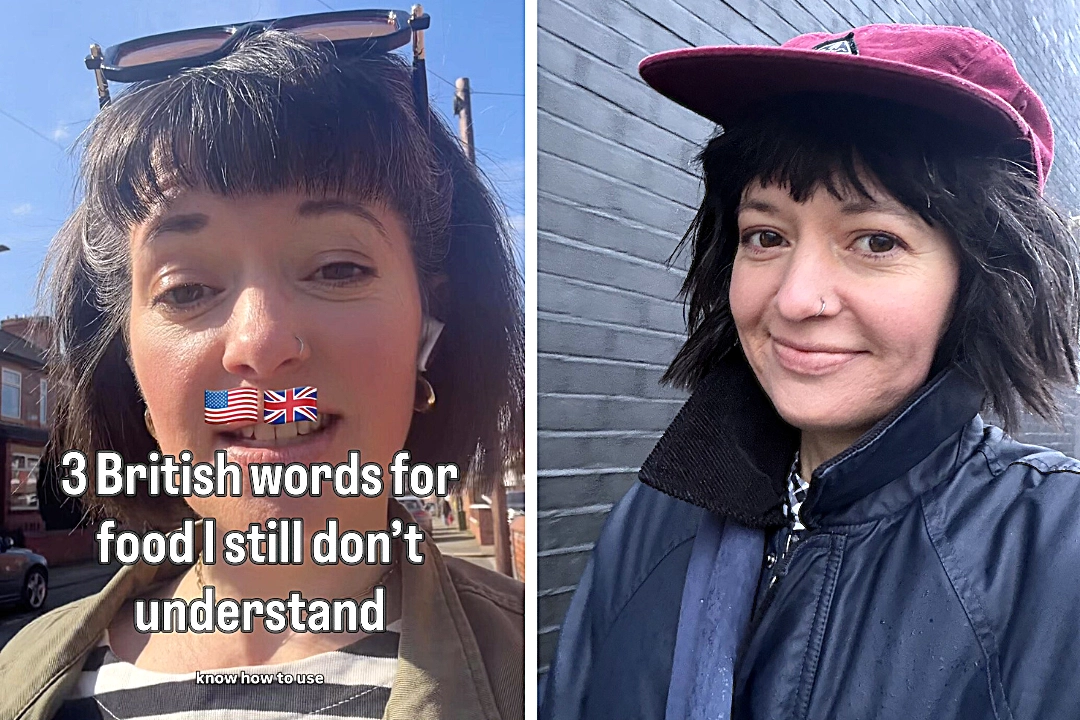

Ashley Jackson has lived in the UK for years, married a British man and moved from Texas to Manchester.
She still does not know what scran means.
The 42-year-old content creator posted a video asking her followers to explain three British food words that continue to defeat her: scran, nosh, and elevenses.
The clip pulled in 195,000 views, and the comments section turned into the kind of chaotic linguistics seminar that only the internet can produce.
Tea was just the beginning
Jackson’s confusion with British food vocabulary started long before this video.
On her first trip to the UK a decade ago, her now-husband’s family invited her for tea.
“I first thought, oh we’re sitting down to drink tea together? Okay sure,” she told CreatorZine.

“But I quickly figured it out when my now husband started rattling off food choices.”
She has previously covered British words that carry very different meanings in America, including rubber and fanny.
The food category, it turns out, has its own problems entirely.
The great scran debate
Her followers were happy to help, though their definitions did not always agree with each other.
Anthony explained elevenses as “second breakfast.”
Jamie called it “another word for brunch, so you have something at 11 in the morning.”
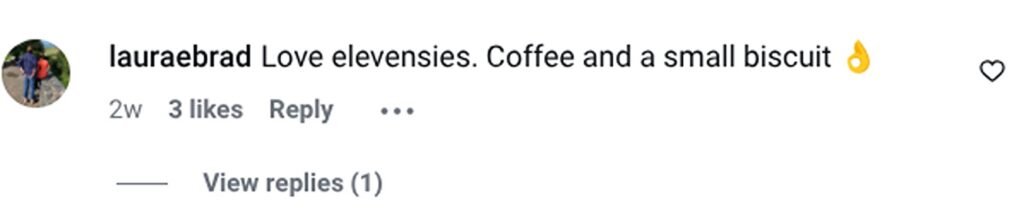
Laura kept it simple: “Coffee and a small biscuit.”
Not everyone was convinced Jackson should feel bad about her confusion.
“I’m British and never heard of the last two,” wrote Millie, which probably did not help.
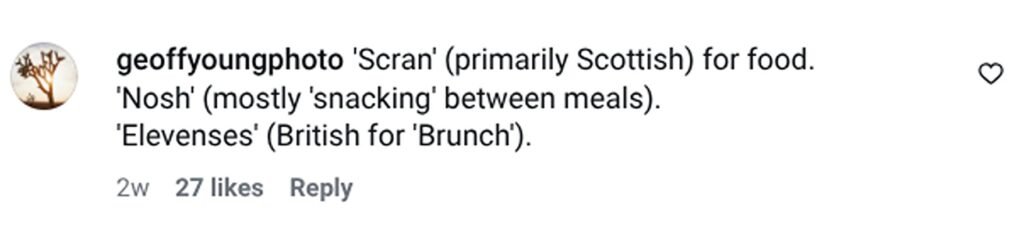
Geoff attempted a comprehensive guide: “Scran, primarily Scottish, for food. Nosh is mostly snacking between meals. Elevenses is British for brunch.”
Other commenters started offering bonus words. Someone suggested grub.
Others mentioned fittle and snap, two regional terms Jackson had never encountered in the wild.
“I’m not surprised because there’s so much regional slang in the UK, I’m sure even more exists,” she said.
Posh nosh and top notch
Since posting the video, Jackson has picked up a few new additions.
“I have learned the terms posh nosh and top nosh,” she said.
“To be fair I have heard it before but thought they were saying top notch.”
That is an entirely reasonable mistake.
Why it matters
Transatlantic culture clash content is one of the most reliable formats on social media, and Jackson’s videos are a good example of why.
The subject is low-stakes and endlessly renewable.
British viewers get to feel protective about their slang, American viewers get to be baffled by it, and everyone argues in the comments about whether elevenses counts as brunch.
For creators, this kind of content proves that you do not need high production value or a controversial take to build an audience.
You just need a genuine reaction and a country with 47 different words for a bread roll.
British slang content shows no sign of slowing down on social media, particularly from American creators discovering that a single language can contain this many ways to say “food.”
Jackson is still learning. Given that she lives in Manchester, she will probably encounter a new one by Thursday.