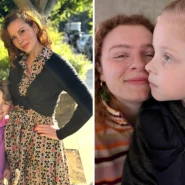




Ten police officers arrived at Olivia Eden‘s Nottingham home and put her in handcuffs.
They searched every room, cleared out her dressing room and took her £1,600 wedding dress.
She was being investigated for conspiracy to transport and sell firearms, and money laundering.
She was later found not guilty. Her husband was sentenced to 23 years.
‘They come and take everything’

Eden, a 30-year-old Babestation model with 47,600 Instagram followers, described the raid on the Option One Podcast by Babestation Studios.
Officers seized personal belongings throughout the house, including her wedding dress and engagement ring.
“I went to my dressing room and they just took everything out of it,” she said.
“I must check my closet where my wedding dress was and they took my wedding dress. It was £1,600. What value is that, apart from trying to mentally get to me?”
The raid took place in August 2023. The case was adjourned before going to trial in January 2024.
For 17 weeks, Eden could not leave the country and was required to stay at a specific address. She signed bail twice a week, later reduced to once.
Louboutins in the dock

Eden decided early that she would not let the process diminish her. “I’m going to wear six-inch Louboutins. I’m going to be me at court,” she said.
“I made sure my clothes were tailored. If I feel good, the day’s going to be good.”
She was cleared of all charges. The relief was complicated. “It was really bittersweet. My husband was found guilty,” she said.
“I got on the train home, scooped up the dog and got him a cheeseburger. I’m just grateful that I was there.”
Two years to get her ring back
The acquittal did not return her belongings.
Eden spent £2,000 in legal costs trying to retrieve her engagement ring, representing herself at magistrates’ court and maintaining what she describes as a meticulous paper trail.
It took two years for the ring to resurface. When it did, she had to buy it back at auction in October 2025.
“Make sure everything’s on an email. Date, time, paper trail,” she said, offering advice to anyone dealing with a similar situation.
Why it matters

Eden’s story touches on something that rarely gets attention in the creator space: what happens when your real life collides with a criminal investigation and you are found to have done nothing wrong.
The acquittal should have been the end of it. Instead, she spent two years and £2,000 chasing her own engagement ring through the courts.
The seized wedding dress was never about evidence.
The system that cleared her name was the same one that made her buy her own property back at auction.

For creators whose personal brands are built on visibility, a public arrest and trial carries reputational risk that a not guilty verdict does not automatically undo.
Eden chose to talk about it publicly.
That is a calculation in itself.