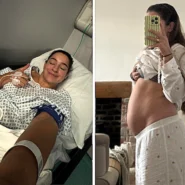
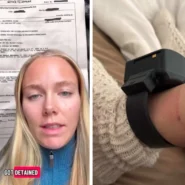

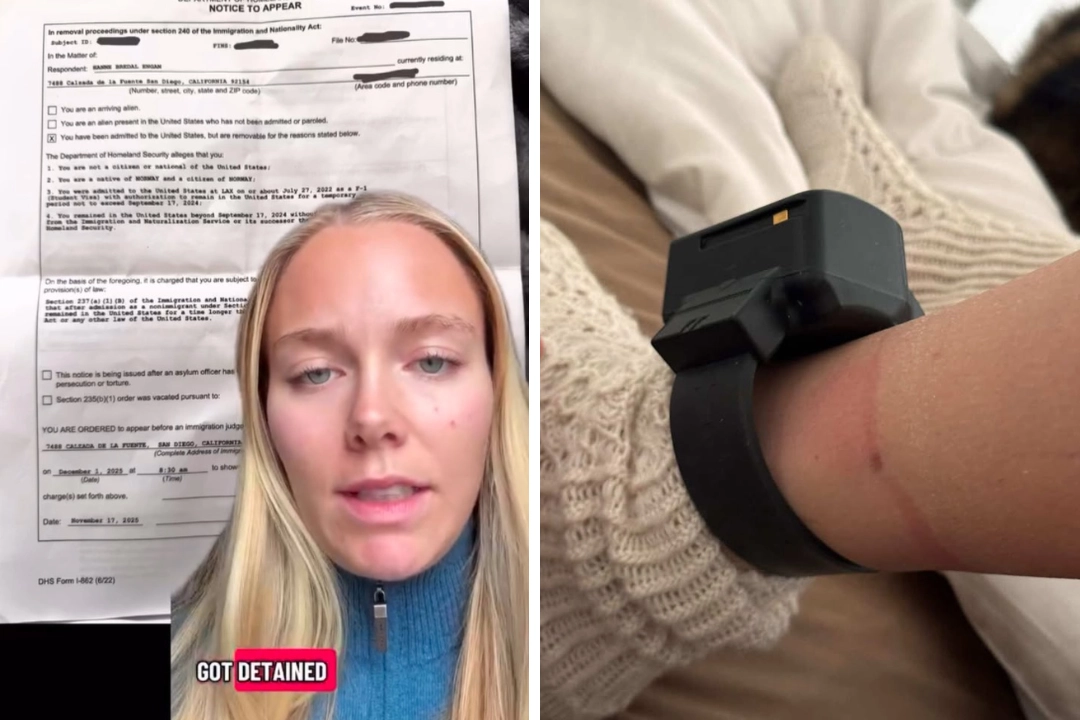

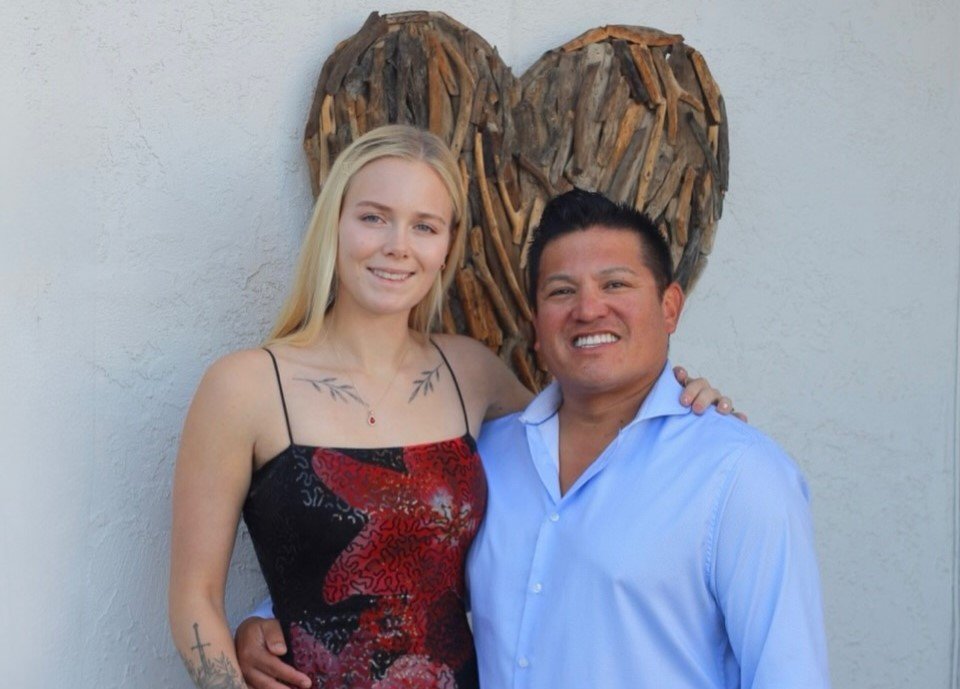
Hanne Bredal Engan went to what she believed was the final step of her green card application.
She left in handcuffs.
The 24-year-old Norwegian was attending a U.S.
Citizenship and Immigration Services interview in San Diego with her American husband Joshua Daguman, 49, when three armed ICE officers arrested her.
Her student visa had expired around the time of their wedding. She was in the process of legalising her status.
The officers took her anyway.
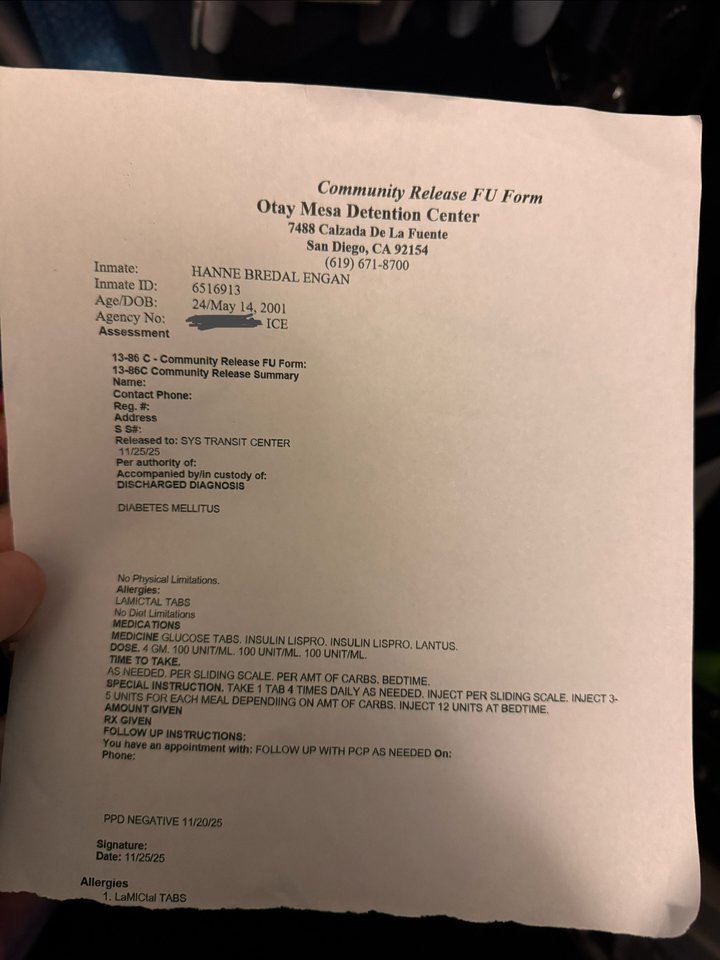
She spent a week in detention. She has Type 1 diabetes.
She says her insulin was confiscated on arrival.
‘I broke down sobbing’
Engan told CreatorZine that her insulin and blood sugar sensor reader were taken during intake.
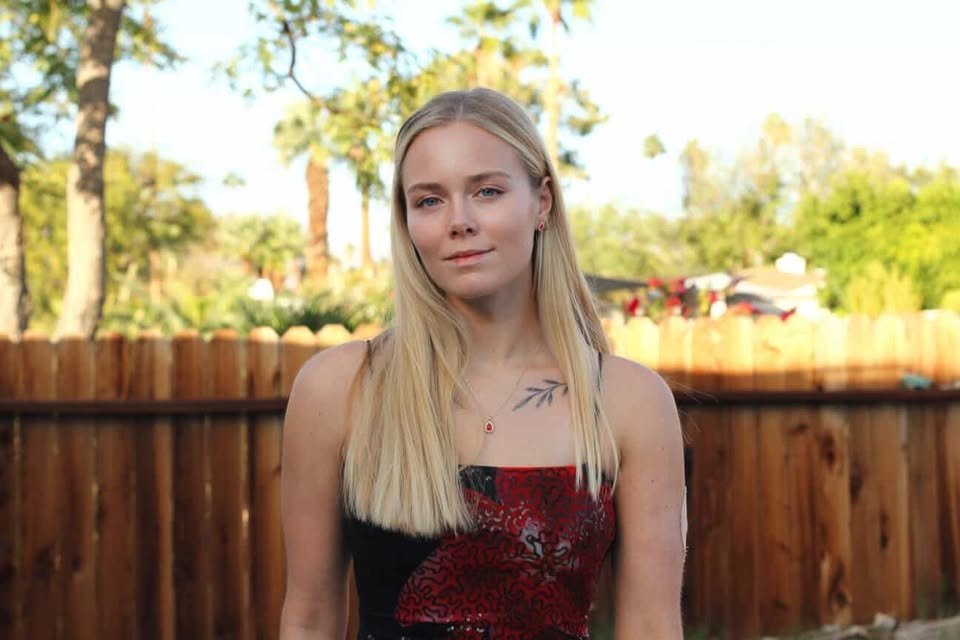
“To stay alive, I must take insulin before every meal, every 24 hours and often inject six to ten times a day and continuously monitor my blood sugar,” she said.
“Without it, I can become critically ill within days and die from diabetic ketoacidosis. During intake, my insulin and blood sugar sensor reader were confiscated. I broke down sobbing.”
She claims she was misdiagnosed as Type 2 diabetic during processing.
Three days in, after eating without insulin, she experienced blurry vision, nausea, dehydration, fainting and severe weakness.
She says doctors in the medical unit found her blood sugar had reached “extremely dangerous” levels.
She was placed in isolation due to her medical condition. “Isolation is psychological torture,” she said.
“Being alone made everything worse.”
She described the conditions in the facility as punishing. “The cell was unbearably cold. For over 10 hours we had no water, no blankets and nothing to protect us from the temperature. The other women and I shook uncontrollably. The fluorescent lights never turned off. Sleep was impossible and it felt intentional.”
ICE disputes the medical claims
A DHS spokesperson disputed Engan’s account directly. “These claims she was denied medical care are FALSE,” the spokesperson said.
“Daguman was provided proper medical care for her diabetes management. Daguman was given her insulin at appropriate times and was able to communicate with the nurses on the dosages she felt were appropriate.”
The spokesperson confirmed the arrest, stating: “ICE arrested Hanne Daguman, an illegal alien from Norway who overstayed her student visa. A pending green card application does not give someone legal status to be in our country.”
DHS added that it is “longstanding practice” to provide comprehensive medical care from the moment someone enters custody, including intake screening within 12 hours and a full health assessment within 14 days.
The statement concluded: “This is the best healthcare that many aliens have received in their entire lives.”
How she got here
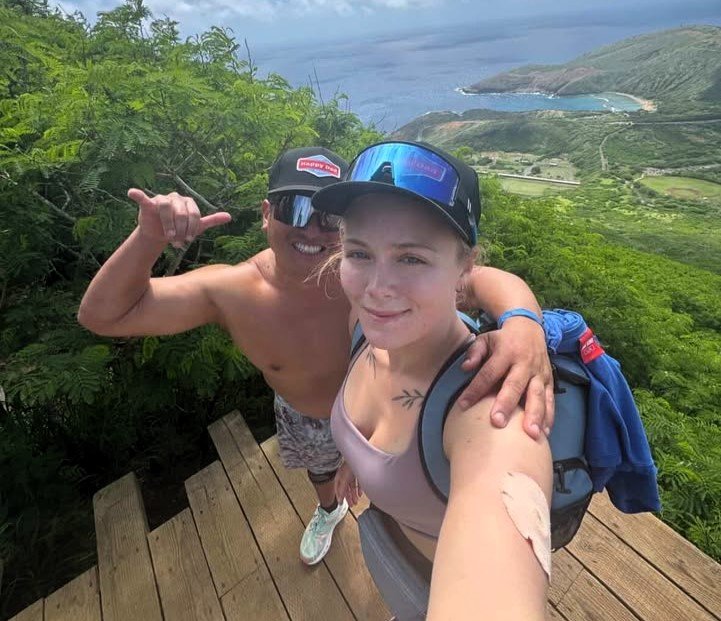
Engan met Daguman in August 2022 playing beach volleyball in San Diego.
They began dating in early 2024 and got engaged later that year.
Her student visa expired in September 2024. They married in October.
She says two immigration attorneys told her the overstay would be “forgiven” because she was marrying a US citizen and they were actively applying for a green card.
The arrest happened during the USCIS interview that was supposed to complete that process.
She was held for over 16 hours in a temporary jail before being transferred to Otay Mesa Detention Centre, where she remained for a week.
On 25 November, her husband bailed her out for $1,500. She wore an ankle tag until a judge ordered her release in January 2026.
She is currently allowed to remain in the US while waiting for her green card to be processed.
‘Nobody deserves this kind of treatment’

Engan says she is being treated for PTSD and sees a therapist. “I struggle with PTSD.
Nobody deserves this kind of treatment, not even criminals,” she said.
No further legal action has been taken. She says she is still navigating the aftermath.
Why it matters
Engan’s case sits at the centre of an increasingly visible pattern under the current administration’s immigration enforcement: people with pending legal applications being detained rather than processed.
Her account and the DHS response contradict each other directly on the medical care she received, and there is no independent verification available for either version.
What is not disputed is that a woman attending her own green card interview with her American husband was arrested by armed officers and spent a week in a detention facility.
Whether the system worked as intended or failed catastrophically depends on which statement you believe.
For the growing number of people sharing immigration detention experiences online, stories like Engan’s are reshaping how the public understands what enforcement looks like in practice, one firsthand account at a time.