

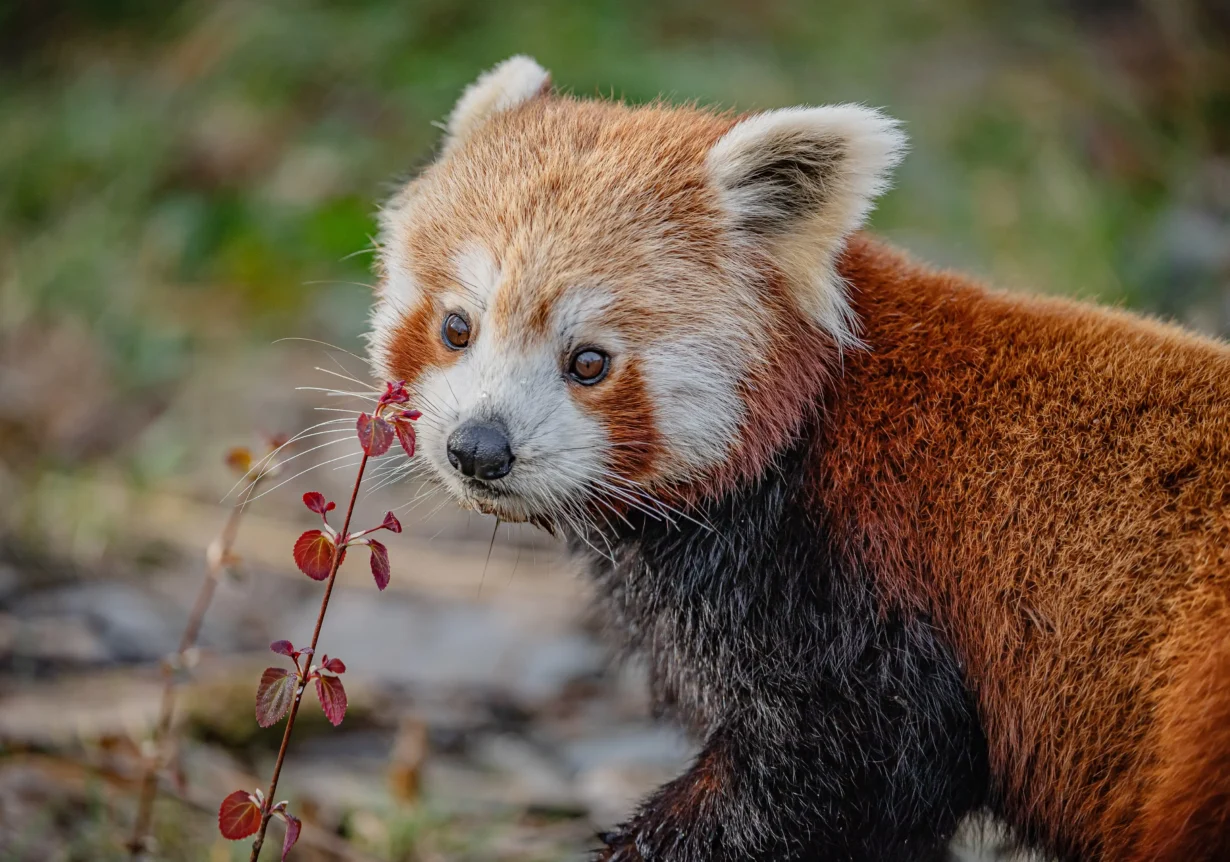

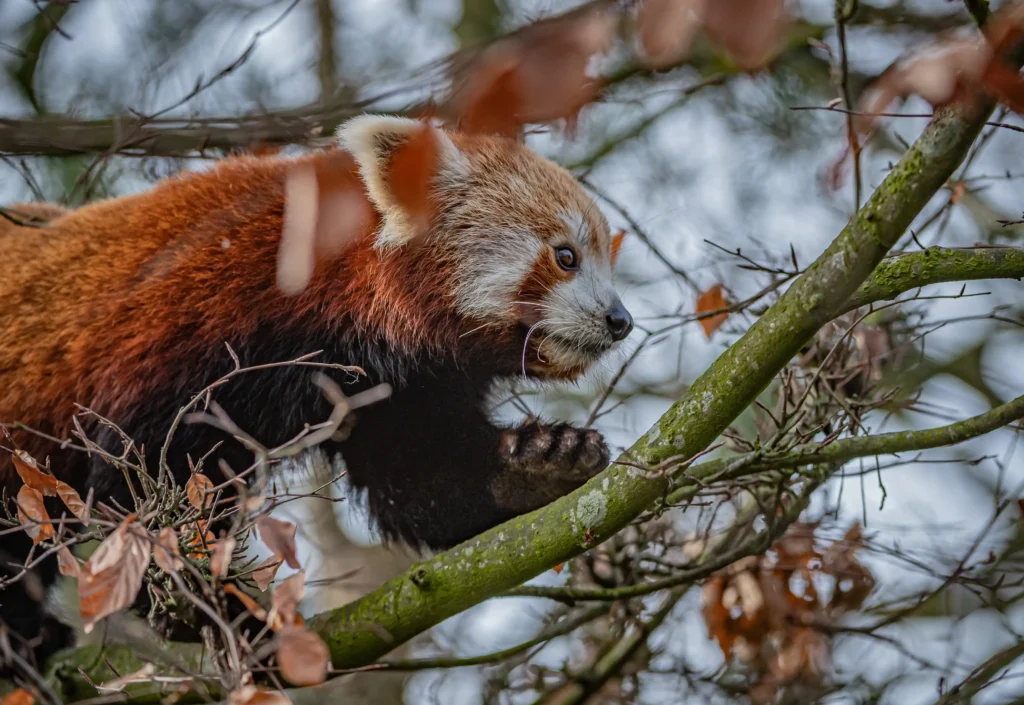
Akashi arrived at Chester Zoo on Wednesday, climbed straight into a tree, started chewing through bamboo and then met Koda.
There has already been playful chasing and a territorial dispute over the best sleeping spot. Keepers say this is going well.
The two-year-old female red panda was transferred from Blackpool Zoo and paired with Koda as part of a conservation breeding programme.
READ MORE: We bought a fox a plain doner kebab on a stag do in Portsmouth – he’s one of the BOYS now
She was chosen as his ideal genetic match.
The hope is that they will eventually produce cubs and help shore up numbers for a species that is running out of time.
‘A real blind date moment’
Dave White, team manager at Chester Zoo, said Akashi wasted no time settling in.
“At just two years old, she’s already a really confident panda and it didn’t take long before she was climbing trees, foraging for food and chewing through plenty of bamboo.”
The introduction was deliberately quick. Red pandas are calm animals but highly territorial, and delaying the first meeting can make things worse.
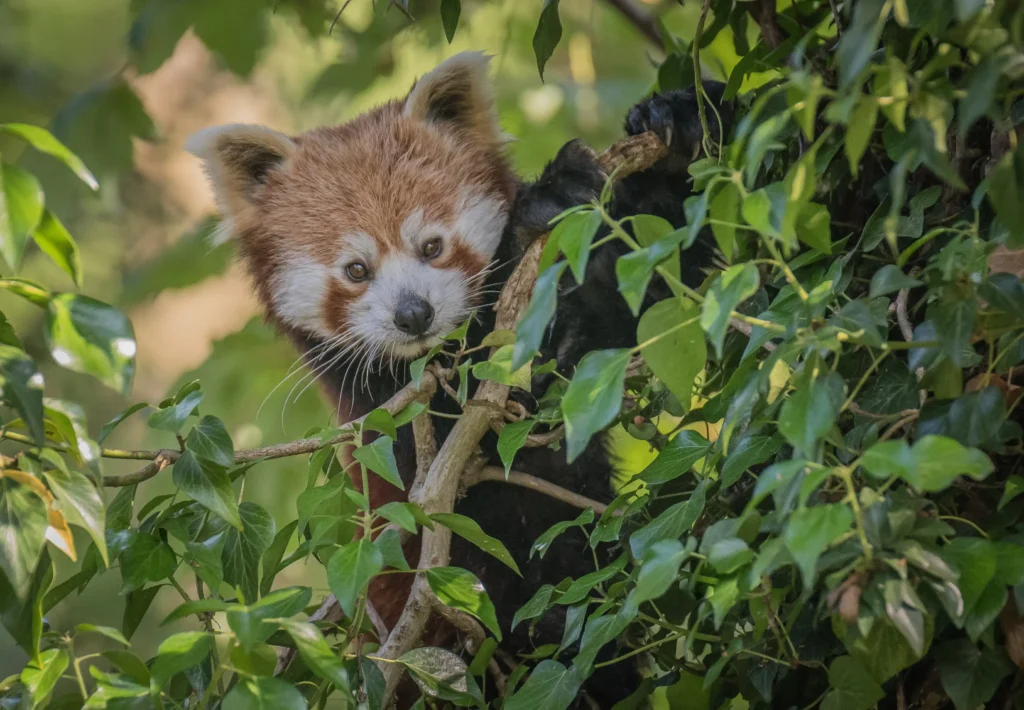
“It was a real blind date moment, but initial signs have been incredibly positive,” White said.
“We’ve already seen some playful chasing and a couple of feisty stand-offs over the best tree branches and favourite sleep spots, which is completely normal panda behaviour and exactly what you want to see.”
He added: “We’re hopeful that Koda and Akashi will form a strong bond and, in time, we might one day hear tiny squeaks of cubs coming from their den.”
Fewer than 10,000 left in the wild
Red pandas are classified as endangered.
Fewer than 10,000 are thought to remain in their natural habitat, with populations declining by roughly 40 per cent over the past two decades. Deforestation, poaching and the illegal wildlife trade are the primary threats.
The species is native to mountainous regions across Nepal, India, Bhutan, Myanmar and southern China.
Despite sharing a name with giant pandas, the two are not closely related.
Red pandas are in fact thought to be the original panda species.
Breeding programmes like Chester Zoo’s form part of a global effort to maintain a genetically diverse captive population that could support wild numbers if conditions allow.
Why it matters
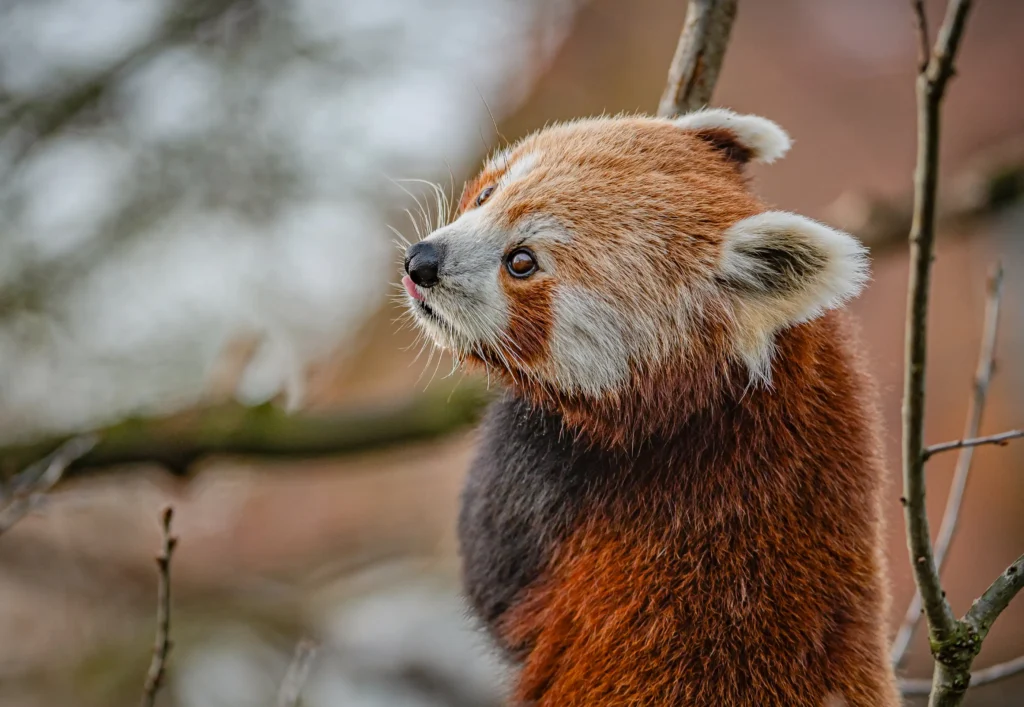
Conservation stories involving charismatic species tend to travel well online, and red pandas are among the most shareable animals on the internet.
But behind the cute photographs is a genuinely urgent situation.
A 40 per cent population decline in 20 years is a trajectory that ends one way without intervention.
Breeding programmes cannot solve deforestation or poaching, but they can buy time.
Akashi and Koda’s potential cubs would not just be good content for Chester Zoo’s social channels.
They would be a small, tangible contribution to keeping a species viable.
The playful chasing and branch disputes are encouraging.
Whether they lead to the “tiny squeaks” keepers are hoping for is a question that only Akashi and Koda can answer.