

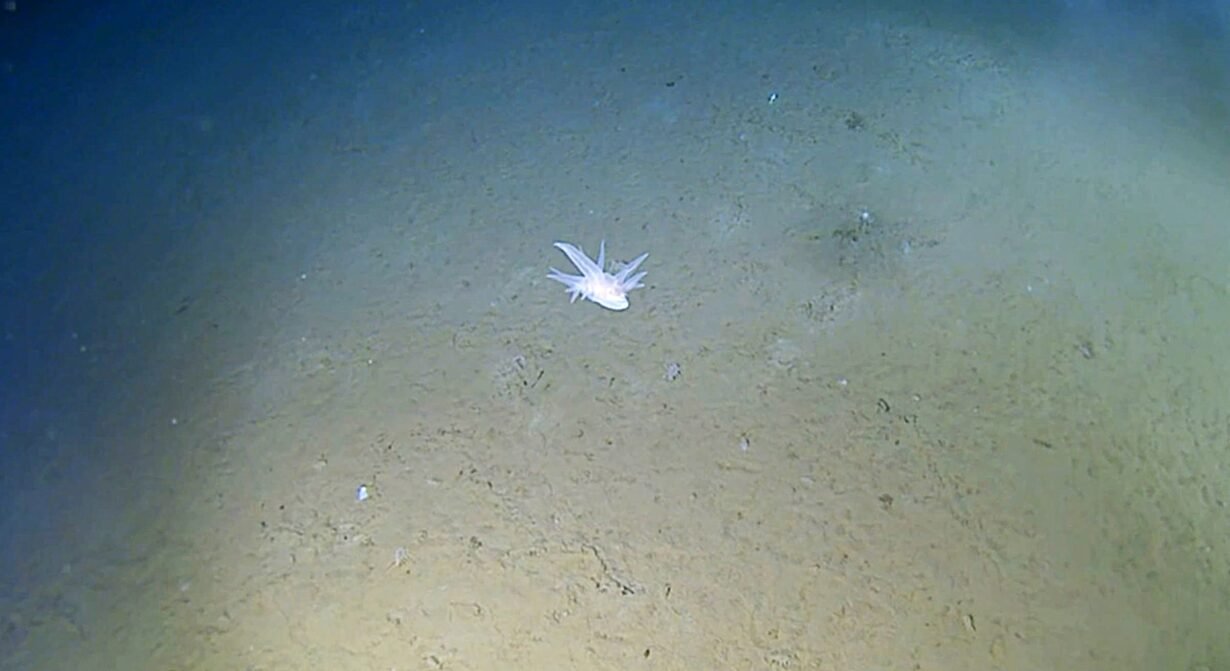

Nearly six miles below the surface of the Philippine Sea, a camera on a crewed submersible filmed something no scientist can identify.
A ghostly white creature, translucent and slow-gliding, drifting through water where the pressure is almost 1,000 times greater than at sea level.
It looks like a sea slug. It is not a sea slug. It has lobes that don’t match any known species.
It has antennae-like projections similar to a nudibranch’s rhinophores. Its body splits into two symmetrical halves. Beyond that, researchers are stuck.
The organism has been designated Animalia incerta sedis, which is the scientific equivalent of a shrug.
It means the creature belongs to the animal kingdom but cannot be placed into any known phylum, the broad classification level that separates mammals from molluscs from insects.
Whatever this thing is, it sits outside all of those categories.
Filmed twice at record-breaking depth
The creature was encountered at 29,977ft in the Ryukyu Trench, which runs along the eastern edge of Japan’s Ryukyu Islands.
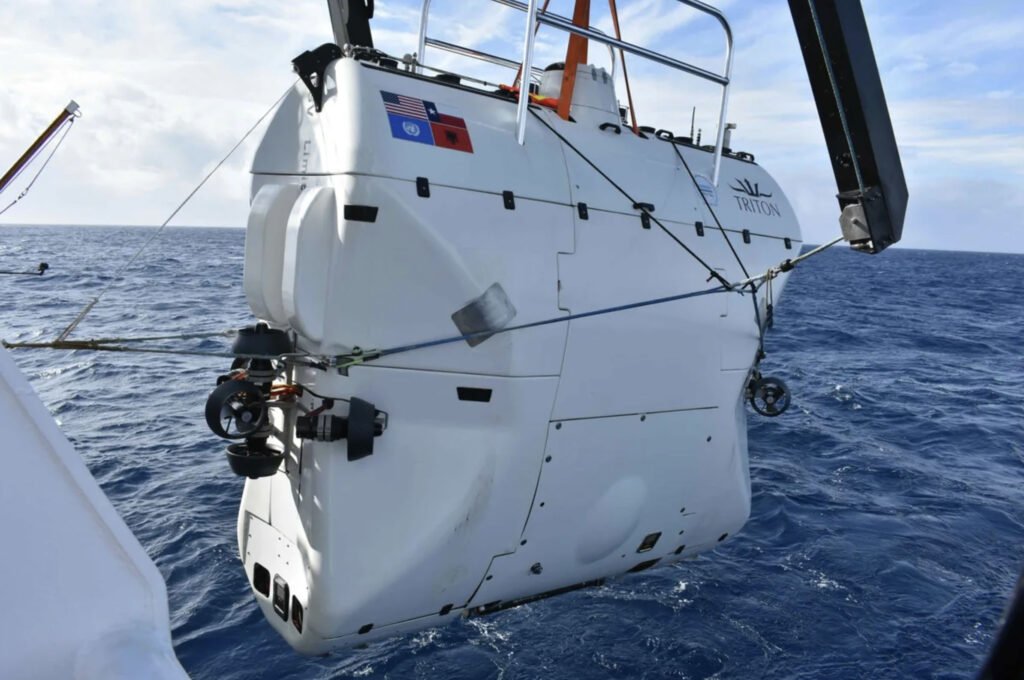
It was filmed twice using high-definition cameras mounted on the Limiting Factor, a crewed submersible operated from the research vessel DSSV Pressure Drop.
An international team led by the Minderoo-UWA Deep-Sea Research Centre at the University of Western Australia made the discovery during a two-month expedition exploring three of Japan’s deepest underwater canyons: the Japan, Izu-Ogasawara and Ryukyu trenches.
The unidentified organism was far from the only find.
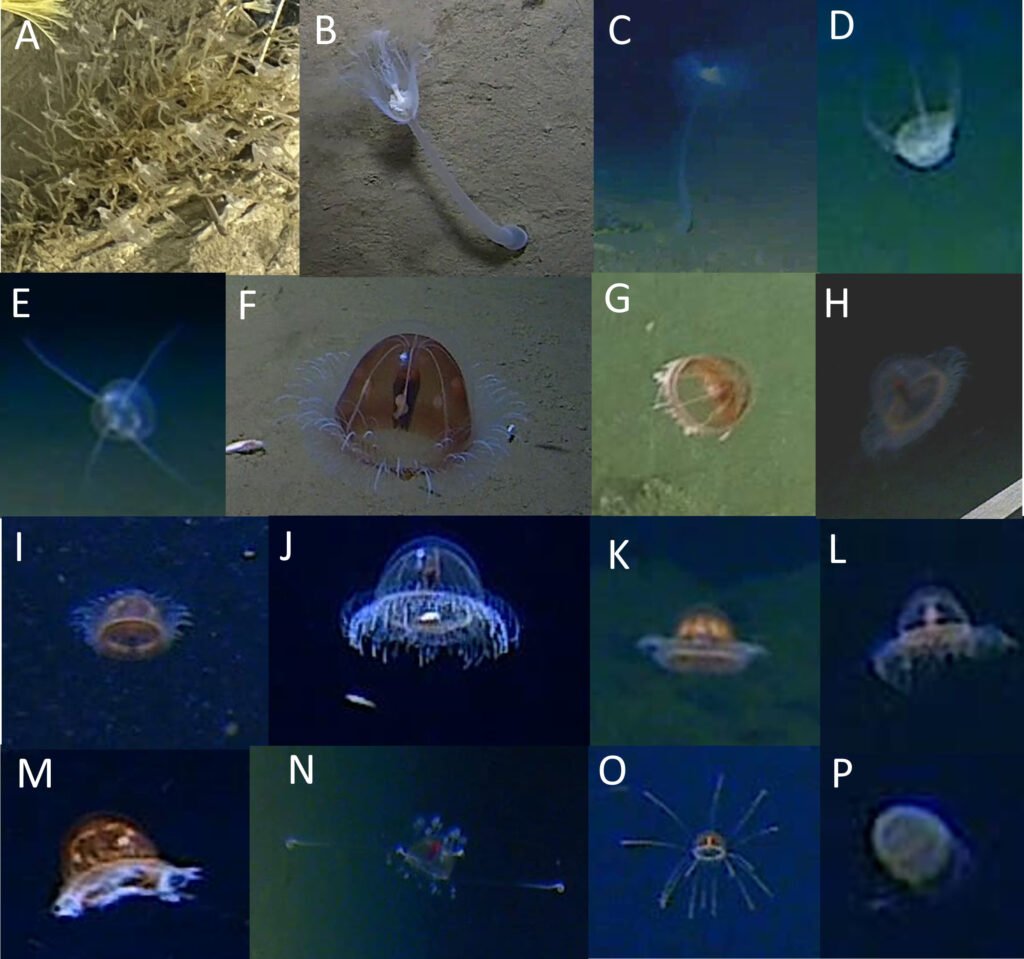
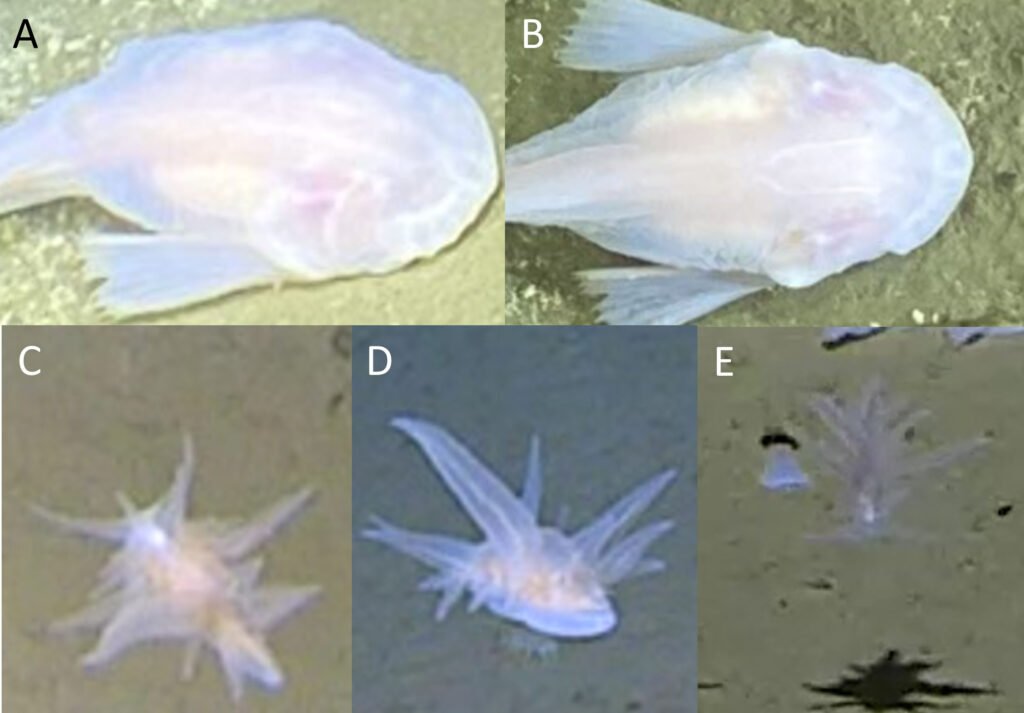
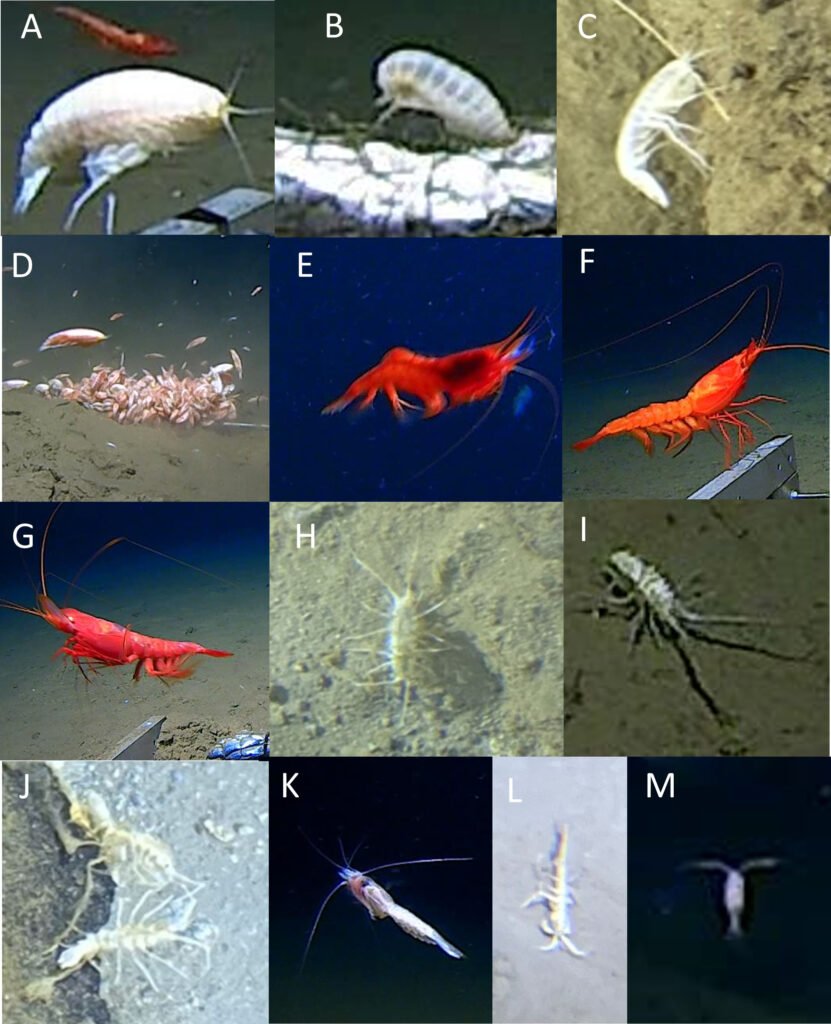
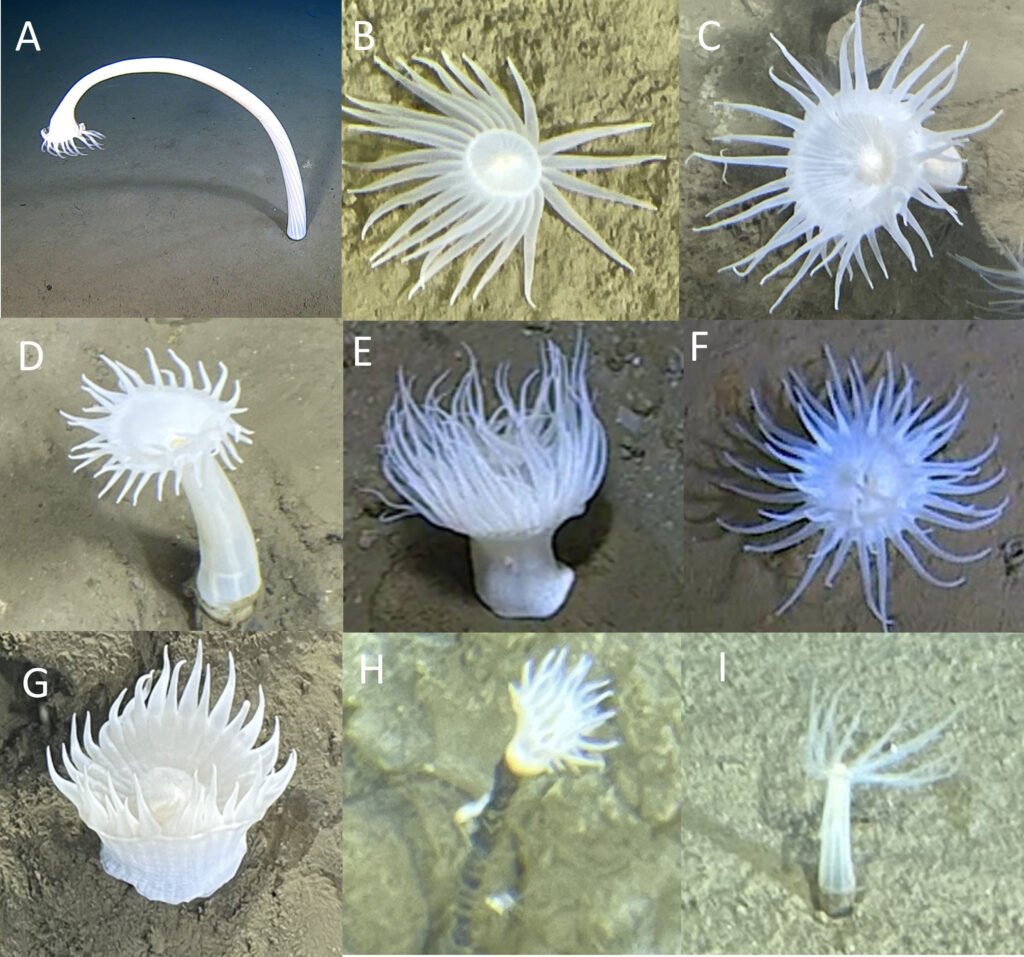
The team catalogued 108 distinct organism groups, including record-setting snailfish, more than 1,500 stalked crinoids anchored to rock terraces and carnivorous sponges from the family Cladorhizidae.
Life thriving where it shouldn’t
Professor Jamieson, chief scientist on the expedition, said the Japanese trenches are surprisingly full of life despite conditions that should make survival almost impossible.
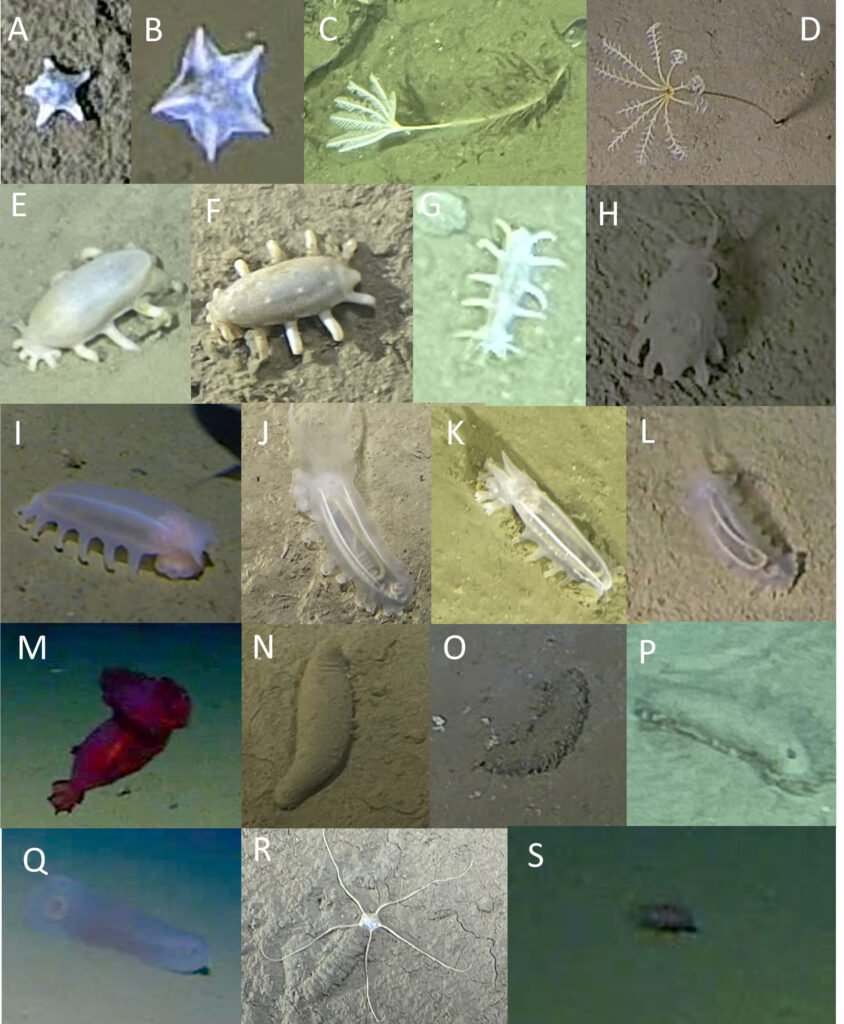
The Japan Trench was rich in sea cucumbers.
The Ryukyu Trench, which receives less food from above, was dominated by brittle stars.
Each trench had its own ecosystem shaped by what little sustenance drifts down from the surface.
Jamieson and his team, working alongside researchers from the Tokyo University of Marine Science and Technology, have spent 15 years studying these environments.
The findings were published in the Biodiversity Data Journal.
“This study was not simply about observing deep-sea organisms, but also aimed to establish a foundation for future research at these depths,” Jamieson said.
“More than anything, the hadal zone remains one of Earth’s least explored and most intriguing frontiers.”
Humans got there before the scientists did
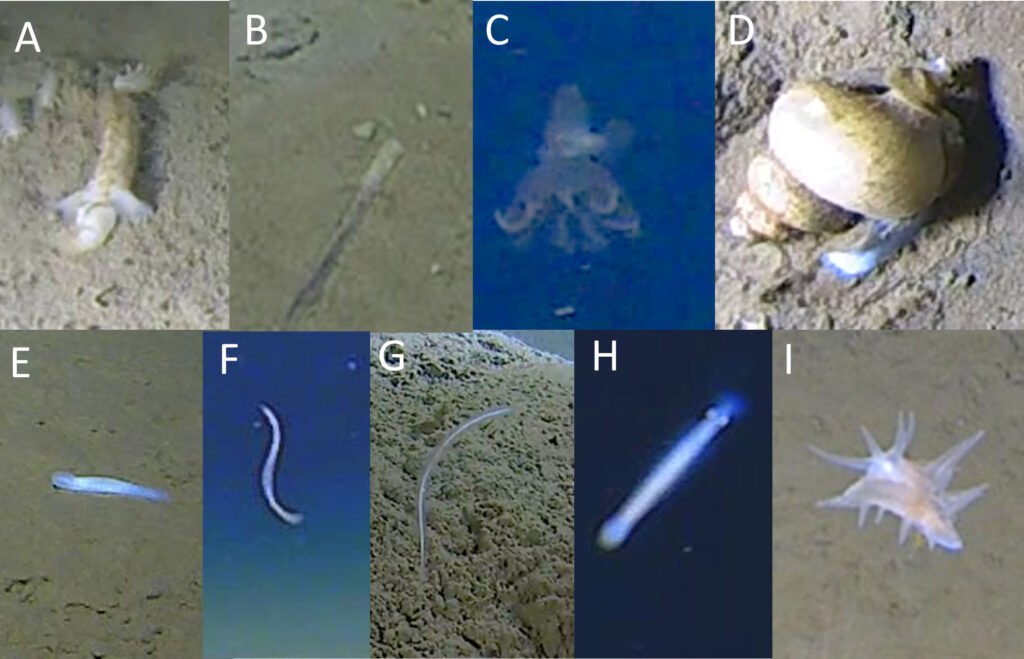
The expedition also found evidence of human-derived debris at extreme depths, likely carried down the trench slopes by currents and gravity.
Six miles below the ocean surface, in a place where an unclassifiable life form drifts through crushing darkness, there was already rubbish.
Why it matters
Deep-sea discovery content consistently performs well online because the creatures look like they were designed by someone who has never seen an animal before.
For science creators and educators, findings like this are gold.
An organism that can’t be classified into any known phylum is the kind of fact that stops people mid-scroll.
But beyond the viral appeal, the discovery matters because the hadal zone, the deepest layer of the ocean, remains almost entirely unmapped.
Every expedition returns with something new. The question isn’t whether there are more unknown species down there.
It’s how many, and whether we’ll catalogue them before the debris reaches them first.
The team says this expedition is a starting point. More dives are planned.
The ghostly white creature drifting through the Ryukyu Trench doesn’t have a name yet.
Giving it one will require figuring out what it actually is.
That part might take a while.
READ MORE: We were fishing 2km from shore when every bird suddenly flew away – then we saw the FIN