
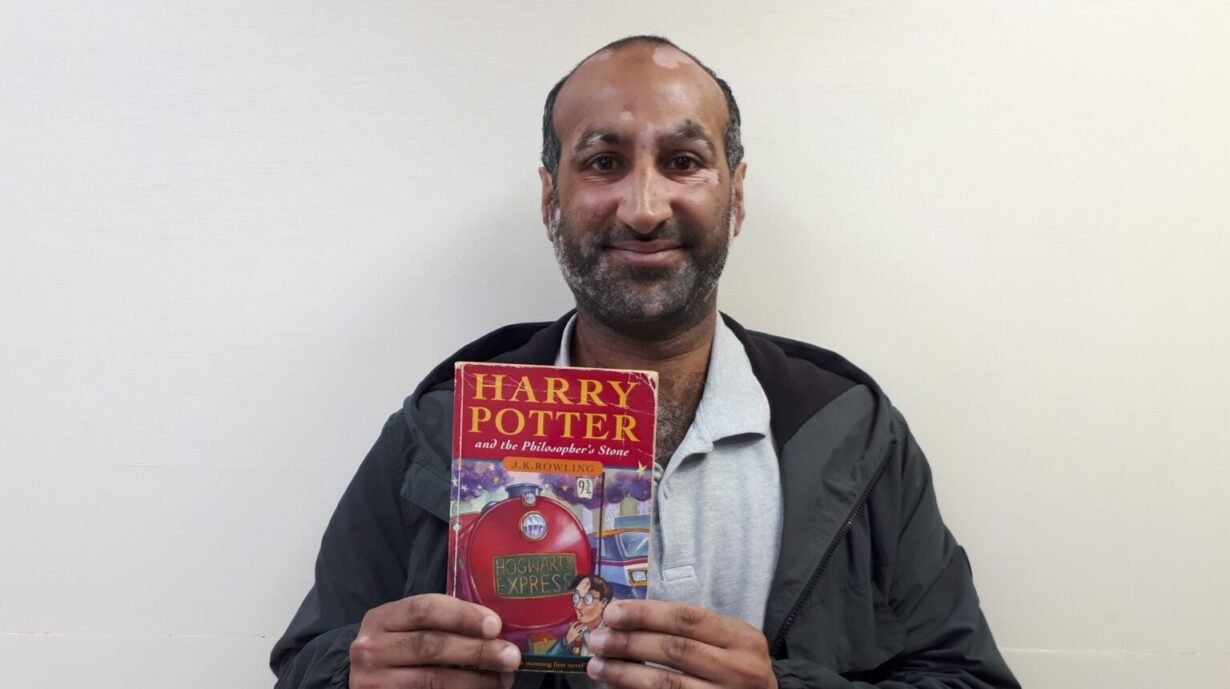

Naveed Younas read his copy of Harry Potter and the Philosopher’s Stone until the spine was soft, then left it on a shelf and forgot about it.
He is now expecting it to sell for up to £4,000.
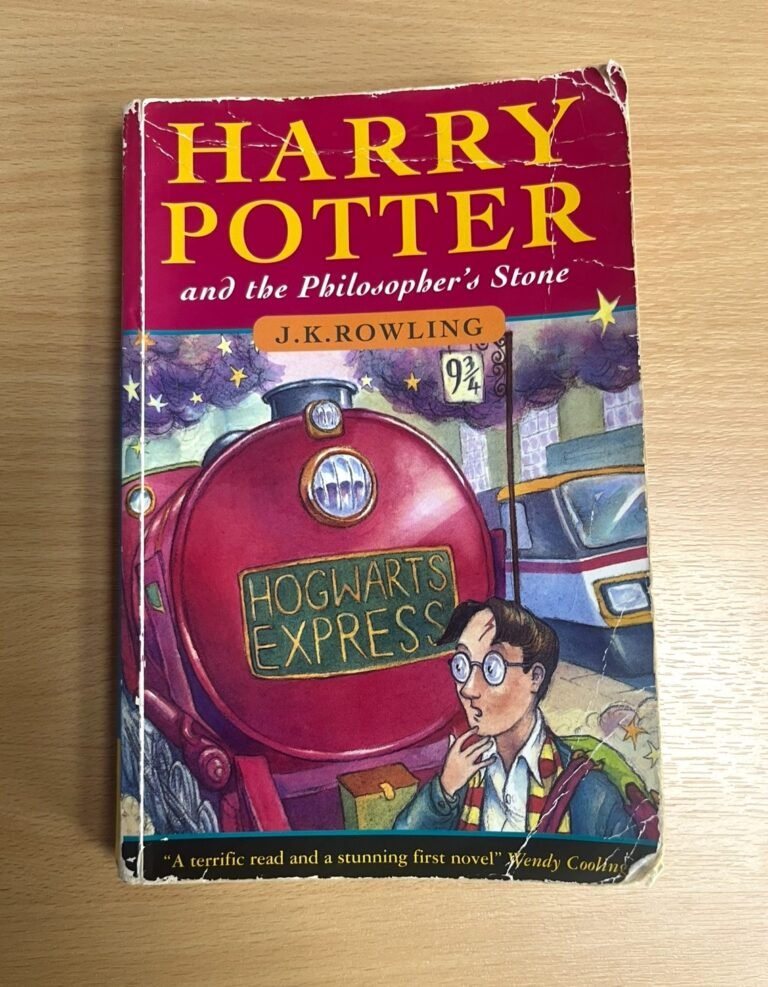
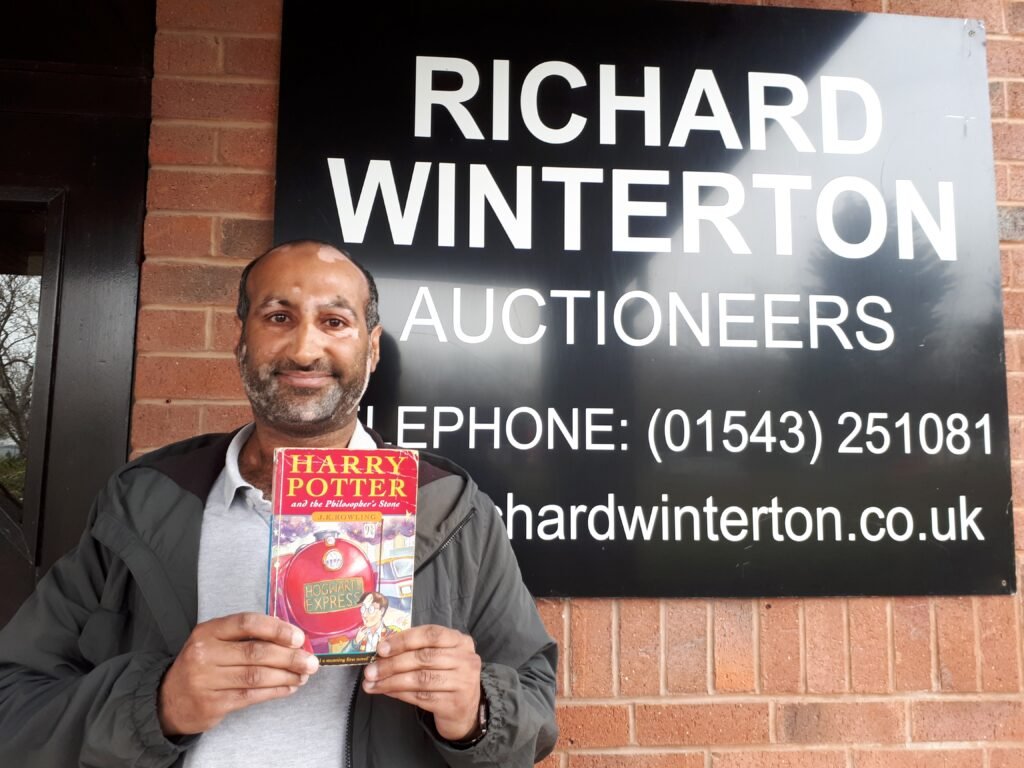
The 37-year-old was given the book as a child. It turned out to be a first edition, first impression softcover, printed by Bloomsbury in June 1997.
READ MORE: We bought a fox a plain doner kebab on a stag do in Portsmouth – he’s one of the BOYS now
Only 5,150 copies of that print run exist. His is one of them.
The errors that make it valuable
The book contains several printing mistakes that identify it as a genuine first edition.
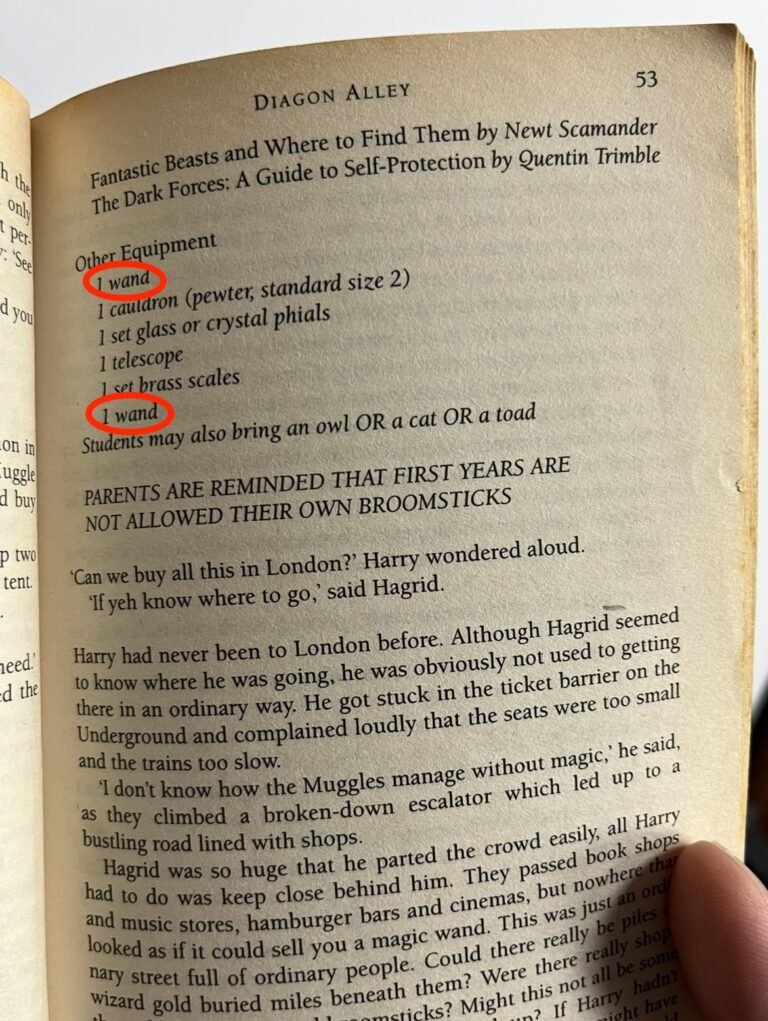
On page 53, a list of school supplies includes “1 wand” twice, at the start and again at the end.
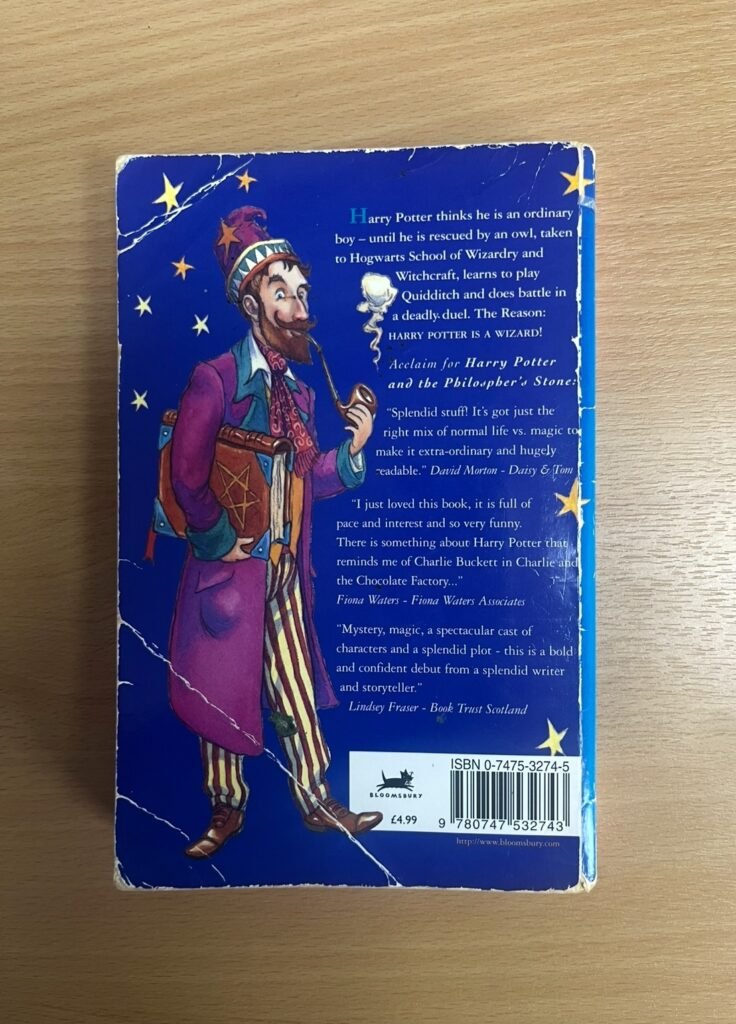
The back cover is missing a letter “o” from the word “philosopher’s” and refers to “Hogwarts School of Wizardry and Witchcraft,” a word order that was later corrected to “Witchcraft and Wizardry.”
Auctioneer and expert Robert French said: “This well-thumbed example has clearly been much-loved and read repeatedly, exactly what it was printed to do.”
He noted that the simplest way to confirm a copy is not a first impression is to check the bottom of the front cover.
If it reads “a Triple Smarties Gold Award Winner,” it was printed later. Younas’s copy does not carry that marking.
Five hundred hardback copies containing the same text were also issued in the original print run. Those tend to fetch significantly more.
‘I thought this would be a good time to pass it on’
Younas told CreatorZine he had enjoyed the book as a child and gone on to read the rest of the series.
“It has been left on my shelf for a few years now and I thought this would be a good time to pass it on to someone else who will appreciate it.”
The book goes to auction on 13 April through Richard Winterton Auctioneers in Lichfield, Staffordshire. The estimate is £3,000 to £4,000.
Why it matters
First edition Harry Potter books have become one of the most recognisable entry points into rare book collecting, partly because so many copies were given to children who had no idea what they were holding.
The appeal of Younas’s story is that it could be anyone’s. Millions of people were given Harry Potter books in the late 1990s.
Most of those copies are worthless later printings. A tiny number are not, and the owners frequently do not know until they check.
For content creators and media outlets, first edition discovery stories perform well precisely because they plant a seed of possibility in every reader who still has a childhood bookshelf somewhere.
The errors are specific enough to check at home. The auction estimate is high enough to make it worth looking.
Younas’s copy has been read, reread and shelved for years. On 13 April it will find out what that wear and tear is worth to a collector.