

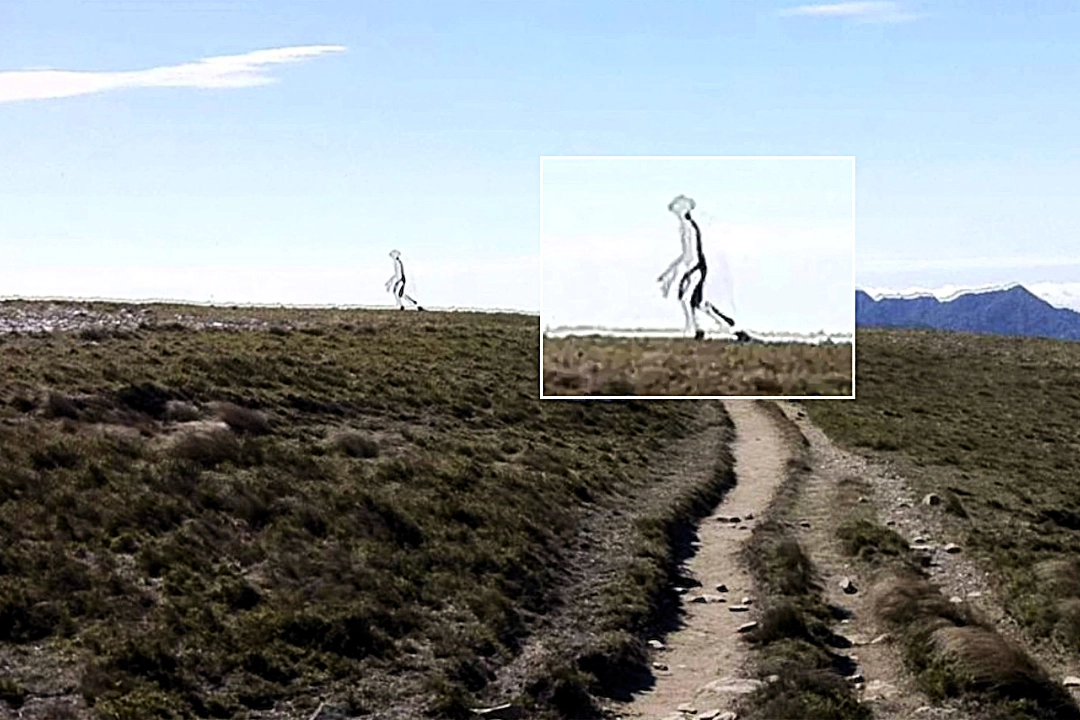

Park patrol officer Chen Yongqiang took a few iPhone snaps of mountain scenery in May 2011.
Walking further down the trail, he checked the photos.
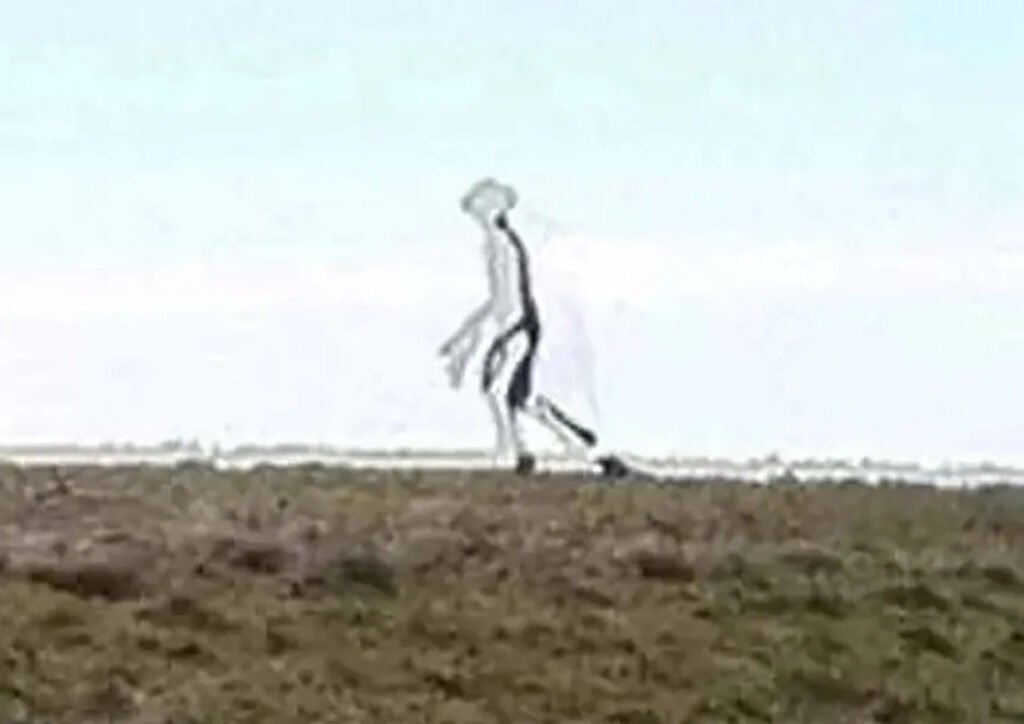
There was a tall, semi-transparent figure with a mantis-shaped head striding along the ridge behind him.
He hadn’t seen it.
The mountain, the iPhone, the mantis
The picture shows oddly proportioned limbs, what look like webbed fingers, and a head that doesn’t belong on anything mammalian.
Chen was hiking at Jiaming Lake, deep in Taiwan’s Central Mountains, at an altitude of 3,310 metres.
He was using an iPhone 4. The figure, whatever it is, is walking the ridge line like a tourist.

For more than a decade, sceptics had a long list of explanations. A human hiker.
A digital hoax. A glitch in the phone’s memory. A double exposure where two frames bled into one.
None of them held up.
The Taiwan Ufology Society spent over a year running forensic checks on every pixel of the image.
They found no evidence of tampering, no traces of editing, no sign of digital trickery.
They then shipped the original file to a US institution for independent analysis. Same verdict. The picture was clean.
This week the FBI agreed.
The bureau weighs in
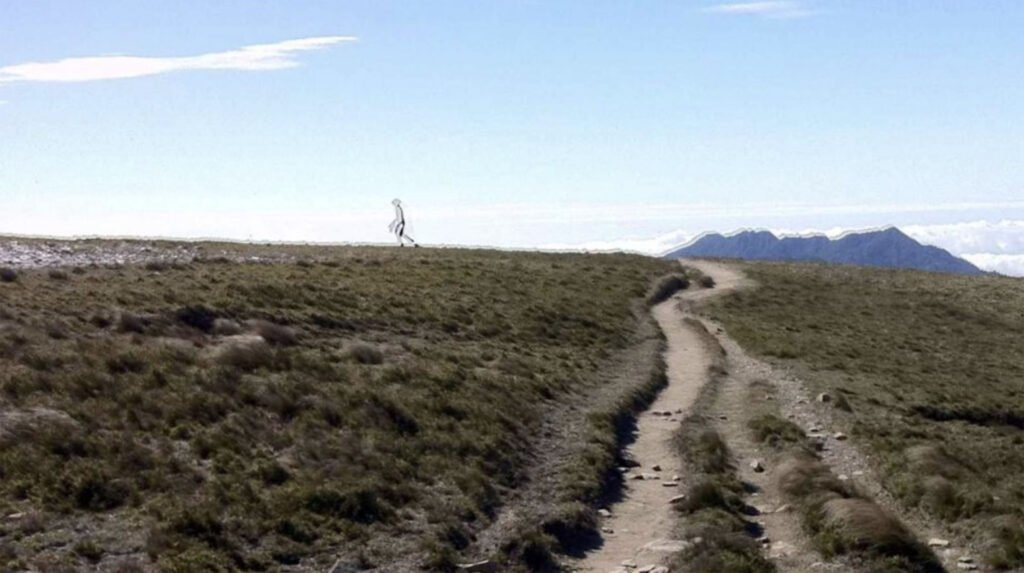
Earlier this month the FBI released a fresh batch of historic UFO documents, and Chen’s photograph turned up inside them.
The official assessment describes the image as showing a legitimate, physical entity that defies conventional human anatomy.
A TUFOS spokesperson called the picture one of Taiwan’s greatest unsolved supernatural mysteries, pointing out that the creature’s appearance rules out any ordinary human explanation.
Imaging experts also dismantled the older “double exposure” theory.
The odds of a ghost image landing in exactly the right spot, at exactly the right scale, on exactly the right ridge, were very small.
Why creators are watching
UFO content has been quietly stacking up views for years, but the FBI file dump has supercharged the whole genre overnight.
Channels that have spent a decade analysing grainy military footage are pulling tens of millions of views off the back of a single declassification.
The Chen photograph is the kind of artefact that travels well across TikTok edits, YouTube essays, Instagram carousels, and late-night podcasts.
It has the right ingredients. Single photographer. Specific location.
A creature that doesn’t look like anything else in the canon. And now, an official-sounding paper trail.
TUFOS first published the image in late 2012. The reaction split cleanly between believers who treated it as proof and doubters who treated it as an inside joke.
Both camps are now rereading the FBI documents looking for footnotes.
Government officials have declined to say anything more about what the figure actually is, or where it came from.
They’ve also declined to say it wasn’t there.