

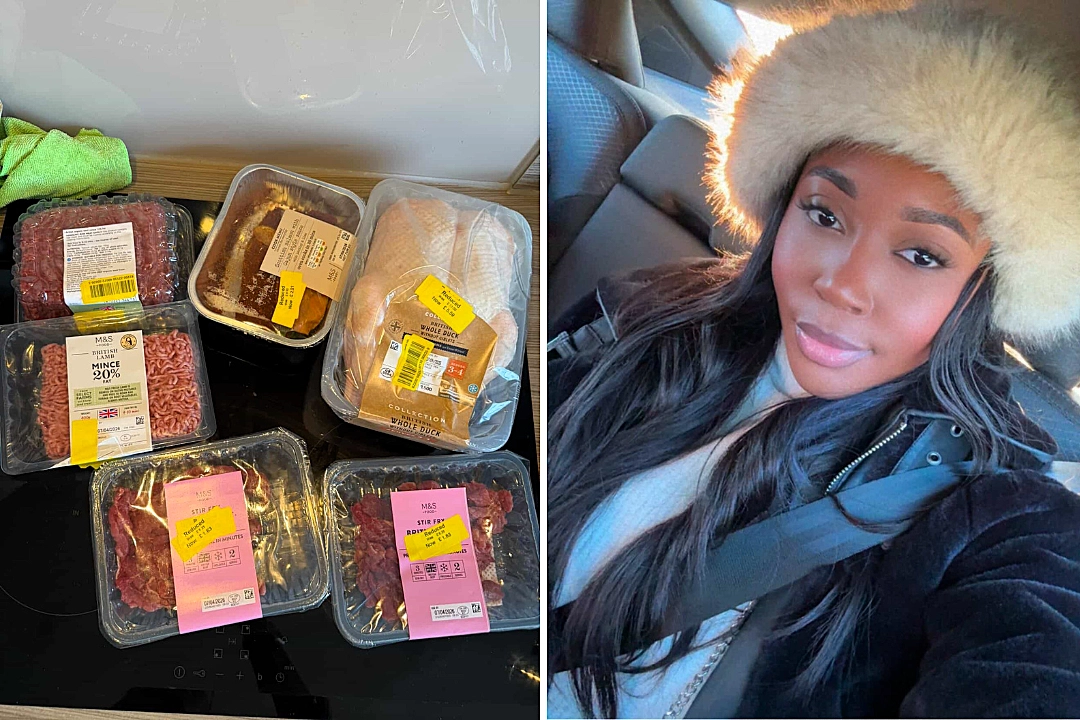

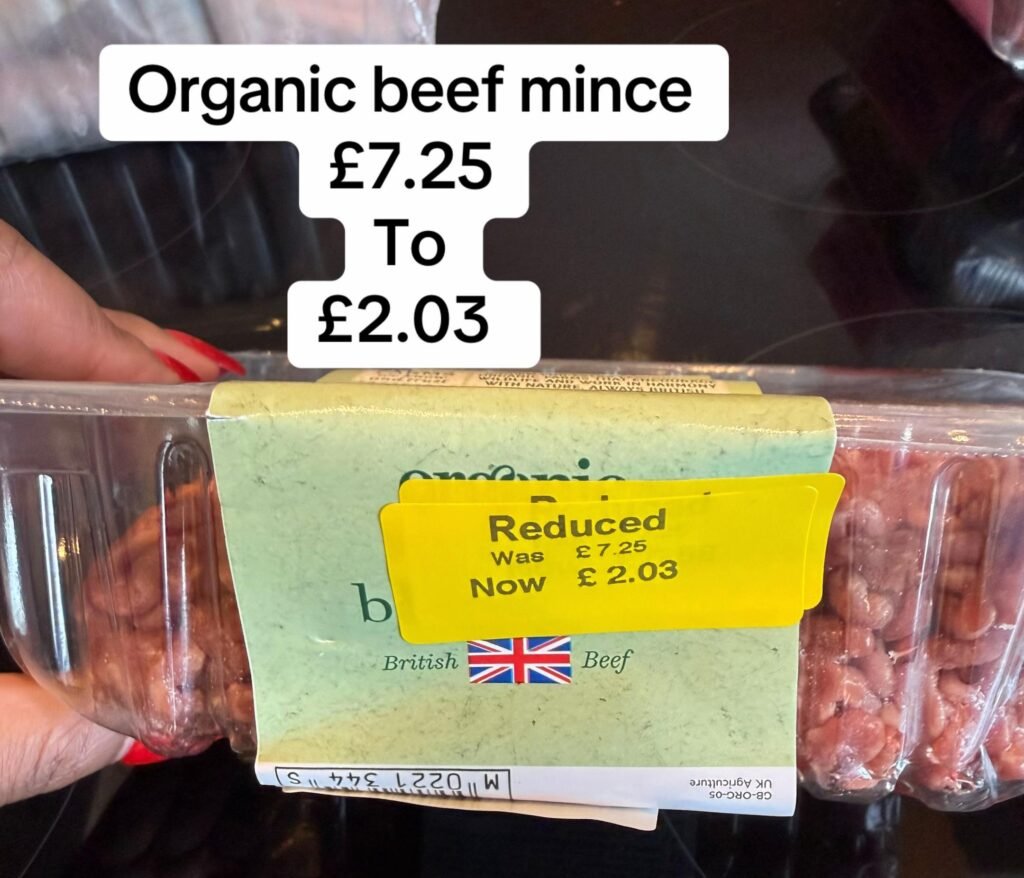
Casey Gore paid £2 for organic beef mince at Marks & Spencer.
She also got a whole duck for £5.59, cajun salmon for £2.21, and organic lamb mince for £1.68.
Her total came to £14.77. The shelf price was £43.25.
The 22-year-old from Surrey has 29,000 TikTok followers and posts regularly about bargain shopping.
This one landed differently.
“This is the best yellow sticker haul I’ve ever had,” she said.
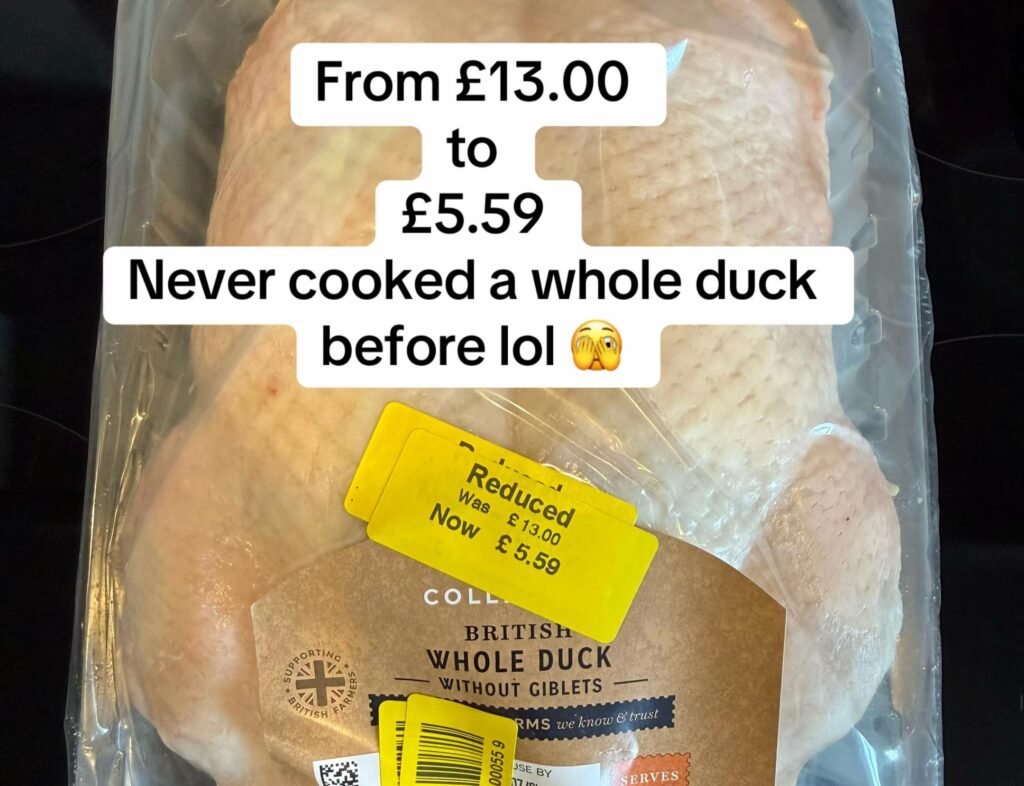
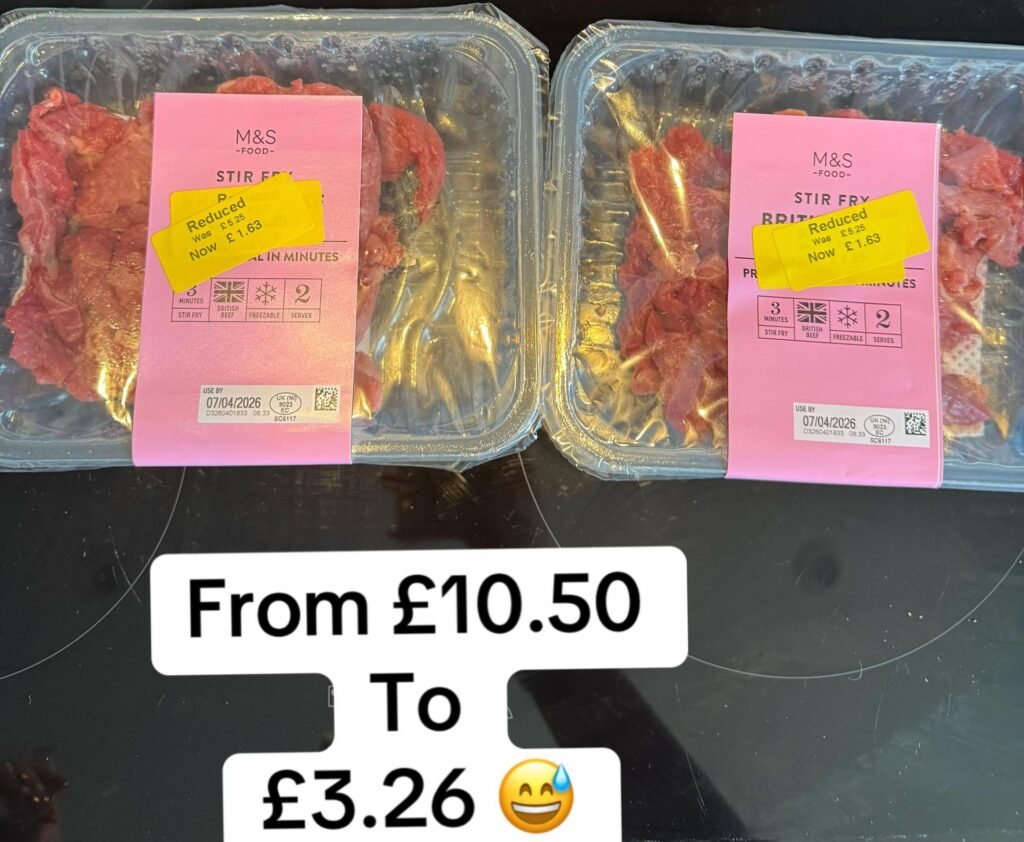
The reduced section had delivered: organic beef mince down from £7, the duck from £13, the salmon from £6.50, organic lamb mince from £6 to £1.68, and two packs of British beef stir fry strips at £1.63 each, originally £5.25 apiece.
M&S, a shop not historically associated with the phrase “yellow sticker”, had apparently gone for it.
Casey filmed the haul, posted it, and the comments arrived quickly.

“You really hit the jackpot.”
“This is naughty, you won.”
“I would chuck all of that in the freezer.”
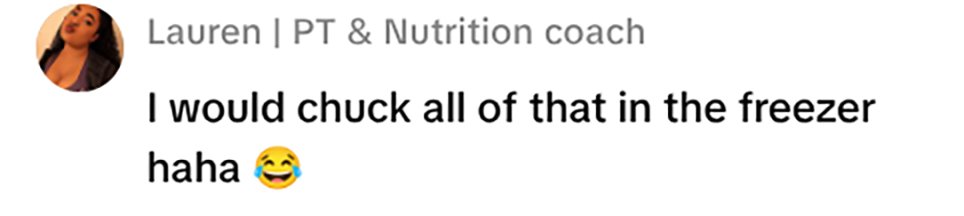
One person simply wrote: “Bargain!!!” with three exclamation marks, which feels proportionate.
The dopamine of buying a duck for a fiver
Casey is thoughtful about why this kind of shopping works beyond the obvious financial logic.
“I find that I would’ve never bought the organic mince for the original price, and so I do think the yellow stickers allow you to try something you would never try — especially the duck,” she said.
“Again, I wouldn’t have bought that full price.”
There’s also something more immediate at play.
“I think I get a dopamine rush from getting a good bargain, especially from a shop like M&S, which is renowned for being rather expensive.”
That combination — premium product, fraction of the price, slight sense of having beaten the system — is exactly why yellow sticker content performs so reliably online.
It’s not just about saving money. It’s about winning something.
Why it matters
Casey’s haul is a clean example of a content category that has grown steadily through the cost of living crisis and shown no signs of slowing: the bargain find, filmed and shared, turned into a small act of community information.
Her 29,000 followers aren’t just watching for entertainment — they’re watching to know where to look and what to expect.
For creators in the food and lifestyle space, reduced-section content is one of the few formats that gets more relevant as household budgets tighten, not less.
She also has a position on the wider issue.
“I hope that shops can continue discounting food, especially if it’s going out of date, because I disagree with food waste. And if the food is not bought, it should be donated.”
For a 22-year-old posting haul videos, that’s a sharper point than most brand campaigns manage.
What’s next
Casey’s advice is simple: scour the yellow sticker section, freeze what you can, and don’t pay full price for a duck.
Whether M&S intended to become a destination for bargain content creators is a question their marketing team is presumably sitting with.
READ MORE: I paid £2.33 for a Morrisons Too Good To Go bag – I was expecting cookies but I got 17 BAGUETTES