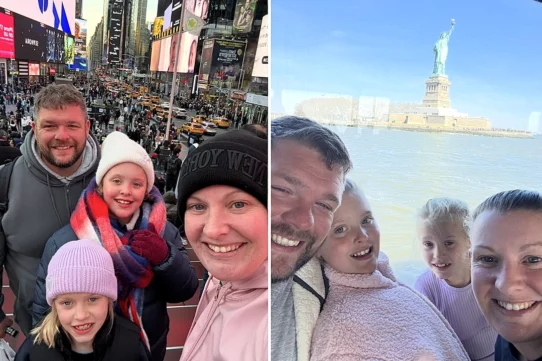


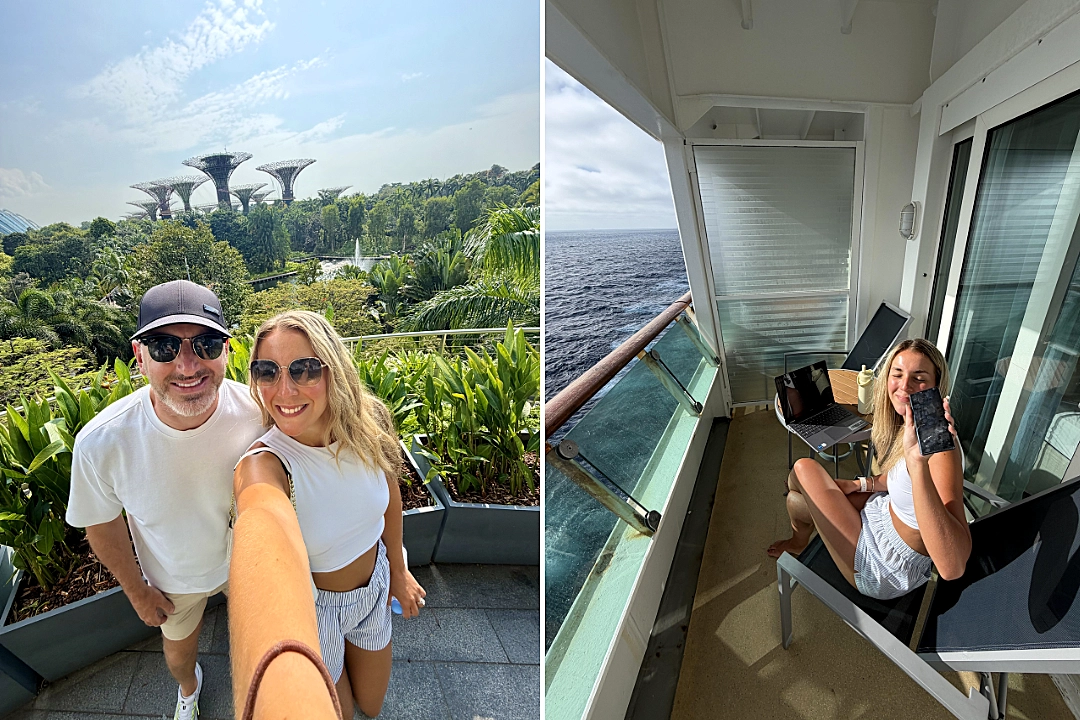

Katrina Middleton and her husband Kevin sold their house in Arbroath, packed up their lives and moved onto a cruise ship.
Then another one. Then another one. They’ve spent 307 nights at sea so far and have no plans to come back.
Middleton is 29. She works full-time as a CRM marketing manager.
READ MORE: I booked the cheapest hotel I could find for £37 a night – they put me in a room with BON JOVI
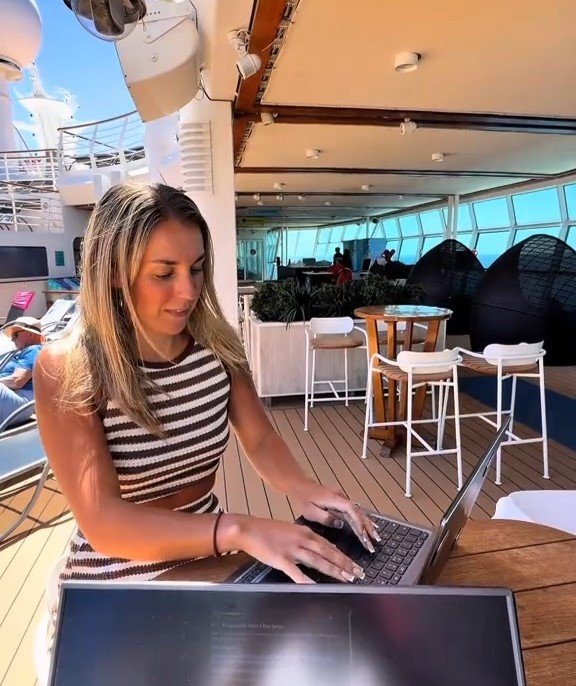
Her husband is 43. They both work remotely from whichever ship they happen to be on, scheduling trips up to 18 months in advance and sometimes doing back-to-back sailings without going home in between.
“Waking up somewhere new is something you never get used to,” Middleton told Creatorzine.

“You go to sleep and when you open the curtains in the morning you are somewhere completely different.”
It started with a 35-night sailing
The couple had always been cruise enthusiasts, but the shift from hobby to lifestyle began when Kevin spotted a trip through the Suez Canal with a stop in Petra.
Safety concerns rerouted it, and they booked a 35-night sailing from Barcelona to Singapore instead.
Neither could take five weeks of annual leave. So they brought the office with them.
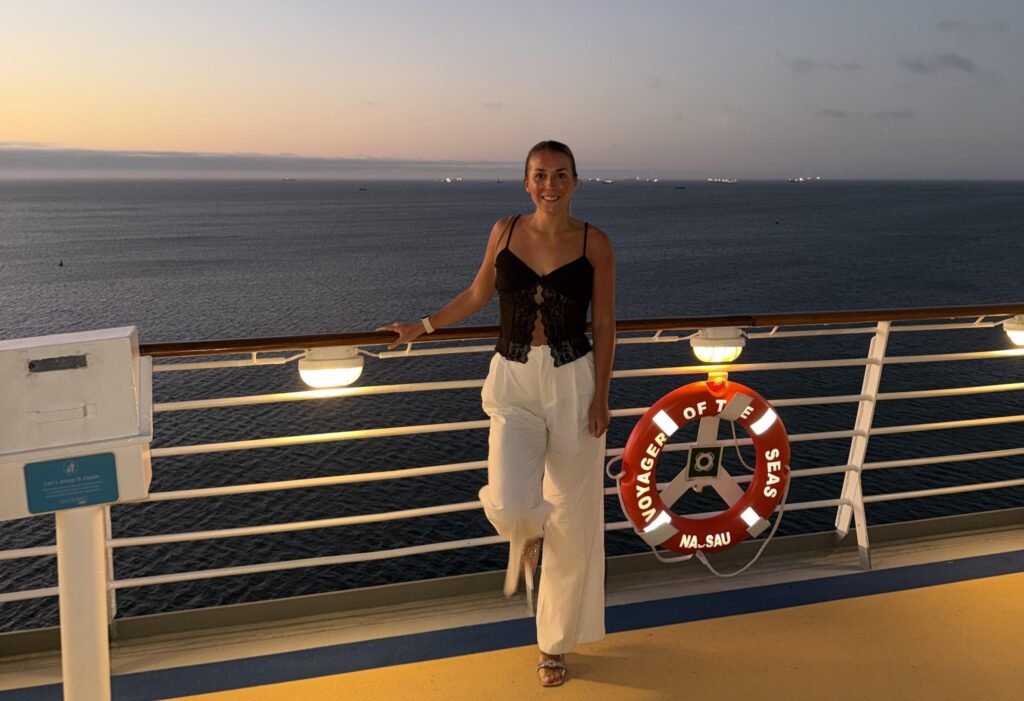
“We thought, why don’t we just take our office with us?” Middleton said.
It worked. They kept booking. Eventually they looked at their house in Scotland and realised they were barely in it.
“It sounds more dramatic than it was,” she said.
“We just gradually realised the house was becoming a place we visited rather than lived in, and that felt like a waste. So we simplified.”
Working from a floating base
Middleton sticks to UK working hours regardless of time zone.
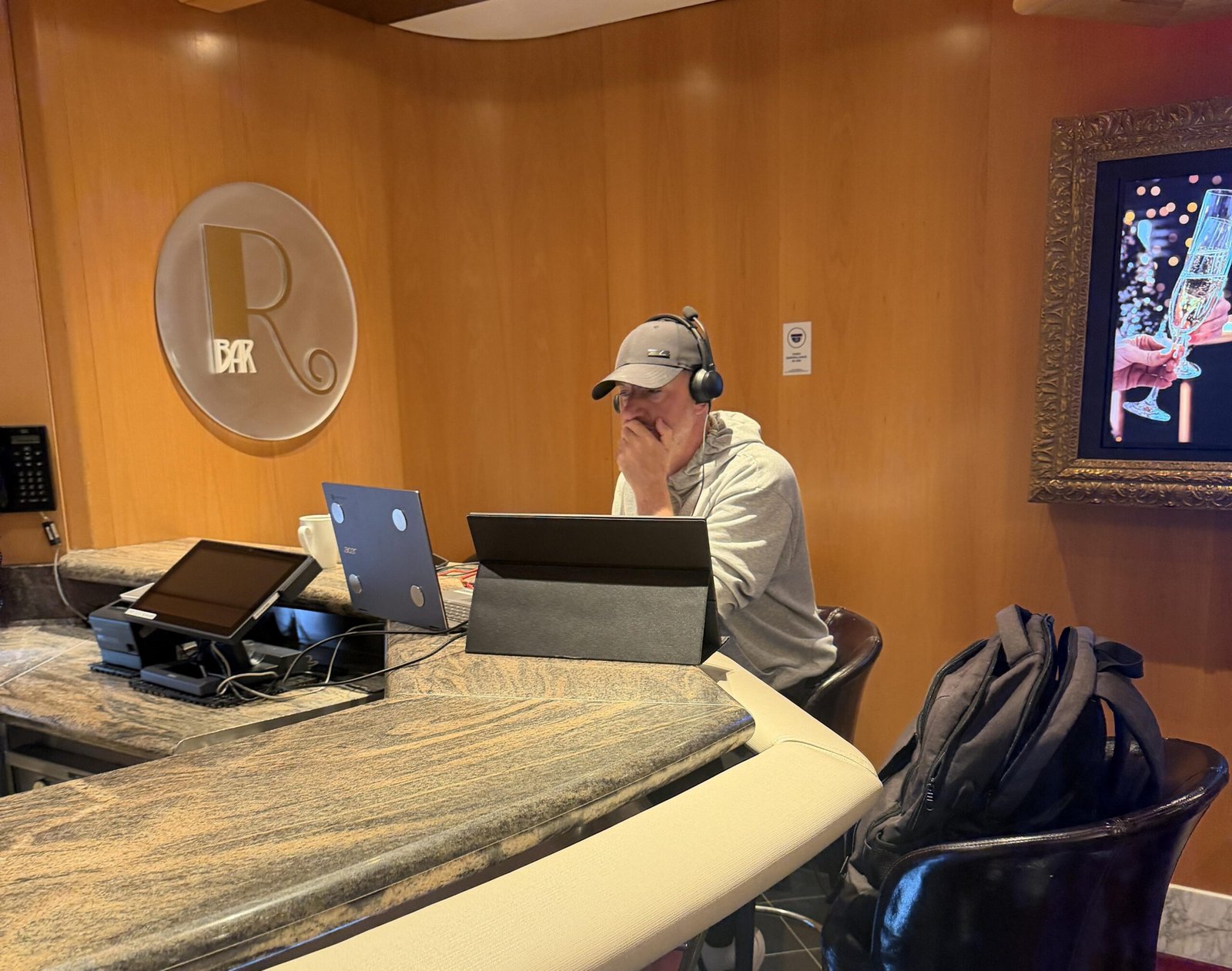
She works mornings in quiet public areas on board before retreating to the cabin later in the day. The routine is deliberate.

“The balance comes from treating the cruise like a floating base, not a constant holiday,” she said.
“When I’m working, I’m properly working.”
Wi-Fi is the main headache. Onboard packages cost £12 to £15 a day.
The couple buy one and hotspot everything off it. Middleton also uses an eSIM called Gigsky, which works at sea and avoids roaming charges.
She says some days are almost entirely work. Others feel like a holiday.
“Across the whole trip, it evens out,” she said.
£80 a night for everything

The couple pay between £80 and £100 per person per night.
That covers accommodation, food, entertainment and transport to the next destination.
No bills. No commute. No supermarket runs.
“When you factor in everything that covers, it compares really favourably to how we used to live,” Middleton said.
They plan meticulously, booking 12 to 18 months ahead to get the best prices and building their calendar around family events that require them to be on land.
“We always know roughly where we are going to be,” she said.
“It just doesn’t look like a traditional calendar.”
The cabin will test your marriage
Living in a cruise cabin full-time is not without friction. The space is small.
Thirty-five nights in it with another person requires strategy.
“We love each other but 35 nights in a small space will test any relationship,” Middleton said.
“We have learned to build in what we call ‘escape schedules.’ One of us takes a walk, the other gets the cabin to themselves for an hour. It sounds funny but it helps.”
She also admits to missing home more than people expect.
“I have always been a homebody, which surprises people when I say we live like this,” she said.
“We stay connected with family constantly but you do feel the distance sometimes, especially at Christmas.”
None of their family has actually joined them on a cruise yet.
Middleton calls this “a massive oversight” and says she’s trying to get her mum on board for an upcoming trip.
People had questions
Friends and family were mostly supportive. Some were less sure.
Middleton says the trickiest conversations were the unspoken ones.
“The harder conversations are the ones where you can see people want to ask ‘but what about settling down?'” she said.
“Which is funny because we feel more settled now than we ever did owning a house in Scotland and going to the same office every day. We are just settled differently.”
Why it matters
Full-time cruise living is a small but growing niche in the digital nomad and travel content space.
Stories like Middleton’s attract attention because the maths is surprisingly reasonable and the lifestyle challenges a set of assumptions about what stability looks like.
For creators covering remote work, alternative living or travel, the cruise-as-home format generates strong engagement because it invites the audience to do the sums themselves and decide whether they could do it too.
The remote work infrastructure on cruise ships is improving but still imperfect, and creators who document the reality of working from sea, including the Wi-Fi problems and the cabin fever, tend to build more loyal audiences than those who only show the sunsets.
Middleton and Kevin have 307 nights logged. They’re still booking. The house is gone. The office floats.
Whether the mum gets on board remains the next big milestone.