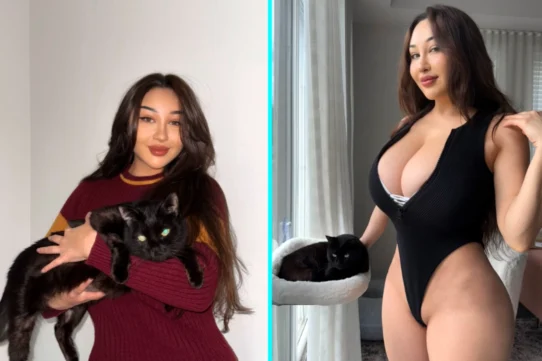



Somewhere right now, a man is falling in love with CeCe Rose.
She has never heard of him.
The 27-year-old model from Toronto, who has 2M followers on Instagram, calls herself the most catfished woman on the internet.
She says her two dedicated takedown teams remove between 110 and 200 fake accounts using her identity every day, as reported by Creatorzine.
READ MORE: Rich men pay me £500 an hour to mock their manhood – I used to earn that in a WEEK
A lot of them want money.
“It feels like every time I open any app, there’s another fake account using my face or body,” she said.

“It’s gone way beyond somebody just making a fake Instagram account.”
From copycat accounts to romance scams
At first CeCe assumed the impersonators were after followers. Annoying, but harmless.
Then men started getting in touch to share their private conversations with “her”, along with stories of money they had sent and things they had been asked to do.

“That was the part that shocked me the most,” she said.
“I had assumed the fake accounts just wanted attention, which seemed pretty harmless at first.”
That’s when she got her legal team involved.
The scams follow a familiar pattern. The impersonator builds an emotional connection first, sometimes over months, before the requests for money, gifts or investments start.

Some victims thought they had a future with her.
“I’ve heard stories where somebody genuinely believed they were in a serious relationship with ‘me’, including believing we were going to meet or have a future together one day,” she said.
Scammers have also pressured men into handing over intimate pictures and personal information.
Married men have contacted her too, and CeCe sees their secrecy as one more lever for the scammers to pull.

“If a scammer knows someone is afraid of their partner finding out, they could exploit that fear to pressure them into doing more or handing over more money,” she said.
A decade of photos stitched into a fake woman
Not every fake uses her name.
Some take her face and body and give them a new name, a new city and a whole new backstory.

The better ones piece together years of her public posts, copying how she looks, what she shares and even how she talks to people.
“That’s what makes it particularly convincing to somebody who isn’t following my real account,” she said.
One man told the real CeCe that she was the fake. The scammer had told him so.
Other efforts are less polished. When CeCe posted that she hoped to visit Australia one day, a fake account announced it had finally made it there roughly six hours later.

“It’s 24 hours of flight time – did I somehow teleport there?” she said.
“But it’s only funny for about five seconds, until you realise somebody might actually believe it.”
Whack-a-mole, every five minutes
Her teams now scan for her face, body and name every five minutes, using facial recognition built on how she has looked over the past ten years.

Instagram, Facebook, TikTok and messaging apps are the worst offenders, but she says no platform is clean.
She compares it to whack-a-mole. One account comes down, another appears within minutes.
Then come the DMs from victims demanding refunds for scams she never ran.
“When I see an Instagram DM saying, ‘Hey, I want my money back for that scam you did on me,’ it breaks my heart,” she said.

“I feel sad for them, but also this isn’t my fault.”
She tells the men who realise they’ve been duped not to feel ashamed.
Months spent in a relationship that never existed, she says, can be devastating.
Warned for impersonating herself
CeCe wants the platforms to move faster.
One of her own backup accounts received warnings for impersonating her, she says, while reported scammers carried on untouched.
“There needs to be more education for users too, because preventing the victim from trusting the scam in the first place is just as important as removing the account afterwards,” she said.
AI clones don’t scare her, though she has grown cautious about posting videos in case scammers lift her voice.
“Could someone use AI to imitate the way I speak or interact? Sure. But at the end of the day, it still isn’t me,” she said.
“I’m not going to sit around worrying about some fake AI version of myself.”
How to spot a fake CeCe Rose account

CeCe says she chats to fans on OnlyFans and nowhere else. No Telegram, no Zangi, no WhatsApp, no “secret accounts”.
“If someone claiming to be me suddenly asks you to send money, buy gift cards, send cryptocurrency, pay a fee, invest somewhere or send financial information, stop immediately,” she said.
“Don’t send another dollar and don’t let somebody pressure you by saying you’ll lose the relationship if you don’t pay.
“It’s much better to feel a little embarrassed for five minutes than lose money or become even more emotionally invested in something that isn’t real.”
Why it matters

Every creator with a big back catalogue of public content is building raw material for scammers, whether they like it or not.
CeCe can afford two takedown teams and lawyers. Most creators have a report button and a lot of patience.
Platforms face growing pressure over impersonation as AI tools make fake profiles cheaper to build and harder to spot.
CeCe’s teams will keep scanning every five minutes. The fakes will keep coming back.
One of them is probably already packing for Australia.