


Londoners are nearly four times as likely as Scots to consider an AI girlfriend or boyfriend.
Most of them would still rather have a person, mind you.
A survey of 1,000 UK adults, commissioned by webcam platform Babestation and reported by Creatorzine, found 40.8% of people in the capital would consider an AI companion.
READ MORE: I warned fans not to get tattoos of me – three ignored me and one put my FACE across his back
In Scotland, the figure was 11.4%.
London tops the UK’s AI dating table
The East of England came second on 34.9%, with the West Midlands close behind at 32.9%.
The North West (28.5%) and the East Midlands (28.2%) sat almost level, before enthusiasm thinned out in Yorkshire and the Humber (22.2%), the South East (22%) and the South West (20.6%).
Across the country, 15.5% of respondents said they had already used an AI chatbot for a personal, romantic, flirtatious or adult conversation.
Another 27.5% said they would consider it in future.
Curiosity, it turns out, is not commitment.
Most Brits still prefer a real partner

Even in London, 71.9% said they would choose a real person for romantic, flirtatious or adult online interaction.
In Scotland, that climbed to 93.1%.
Nationally, only 5% would actively prefer an AI relationship.
Some 80.8% said they valued human connection more.
A Babestation spokesperson said: “You can’t manufacture human chemistry.
“People are clearly curious about AI and we’re not surprised that more are experimenting with it.

“Talking to a real person is unpredictable. They can flirt with you, make you laugh, disagree with you, tease you or completely surprise you.
“An AI companion might learn what you like and become very good at telling you what you want to hear, but there’s a difference between simulated attention and somebody genuinely reacting to you.”
Brits want AI clearly labelled
Nobody, it seems, likes finding out they’ve been chatting up software.
In the East Midlands, 90.7% said they would feel misled if someone they believed was real turned out to be AI.
Yorkshire respondents pushed hardest for transparency, with 95.3% wanting it made clear when they are talking to a machine.
Nationally, 86.5% said they would feel misled by the discovery, and 92% said AI companions and virtual performers should carry an AI label always or in most cases.
‘You can’t programme genuine chemistry’

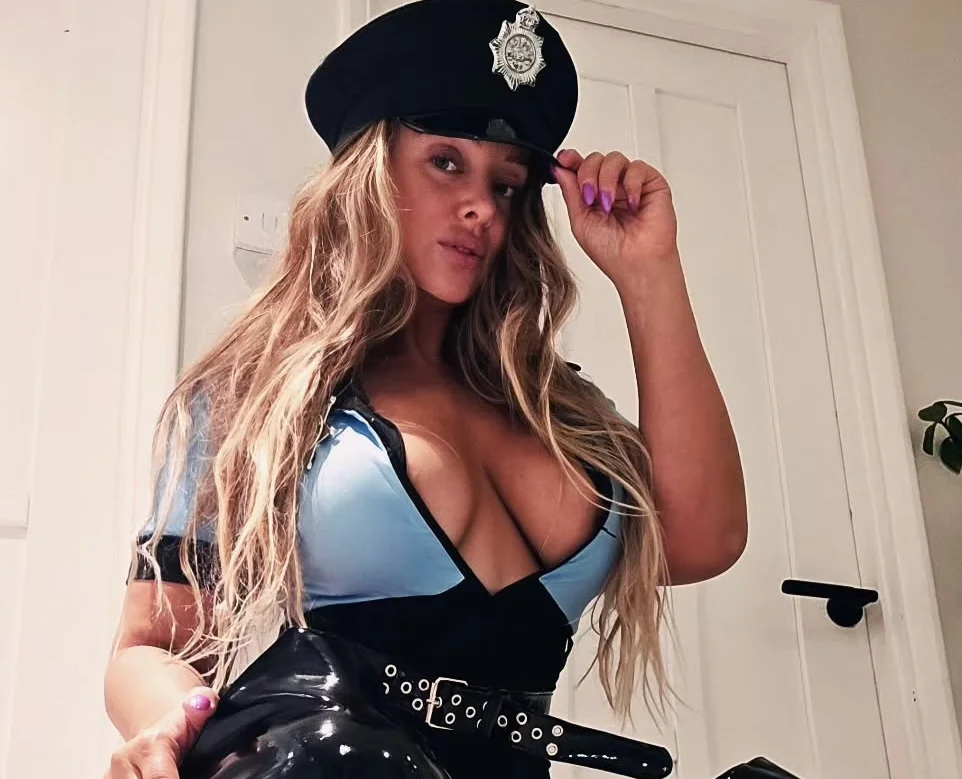
Babestation model Beth Bennett says the gap shows most clearly when viewers just want to talk.
“People assume men only come to see me because they want something naughty, but sometimes we can spend ages just chatting,” she said.
“They’ll tell me about their day, their job, their relationships or something that’s bothering them.
“Obviously we flirt and things can get sexy, but every conversation is different because I’m genuinely reacting to that person. If someone makes me laugh, I laugh. If they’re cheeky, I’ll be cheeky back.
“I can understand why someone might be curious about an AI girlfriend that’s available whenever they want her.
But knowing you’re talking to somebody really makes it exciting.”
Almost two-thirds of those surveyed, 63.8%, agreed a real performer or creator feels more authentic than an AI companion. Just 3.8% backed the AI.
The spokesperson added: “AI companionship isn’t going away and we don’t think there’s any point pretending people aren’t interested in it.

“But curiosity about AI and wanting to replace people with AI are two very different things.
“Our performers aren’t programmed to give somebody the perfect answer. They’re real people having real conversations.”
Why It Matters
AI companions now compete directly with human creators for the same thing: paid attention.
These figures suggest the appetite is real but has a ceiling, set by audiences who want proof someone is on the other end.

For creators, being verifiably human may become something to sell rather than assume.
Worth remembering, too, that a company built on human performers paid for a survey concluding people prefer human performers.
AI girlfriend apps have moved from novelty to mainstream in the space of two years, and regulators in Europe are already pushing chatbots towards mandatory disclosure.
Whether Britain gets the labels 92% of respondents want is another matter.
The bots, presumably, aren’t asking.
READ MORE: I paid a cleaner to scrub custard off my bathroom walls – I was too mortified to tell her WHY