
Bradley Rivers was at airport security when the bag scanner flagged the handcuffs.
That was the first problem.
The second was the collar.
“The officer pulled me aside and asked if I could remove it,” he said.
He couldn’t.
READ MORE: Turkish surgeons said no because of my age – so I flew to South Korea and went BLIND for 15 hours
The arrangement
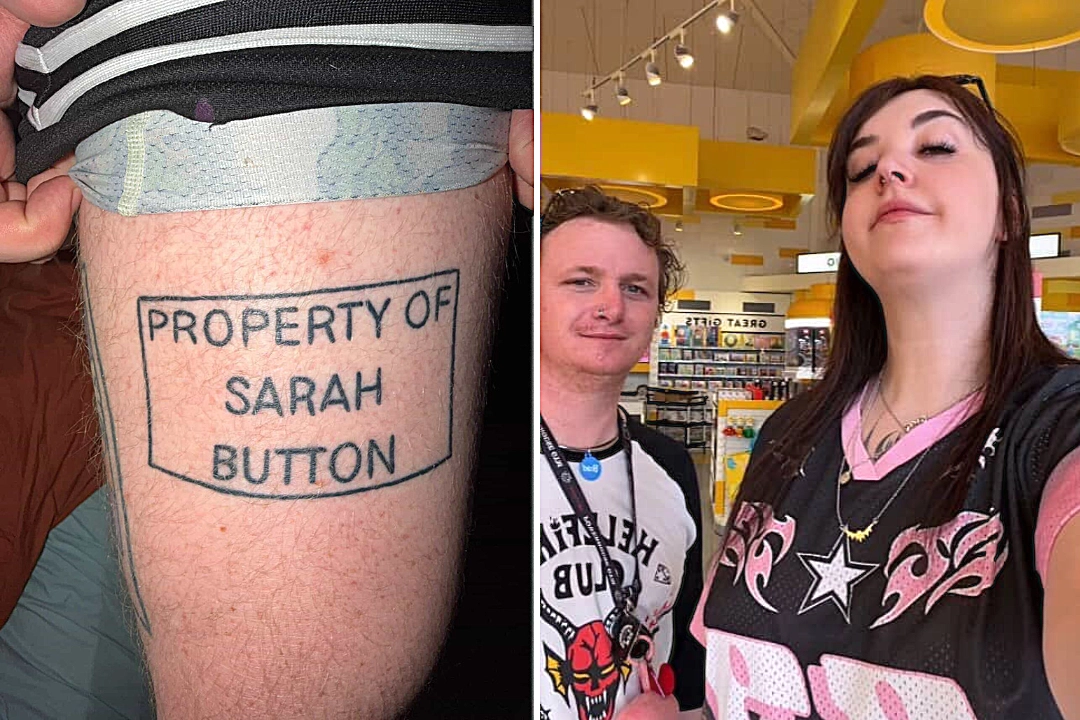
Bradley, 38, lives with his influencer girlfriend in Brisbane and works as her full-time personal assistant.
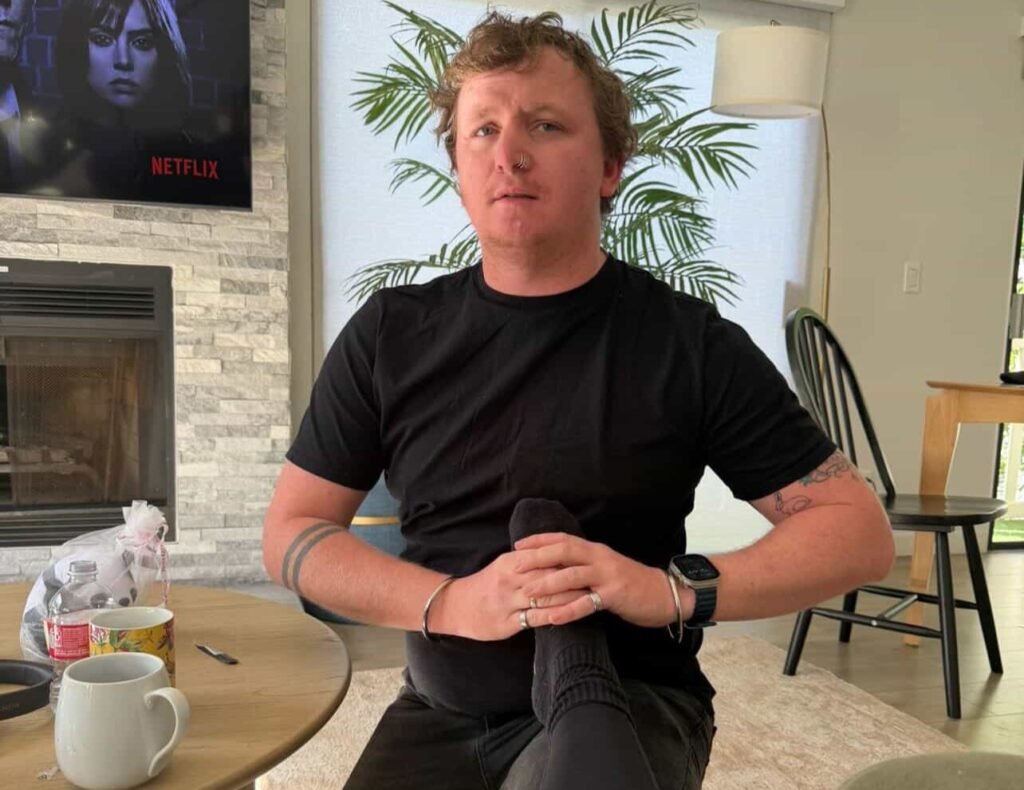
The couple describe their setup as a consensual dynamic — Bradley takes a service-based role in their daily lives, wears a collar as a sign of that commitment, and is paid a weekly wage with bills and expenses covered.
Behind closed doors, it works smoothly. In an airport security lane, it attracts attention.
After explaining to staff that the collar couldn’t come off, officers carried out a physical check to confirm it was safe to proceed.
The handcuffs, presumably, required their own conversation. Other passengers watched.
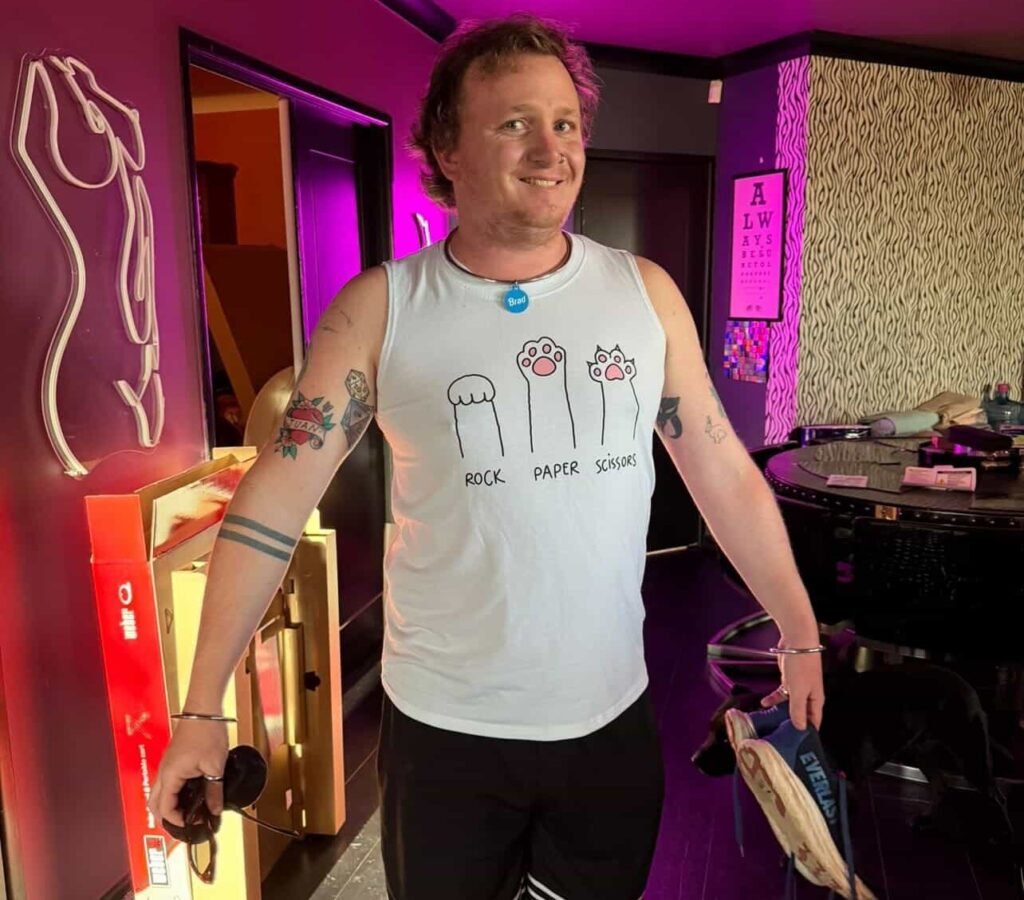
“I got a few curious looks from some other passengers,” Bradley said, “but nothing was said.”
He has learned to absorb this kind of attention.
“It draws stares a few times a day, but I’ve gotten used to it now.”
The beach incident
The airport wasn’t even the most chaotic travel story.
On a recent beach trip, the couple lost the key to his collar somewhere in the sand.
After searching without luck, they abandoned the beach, drove home to retrieve a metal detector, and went back to find it.
Bradley tells this story without apparent drama. It is, at this point, just what travelling together looks like.
“As long as I’m happy and safe”
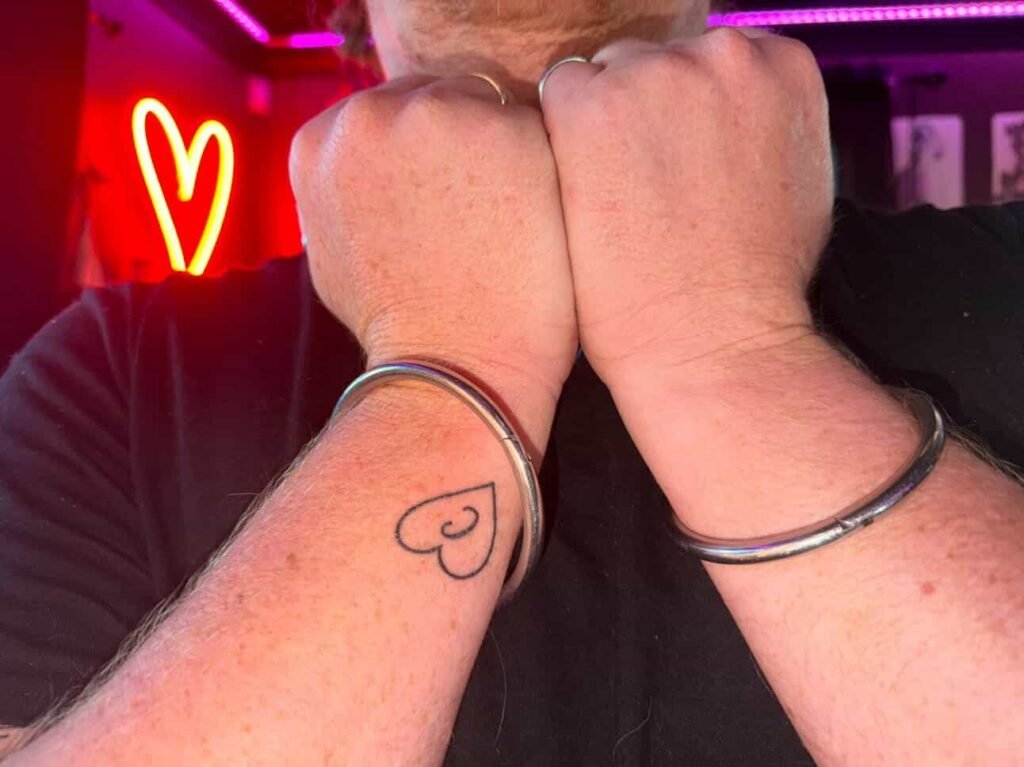
The people who know Bradley personally have taken it well.
His mother’s position, he says, is straightforward: if he’s happy and safe, she’s fine with it.
“I think people assume I’m not taken care of, or that I’m doing this for the wrong reasons,” he said.
“We’re still learning what works. We always communicate, and that helps a lot.”
He describes himself as extremely fortunate.
The bills are covered, the work is defined, and the relationship — unconventional as it looks from the outside — is, he says, built on consistent communication.
“Friends and family are extremely supportive,” he added.
Why it matters
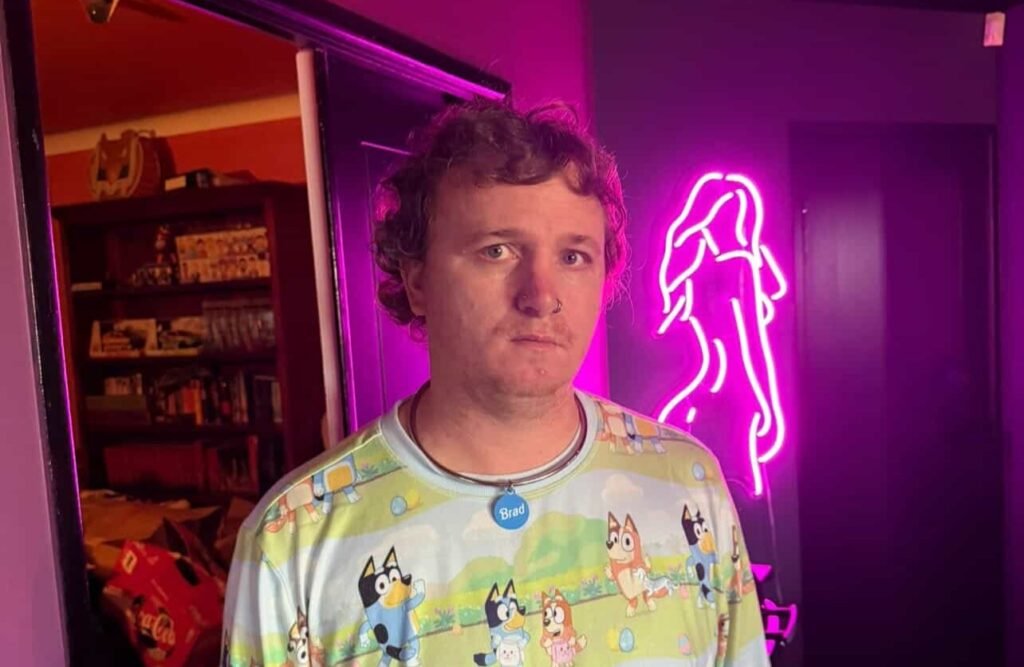
Bradley’s story sits at the intersection of two things the creator economy is increasingly producing: influencers who need operational support to function at scale, and partners who build entire roles around that support.
The power dynamic here is explicit and consensual in a way that most professional arrangements quietly aren’t.
What makes it notable isn’t the collar — it’s that Bradley is essentially a one-person agency for his partner’s career, and the personal and professional have merged completely.
For creators thinking about what sustainable support structures actually look like, that’s a more interesting question than the handcuffs.
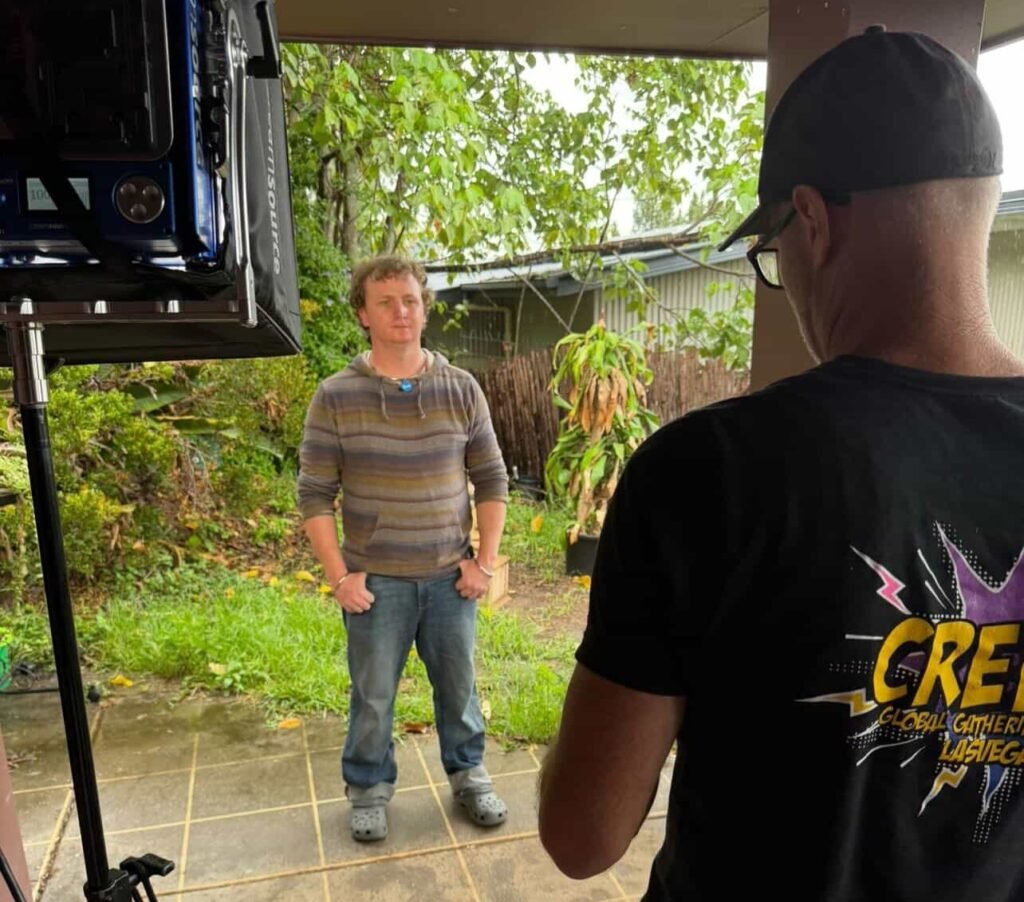
Alternative relationship structures are appearing more frequently in creator content, partly because the audience appetite is there, and partly because living publicly is, for many influencers, simply part of the job.
What’s next
Bradley and his partner are still figuring out what works, by his own account.
Given that the current arrangement involves international travel, airport security negotiations, and beach-based metal detector missions, “still figuring it out” sounds about right.
READ MORE: I found a Ted Baker dress worth £400 in a charity shop – I paid £9 and it still had the TAGS