


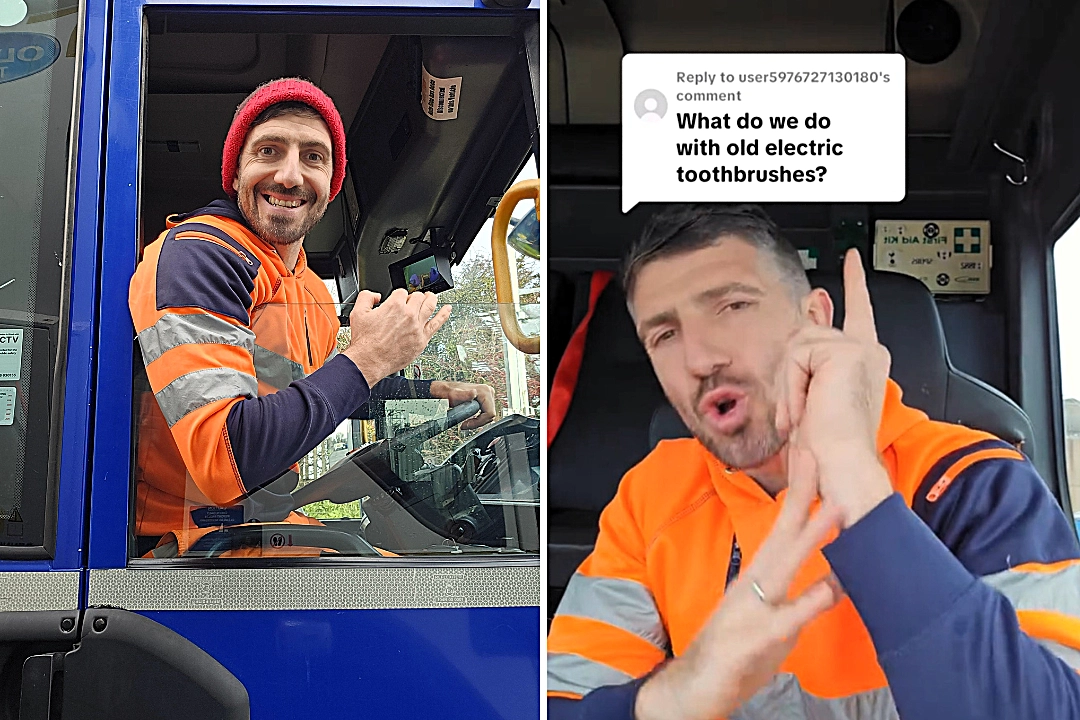

Ashley empties bins for a living and has one request: stop putting electric toothbrushes in them.
The 37-year-old refuse collector from south-east England, who has built a following of 168,000 on TikTok as a self-described “bin-fluencer,” says the rechargeable batteries inside electric toothbrushes are a genuine fire hazard when they end up in the wrong bin.
“You do not put them in your general waste bin and you do not put them in your recycling bins because they have a rechargeable battery inside them,” he told Creatorzine.
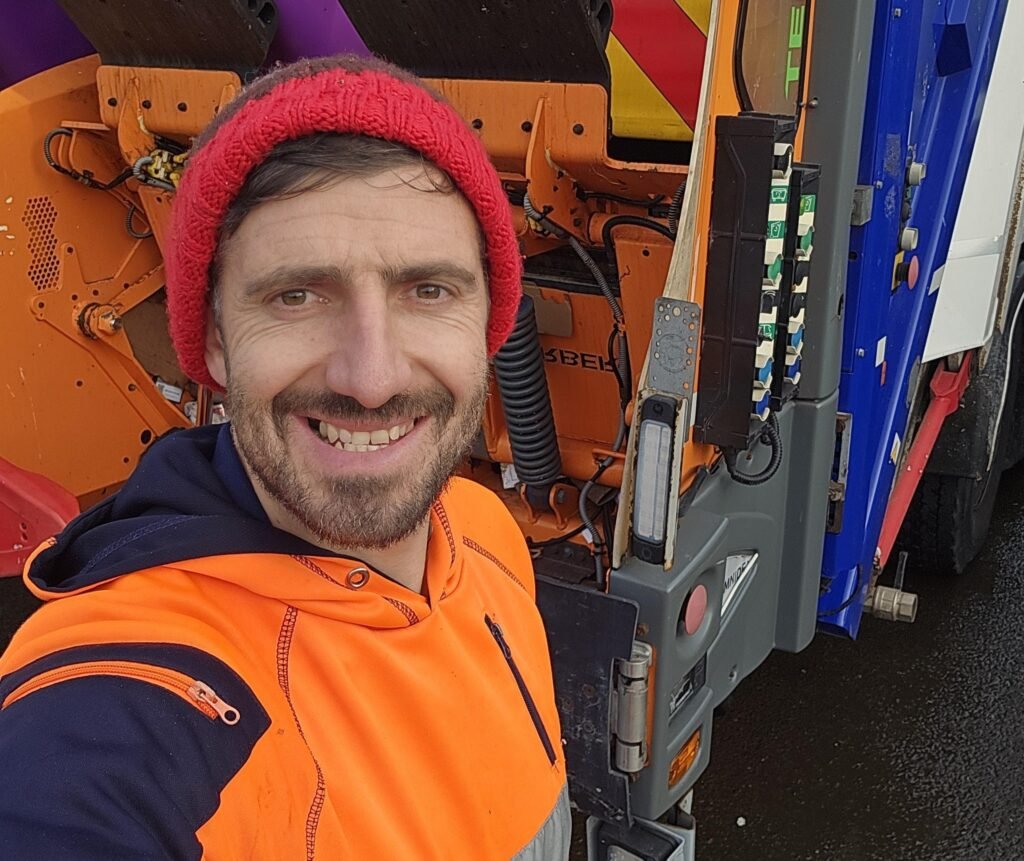
What actually happens inside the lorry
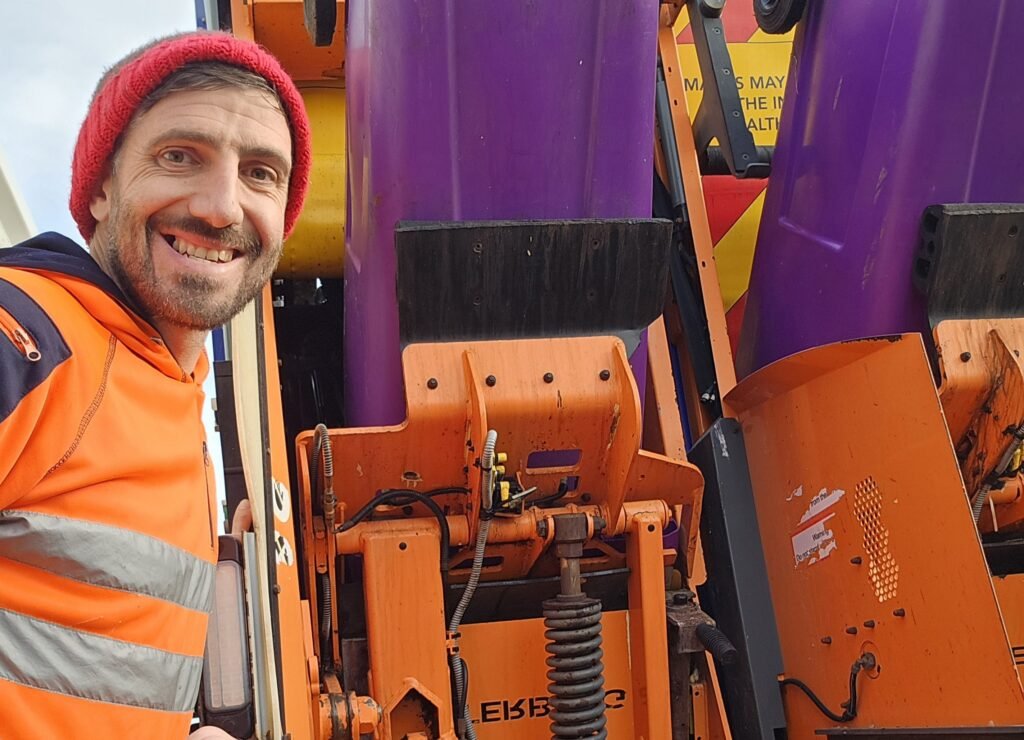
The danger isn’t theoretical. When a bin lorry compacts its load, a hydraulic blade crushes everything inside.
If that blade punctures a lithium battery hidden in an old toothbrush, the battery can ignite.
“When the blade comes down, if it bursts the battery inside it, that’s how the fire starts,” Ashley said.
“It’s the same when we get to the tip and they crush it. They’re not expecting electrical devices to be in there.”
Bin lorry fires caused by batteries are a known problem across the UK waste industry.
Ashley’s advice is simple: keep anything with a rechargeable battery out of household bins entirely.
So where should they go?
Ashley acknowledges that the alternatives are inconvenient.
Electric toothbrushes need to be taken to a retailer that sells small electricals, such as Boots or Currys, many of which have collection bins near the entrance. Local tips also accept them in designated small electrical bays.
“I know it’s a faff,” he said.
“Sometimes you just have to return stuff to where you got it from.”
He was clear that the restrictions aren’t the binmen’s choice.
“It’s not our fault we don’t take them. We don’t take everything. It’s just to stop fires.”
Every council does it differently
The comments beneath the video revealed the usual patchwork of local rules that makes waste disposal in the UK feel like a postcode lottery.
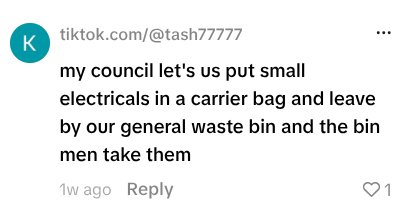
“My council lets us put small electricals in a carrier bag and leave by our general waste bin and the bin men take them,” wrote one viewer named Tash.
Another commenter said their council provides kerbside collections for batteries and small electrical items including microwaves, toasters and gaming controllers.
A third suggested councils should provide something specifically for used household batteries.
The inconsistency is part of the problem.
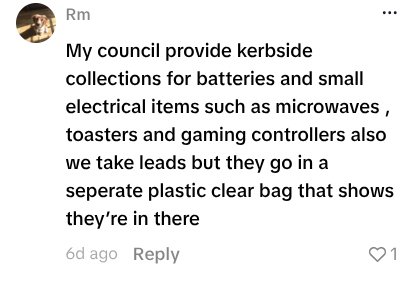
What’s accepted kerbside in one borough requires a trip to the tip in the next.
Why it matters
Waste disposal content sounds like the least viral genre imaginable, and yet Ashley has 168,000 followers because he answers questions that most people don’t know they have.
The electric toothbrush warning is a good example. Most households own one.
Almost nobody thinks about what to do with it when it dies.
The default move is to throw it in the bin, which is exactly what Ashley is trying to stop.
For creators, his account is a case study in niche expertise.
He’s not competing with lifestyle influencers or comedy accounts.
He’s the only person most of his followers have ever seen explain what happens inside a bin lorry, and that monopoly on a specific kind of knowledge is what makes the audience stick.
Battery fires in waste collection vehicles are a growing concern across the industry.
As more household products contain rechargeable lithium cells, from toothbrushes to vapes to wireless earbuds, the problem is getting worse rather than better.
Ashley’s advice is worth taking seriously. The next time an electric toothbrush gives up, it’s a trip to Boots. Not the bin.