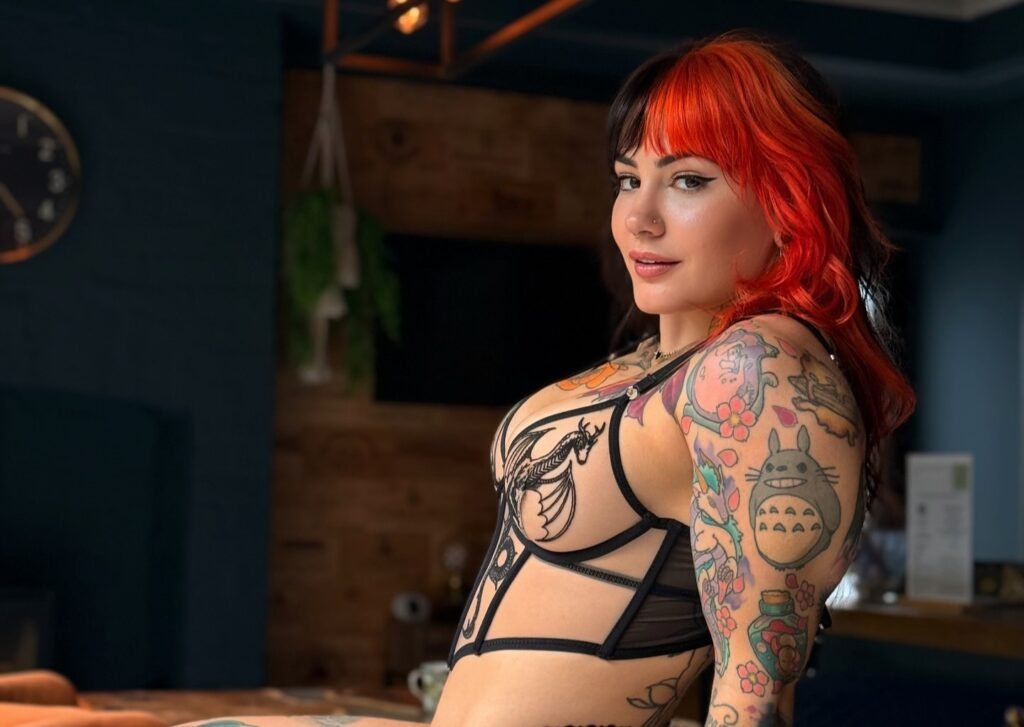

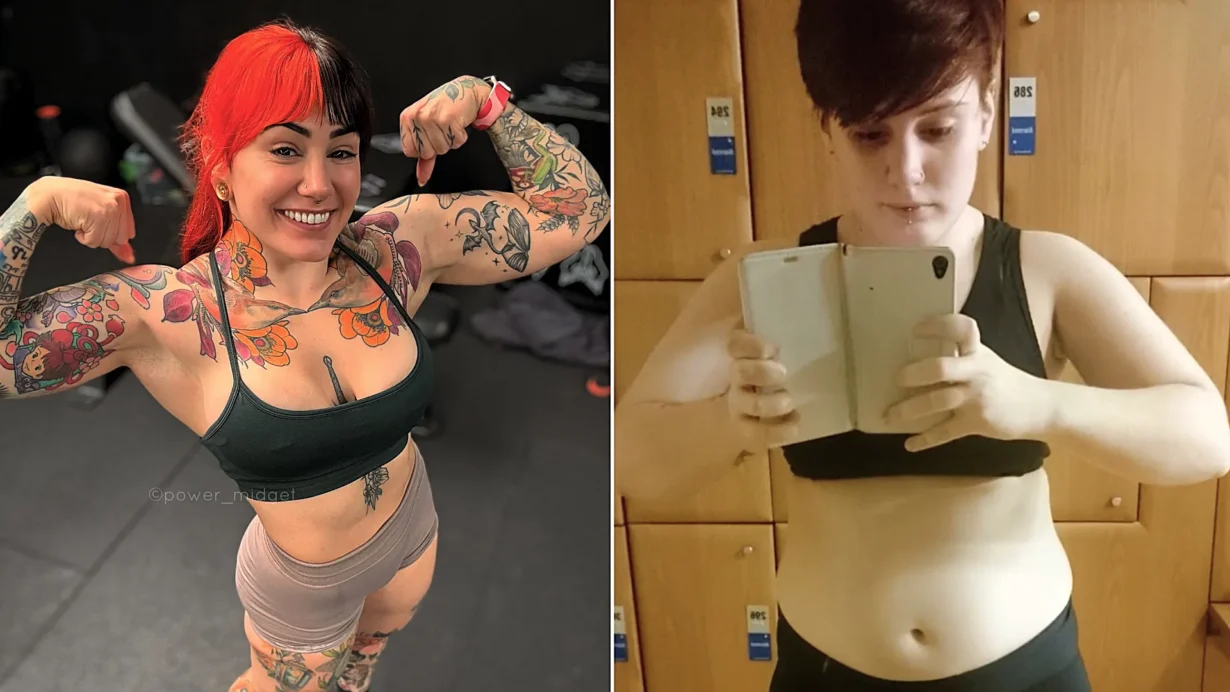

Peta has two photographs that people flatly refuse to accept show the same woman.
In both of them, she weighs almost exactly the same.
The 4ft 8in powerlifter, who posts to more than 460,000 Instagram followers at @power_midget, went from what she calls a “chubby nerd” to a tattooed “muscle mummy” without the scales moving in any meaningful way.
READ MORE: I’ve cosplayed Marge Simpson and Lois Griffin – grown men can’t get ENOUGH of cartoon mums
The comments section has never quite recovered.
“I have photos of me from before I ever stepped foot in a gym, and if you saw them, you’d think, ‘This is not you,'” she told Creatorzine.
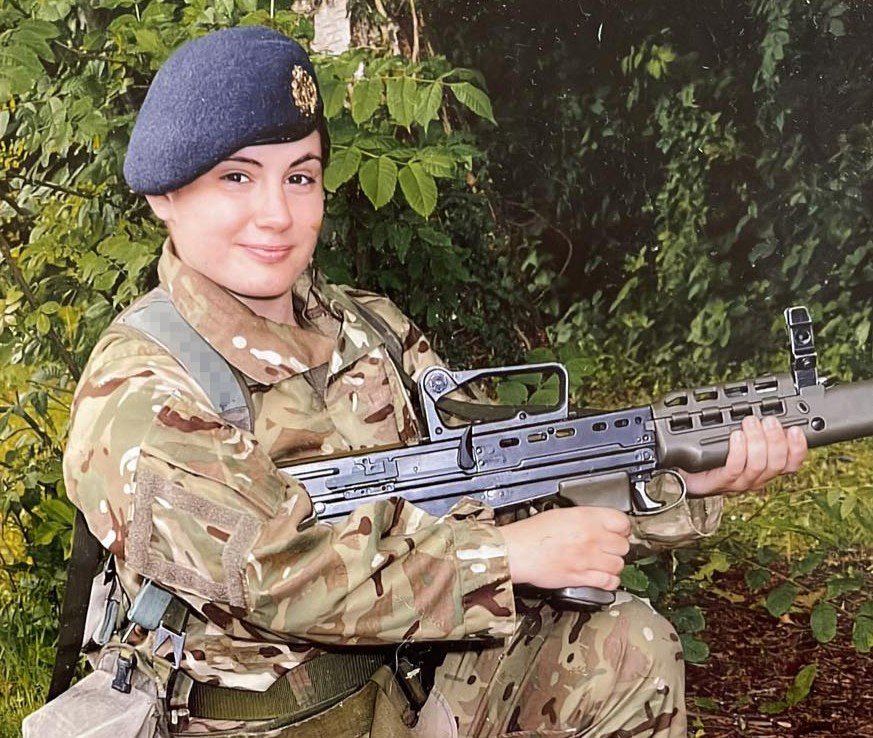
“I look like a completely different person, but I’m around the same weight I’ve always been.”
The number that refused to budge
For years, that was the problem rather than the point.
Peta says she became fixated on getting below 50kg and treated the failure to do so as a personal one.
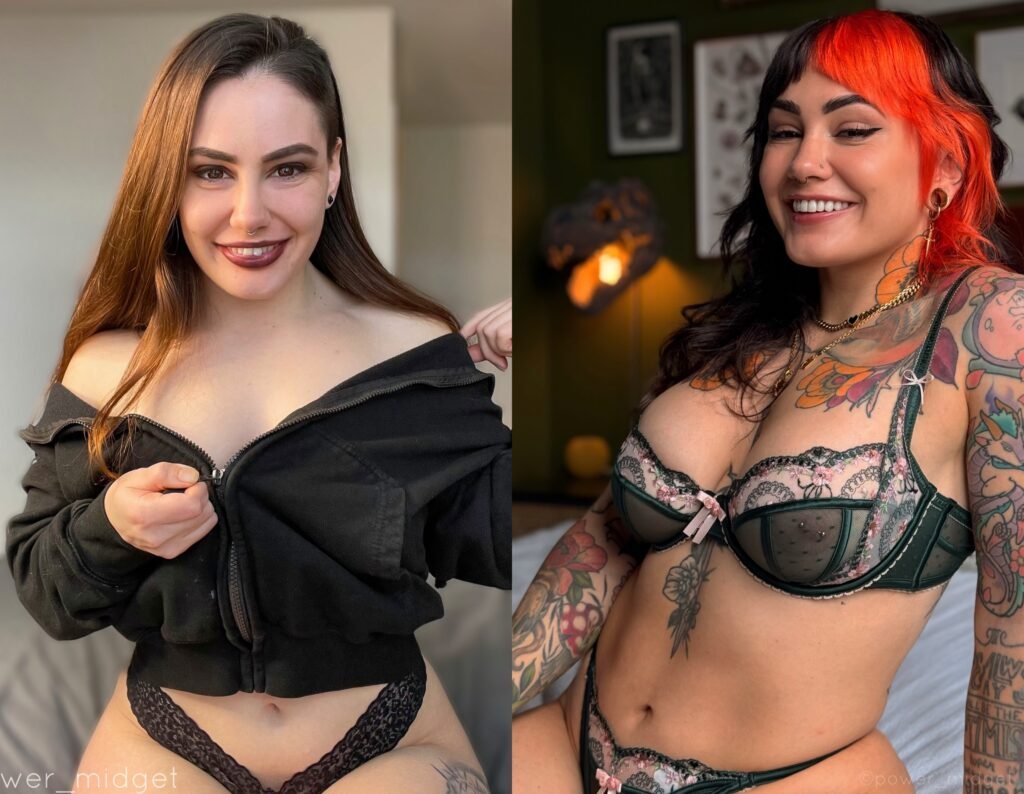
“When I first started my fitness journey, I really beat myself up over the weight not going down because I was pretty obsessed with being as small as possible,” she said.
“I never managed to get myself below 50kg. It just wasn’t happening, and I didn’t understand why.”
She was, it turned out, building muscle the entire time.
Short is not the same as small
The assumption she’d been working against was that being 4ft 8in should automatically mean being delicate.
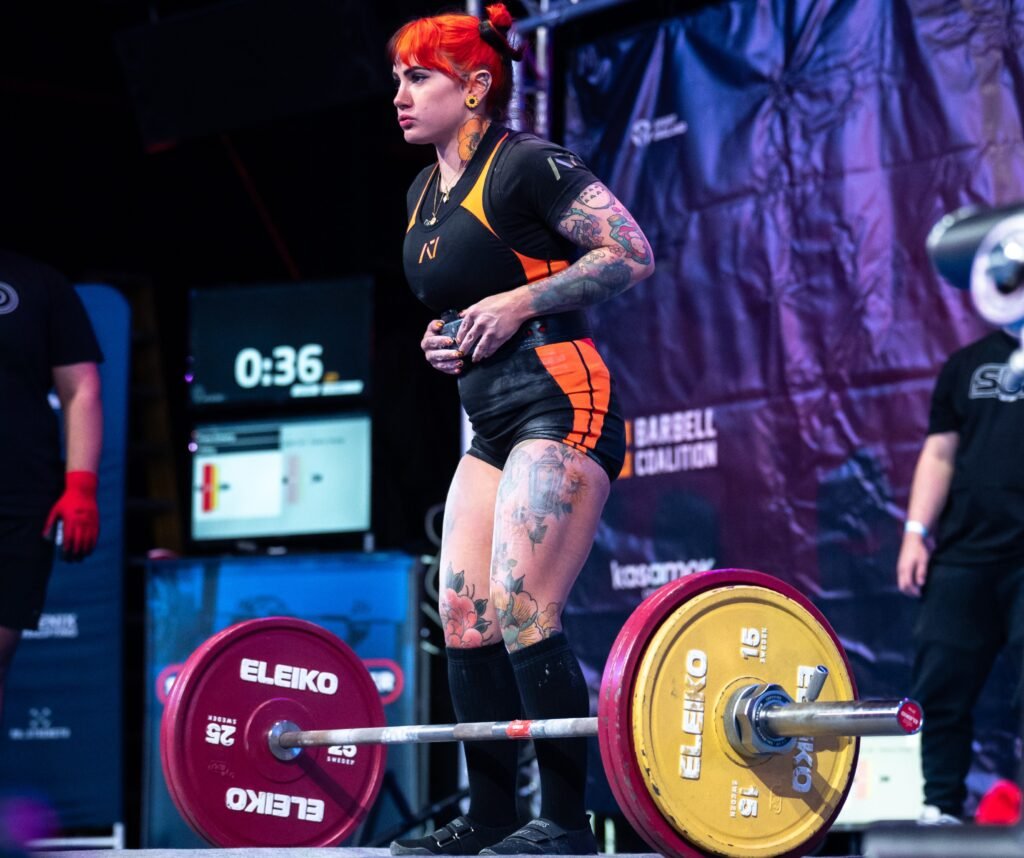
“I’m short, but I don’t have a petite frame. I hate the phrase ‘big-boned’, but I’m sturdy,” she said.
“I was never going to be this petite, lithe, ballerina type because it just isn’t in my genetic makeup, and genetics play such a big part in it.”
Weight training muddied the picture further.
Peta describes what happened to her body as recomposition rather than loss, and points out that the scales are a blunt instrument for anyone lifting seriously.
Her height amplified the effect in both directions.
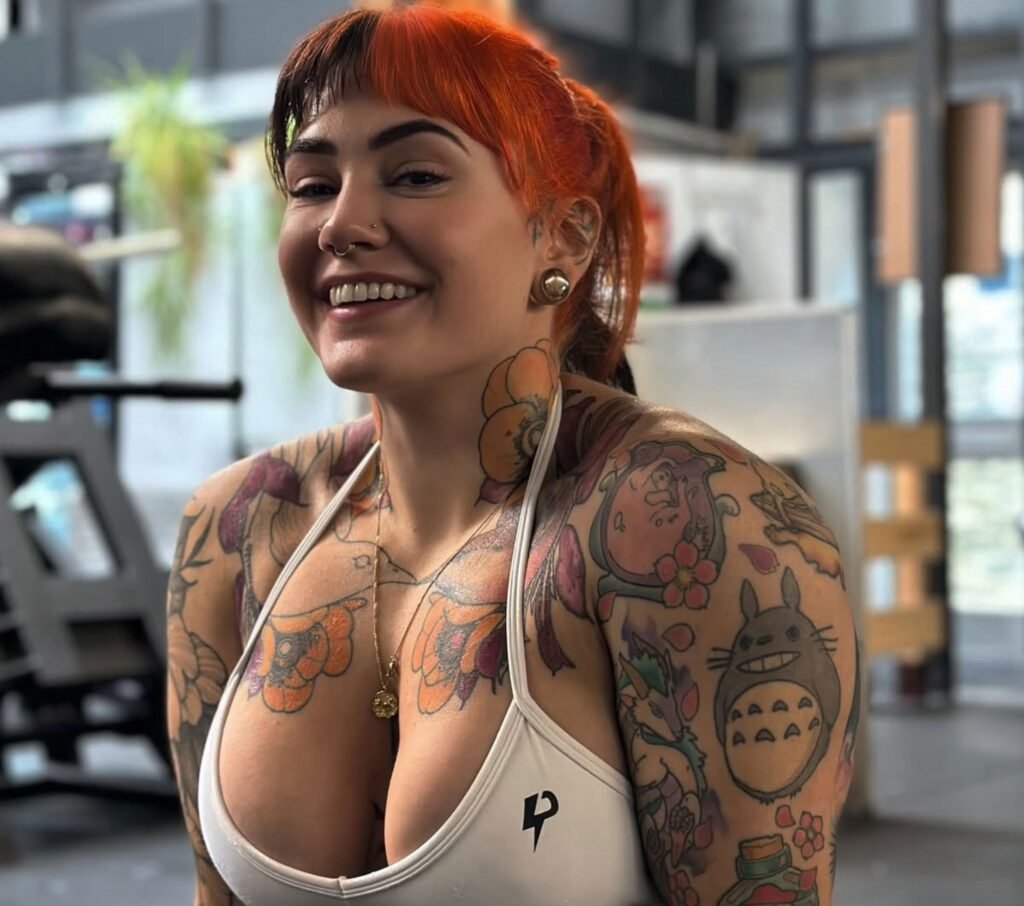
“Being short also means that even a small amount of weight can look more noticeable, but one of the benefits is that I gain muscle quite easily,” she said.
The before-and-afters do numbers online precisely because they break the format.
“They always get so much traction because the difference is huge, even though it isn’t a traditional weight-loss transformation,” she said.
Swapping the mirror for the barbell
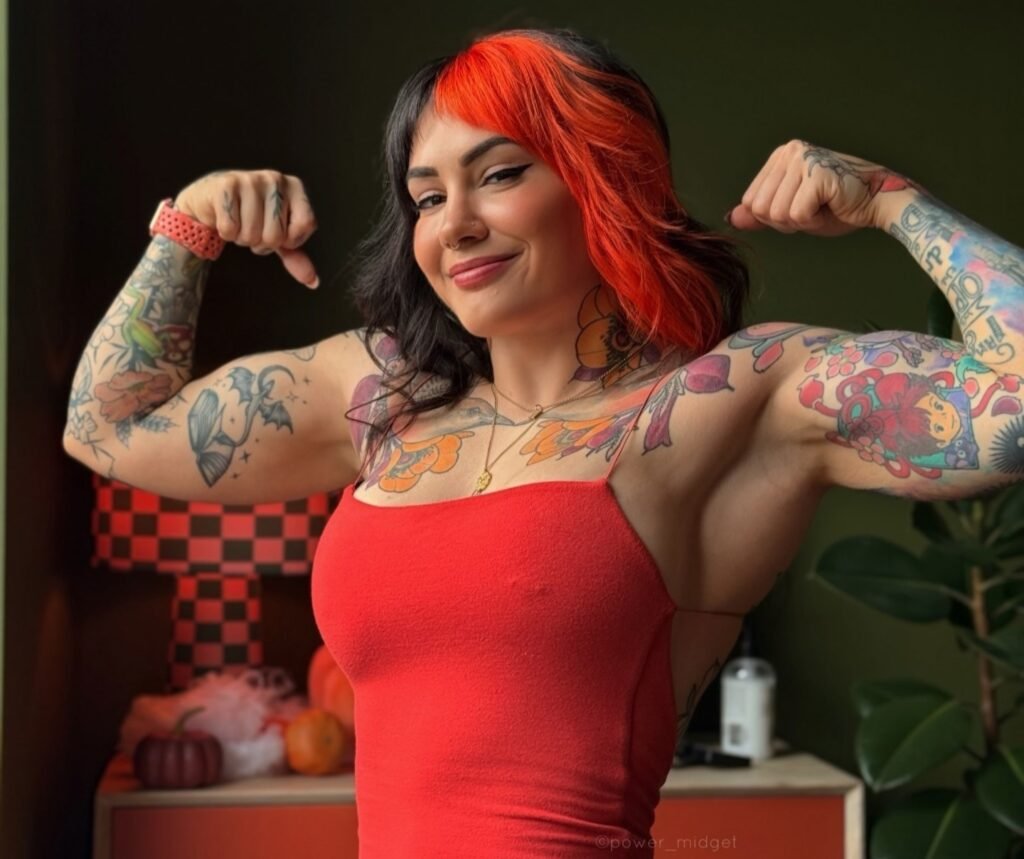
Powerlifting handed her a different scoreboard.
“One of the beauties of powerlifting compared to bodybuilding is that bodybuilding is very aesthetics-based, whereas powerlifting is based on performance,” Peta said.
“I used to have quite bad body image issues, so I like powerlifting because it focuses on how your body performs rather than how it looks.”
She now competes at national level in the under-52kg category, according to her own account, and intends to move up to 57kg.
Deliberately. On purpose. Upwards.
The bit she was scared of
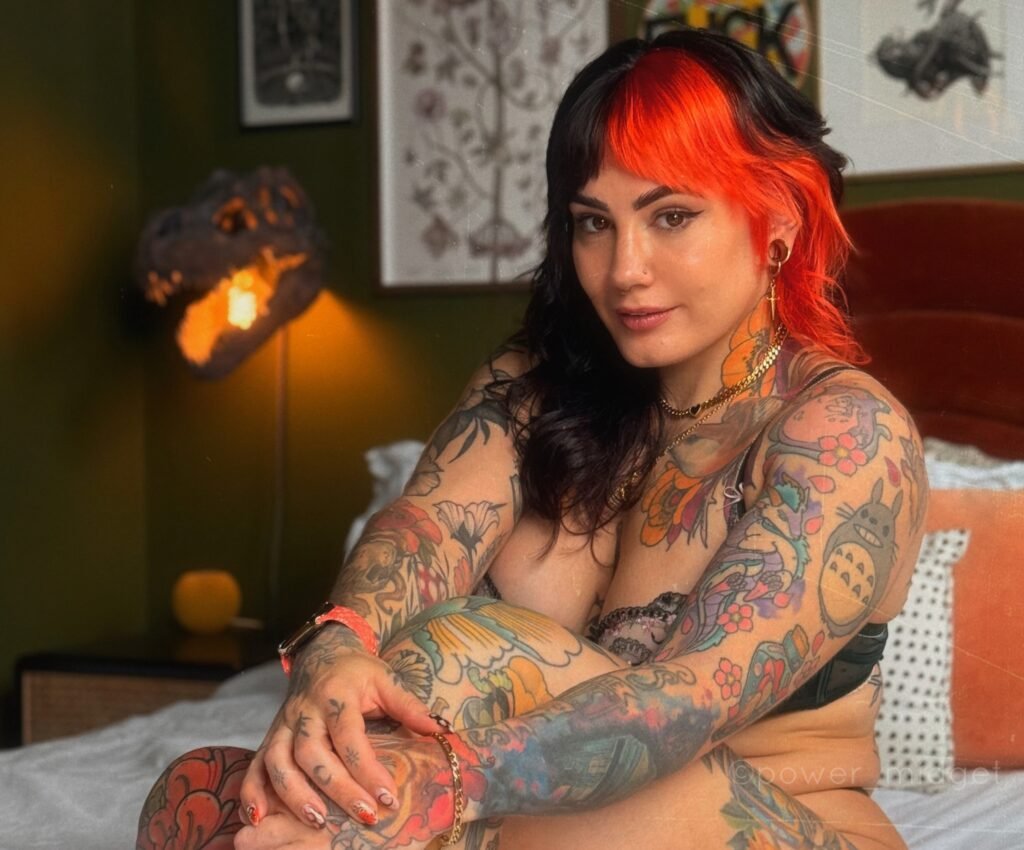
The job was the last thing holding her back. Peta also creates content on OnlyFans, and worried that adding size would cost her.
“It’s only really over the past year that I’ve wanted to commit to bulking and getting bigger,” she said.
“Before that, I got in my head about wanting to stay small and lean all the time and have abs, especially because of my job.”
The market disagreed with her. “But guys actually love it when you’re thicker,” she said.
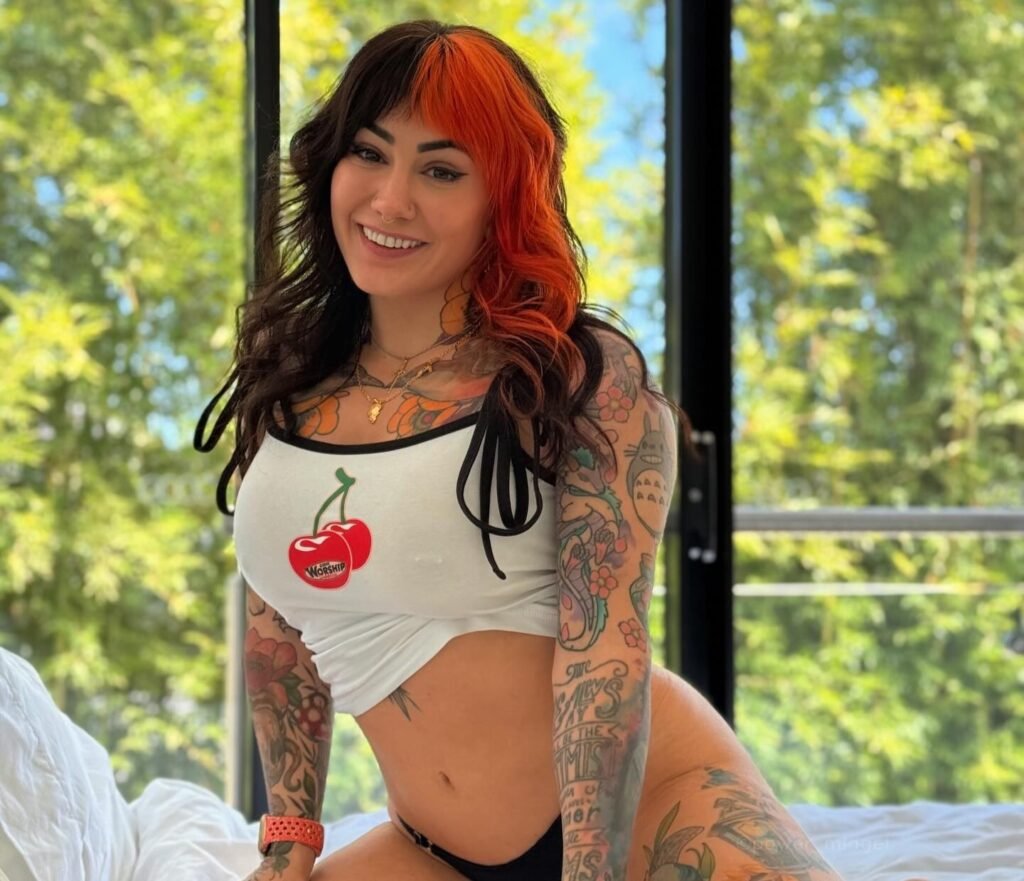
“That got me out of my head a bit. Now I’m like, at the end of the day, I just want to enjoy life and have more balance again.”
Why it matters
The before-and-after is the most reliable engagement format fitness creators have, and it runs on a single assumption: the second photo shows less of you.
Peta’s version works because it violates that rule while still delivering the visual payoff, which is a genuinely rare thing to own in a saturated category.
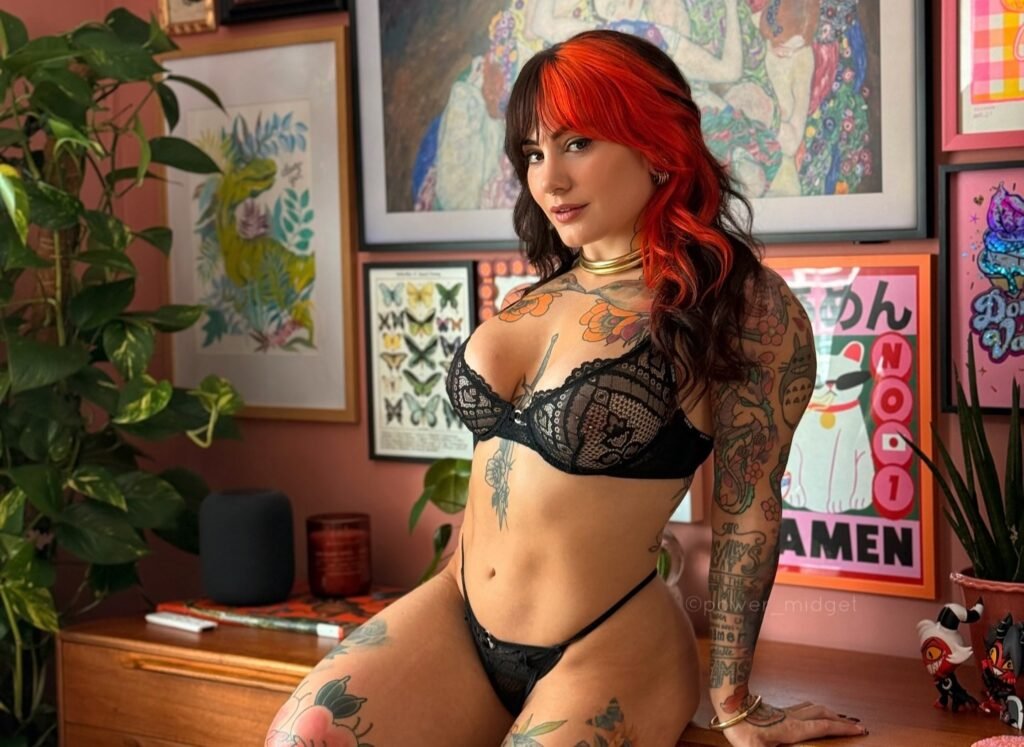
The commercial detail is the more instructive one.
Creators whose income is tied to their appearance carry a real risk when that appearance changes, and most manage it by never changing at all.
Peta assumed her audience wanted her smaller, tested it, and found the opposite.
That gap between what a creator believes their audience wants and what it actually pays for is where a lot of career stagnation lives.
Strength-led women’s fitness content has been building for years, and it’s arriving at a moment when weight-loss content has never been cheaper to produce or easier to ignore.
Recomposition stories cut through partly because they can’t be faked by a camera angle and a fortnight.
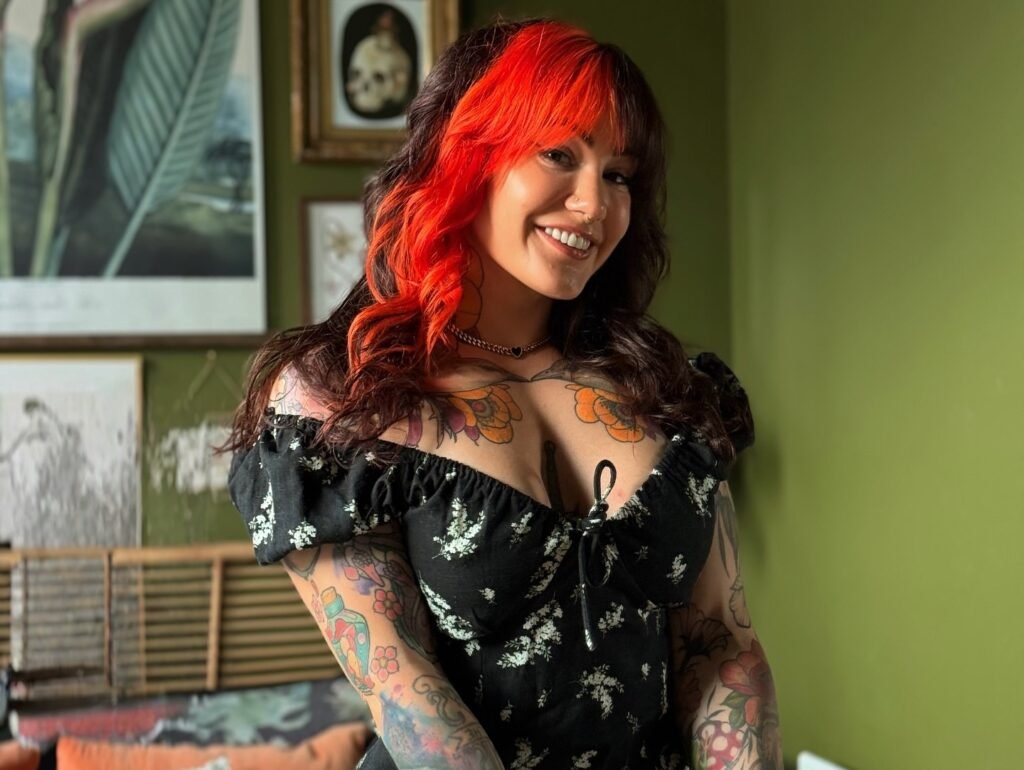
Peta’s stated goal now is the opposite of everything she spent a decade chasing.
“The patriarchy wants you small, frail and fragile, so standing outside of that is really important,” she said.
“Taking up space, being sturdy and fuelling your body is really important.”
The 57kg move will test whether an audience built on transformation content follows a creator up a weight class.
She sounds unbothered either way.
“Now I want to be absolutely yoked. I want to be the embodiment of a muscly dwarf.”
READ MORE: I make $50k a month on OnlyFans – I’d rather scratch my Louis Vuitton than my $10,000 anime FIGURES