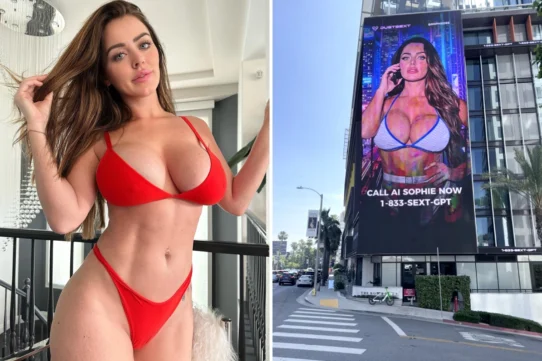

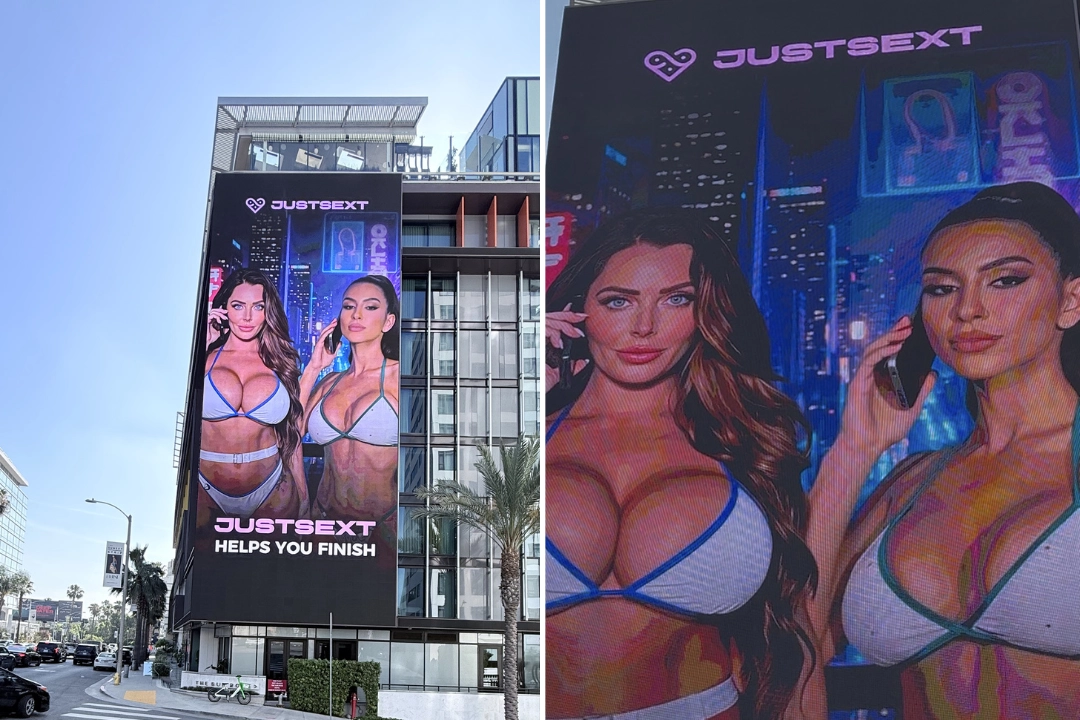

The billboard went up at 9:30am on a Tuesday on Sunset Boulevard.
It was gone before the day was out.
JustSext, a tech company offering AI-generated chat companions modelled on adult stars, had spent months planning the campaign.
READ MORE: Babestation reveals which American fans tip the most – and Texas men are spending BIG
The landlord had signed off the creative weeks in advance. Then real people saw it.
What was on the billboard
Two AI-generated models in bikinis. The company’s branding.
An implicit invitation to engage with what JustSext describes as “AI twins” of major adult performers — digital replicas available to chat with around the clock.
Locals on Sunset Boulevard were not receptive.
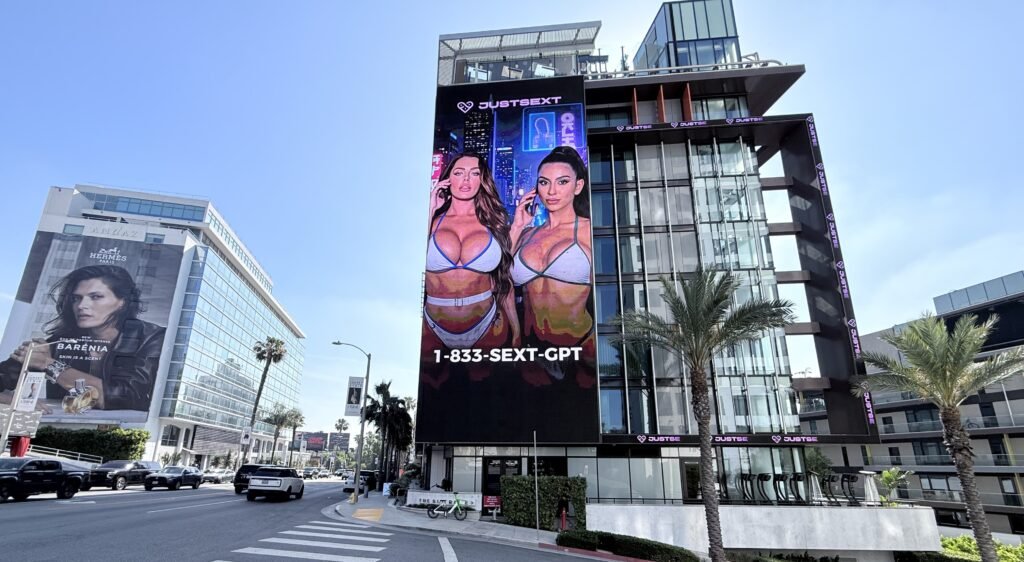
Complaints flooded the landlord. The plug was pulled the same day.
Social media responses ranged from alarmed to apocalyptic.
“Alright, I’ve seen enough — shut it all down.”
“We are progressing, just backwards though.”
“This is actually terrifying.”
“The art didn’t change between approval and install”
Eric Dolan, founder and CEO of JustSext, is not apologising.
“The vendor approved this creative weeks before it went up,” he said.
“It was live for less than a day before it came down — the art didn’t change between approval and install. What changed was that real people saw it.”
He places the backlash in a longer historical context.
“You’d think in 2026, with everyone in the media and how sex usually leads the tip of the spear on innovation and technology, it wouldn’t be so shocking.
The internet, VHS, webcams — all of these became affordable and viable because of this industry. I think we forget this and take it for granted.”
It’s a well-worn argument. It also happens to be largely accurate, which is part of what makes it so irritating to the people who disagree with it.
The takedown made it bigger
The billboard is gone. The platform is not.
JustSext broke its own payment system on launch day — too many people trying to spend money simultaneously.
Within 48 hours of the controversy, a wave of paying customers had arrived. Users were spending hours talking to the AI.
Demand surged in direct proportion to the outrage.
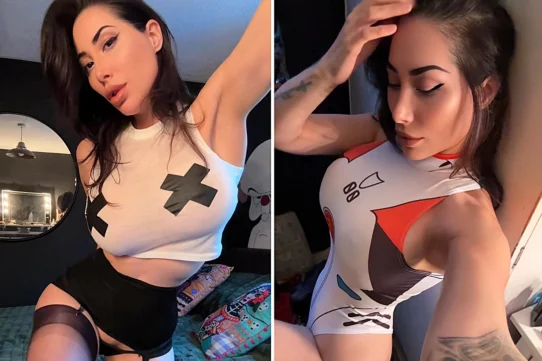
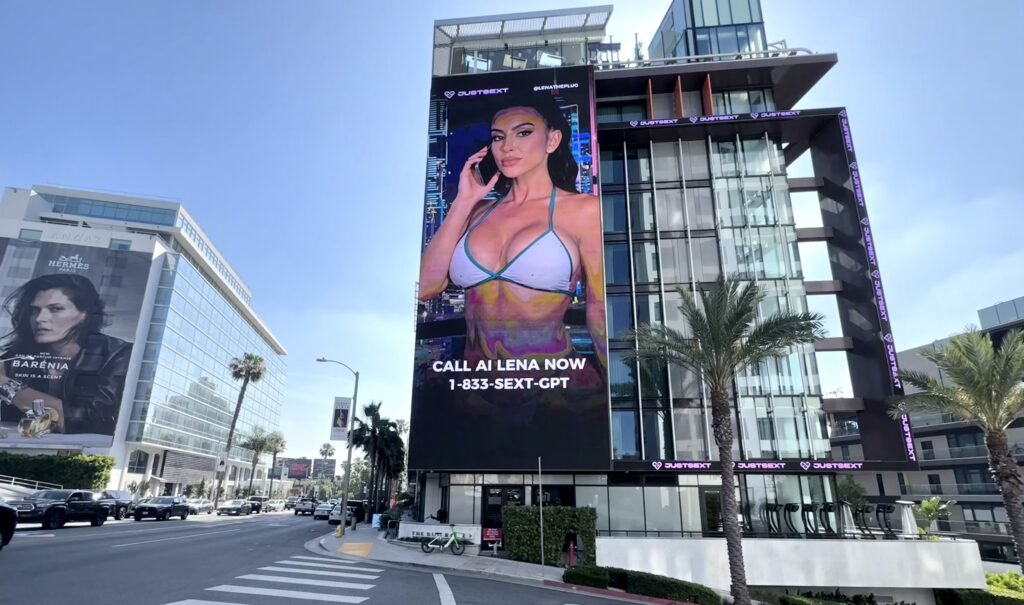
Sophie Dee and Lena The Plug have already signed up and approved their own AI versions.
The company says its model is built around direct partnerships with performers, giving them control over their digital replicas.
“We’re one of the most ethically structured players in this entire space,” Dolan said.
“If our billboard gets pulled in 24 hours, imagine what happens to everyone doing it without the guardrails.
The irony is that the takedown mostly punishes the companies trying to do this the right way.”
A follow-up campaign is already in development. He says it will push further.
Why it matters
The JustSext billboard story is not really about bikinis on Sunset Boulevard. It’s about a category of technology — AI companions, digital replicas, synthetic intimacy — expanding faster than public discourse, advertising standards, or regulation can keep pace with.
Dolan’s argument that prohibition drives the industry underground rather than eliminating it is one regulators in multiple countries are currently failing to resolve.
The billboard lasted less than a day. The underlying platform, and the dozens of competitors building the same thing with fewer stated guardrails, are not going anywhere.
For creators in the adult space and the broader creator economy, the question of AI replicas — who controls them, who profits, and what consent looks like — is arriving as a practical business issue, not a theoretical one.
Lena The Plug approving her own AI twin is a data point the industry will be watching closely.
What’s next
JustSext is planning its next campaign with the explicit intention of going further.
Whether LA’s billboard landscape — or its regulators — are ready for that is, based on this week’s evidence, genuinely uncertain.
The company has already proven that removal is its own form of marketing.