


Cate Langley wanted a sequin dress for her birthday.
Shein sent her a picture of one.
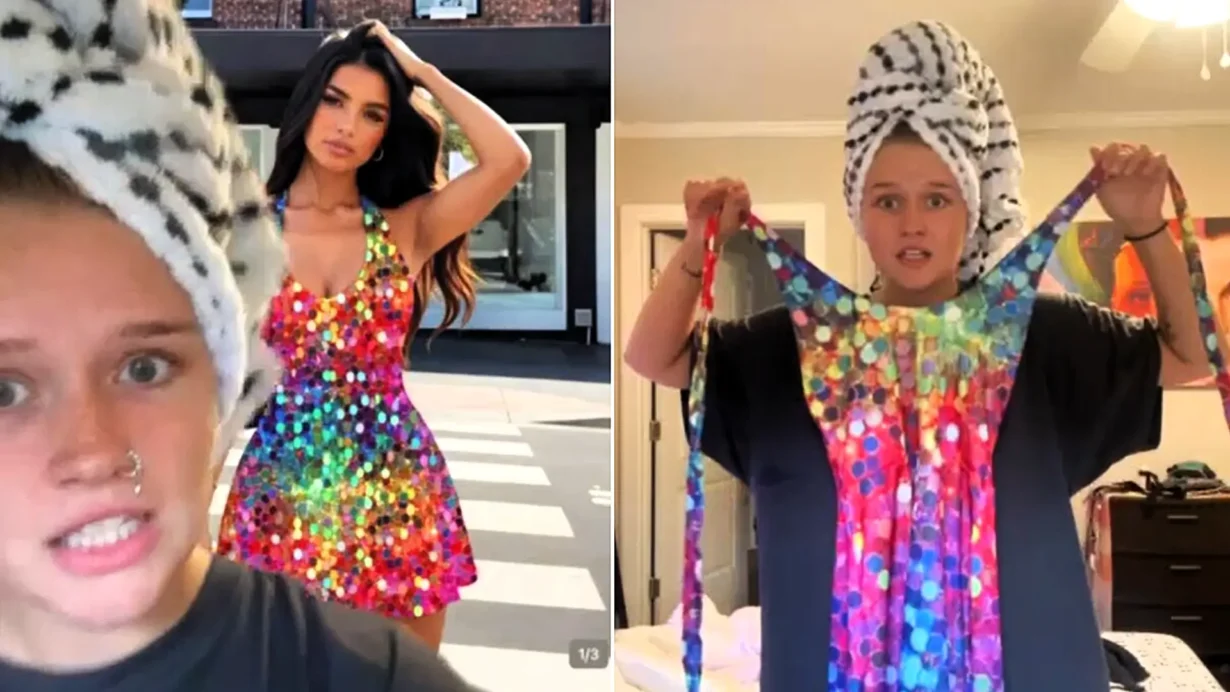
The 24-year-old server and aspiring content creator, from Mobile, Alabama, paid around £13 ($17.95) for a colourful halter neck mini dress that appeared, on the website, to be covered in bright sequins.
When the parcel landed on July 25, the sparkles turned out to be printed flat onto the fabric.
“The dress genuinely looked like they had screenshot the picture of the dress I wanted, and put it onto a random dress,” Cate told CreatorZine.

“There were no sequins, no nothing. It was just a picture of sequins.”
Her one-word review: “preposterous.”
‘The dress 100% looked photoshopped’
Cate admits the warning signs were there.
“Here’s where my naivety comes in, the dress 100% looked photoshopped onto the model,” she said.
“But I’ve never been essentially scammed by the pictures on Shein, so I thought that I would trust the process. That was my mistake.”
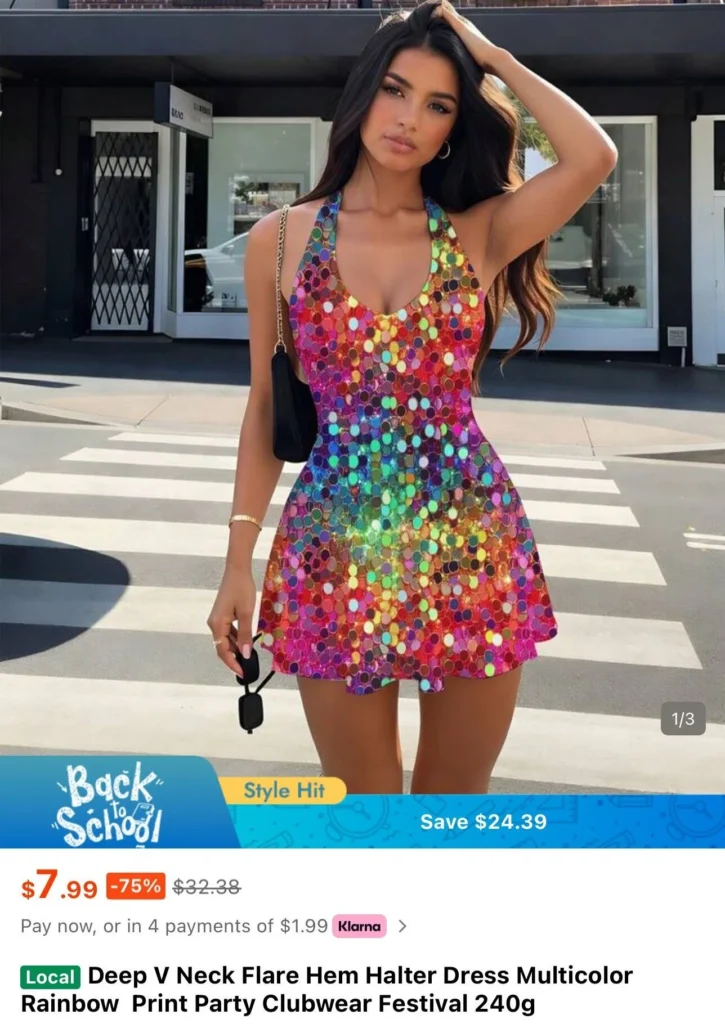
The listing described the item as a “deep, v neck, flare hem halter dress, rainbow print, party, clubwear, festival.”
It had no customer reviews, which Cate acknowledges most shoppers would treat as a red flag.
Her logic was simpler. “Someone has to be the first to review something, so why not be the guinea pig?”
She was more resigned than devastated when she opened the box.
A little annoyed, she says, because it could have been a fantastic birthday dress.
Her roommate burst out laughing.
Five million views and one very blunt comment section
Cate posted the fail on TikTok, where the clip has racked up more than five million views and the full spectrum of internet sympathy, which is to say almost none.
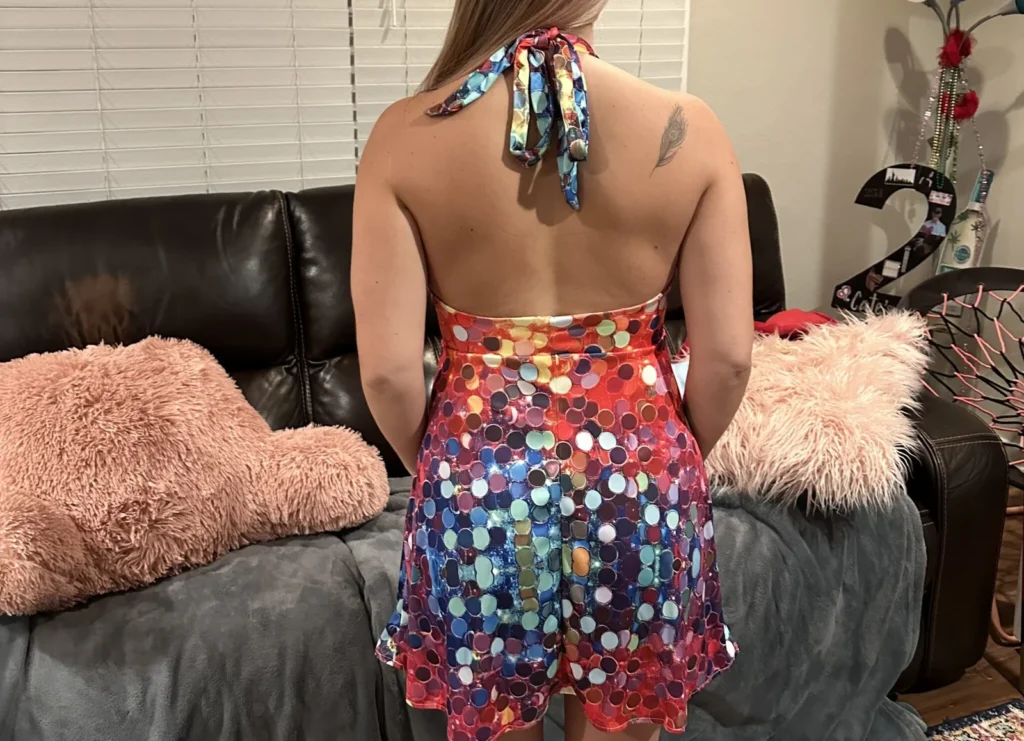
“The reactions included people calling me an idiot for not recognising how AI the picture was, people saying the dress was ugly in the first place, people telling me I could DIY sequins on it, and people hating on me for buying from Shein in the first place,” she said.
“Making fun of me was expected, hating on me seems a bit ridiculous, but oh well.”
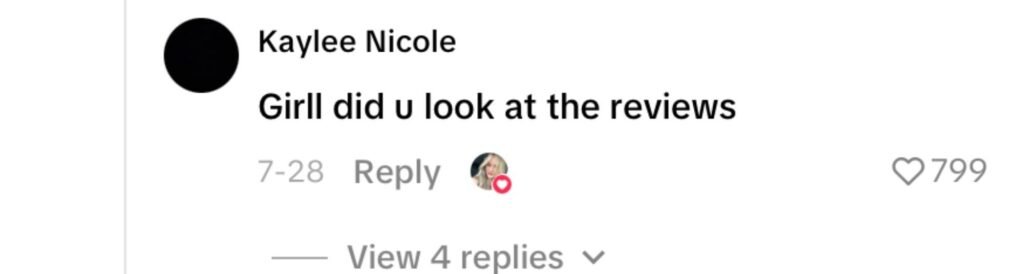
One commenter asked: “Girl, did you look at the reviews?”
Another wrote: “You thought you were getting all those sequins for $2.50?”
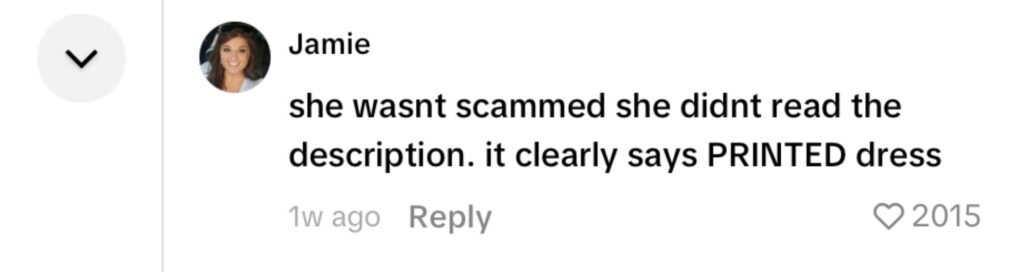
A third insisted she hadn’t been scammed at all: “It clearly says printed dress.”
The dress itself is heading to a thrift store rather than back to Shein.
“I’m a master procrastinator so I doubt I will return it,” Cate said.
“There has to be someone out there that will like the dress. Or maybe not. It’s hideous so who knows?”
Reformed shopper? Not quite.
“Sometimes you need a quick and cheap option and Shein is that,” she said.
“I will do my best to use my brain a little better next time. No promises though.”
Why It Matters
Fashion fails remain one of the most reliable engines in short-form content, and Cate’s clip is a textbook example of why: a £13 mistake converted into five million views, a comment section doing half the entertainment work, and an aspiring creator suddenly holding a proof of concept.
The expectation-versus-reality format costs nothing to produce and travels further than most polished hauls. It also lands as fast fashion platforms face growing scrutiny over edited and AI-assisted product imagery, with creator content increasingly doing the consumer-watchdog work that reviews used to.
Whether Cate builds on the moment or the algorithm moves on, one lucky thrift store shopper in Alabama is about to inherit a picture of sequins.
Shein has been contacted for comment.
READ MORE: Duolingo ENRAGES Brits by putting American flag next to English and calling football ‘soccer’