


I’ve had to do in the last three years.”
The change is specific.
A boy who once turned up sulking over a playground fall-out now turns up frightened.
“Now I’ve got children that don’t want to come into training because they’ve seen something online that has scared them, upset them, or told them they’re not good enough,” he says.
He didn’t sign up for this part.
“I never considered when I started that coaching would be about more than just football.”
The numbers behind it
Paul’s experience isn’t a one-off.
Research commissioned by EE found 42% of boys aged 11 to 16 regularly meet content telling them to “man up” or bury their feelings.
Seven in ten say the pressure online leaves them overwhelmed.
And football is catching the overflow.
Of the coaches surveyed, 78% said a child had confided in them about something with nothing to do with football, and 95% said looking after players’ emotional wellbeing was now a growing part of the job.
The bloke on the algorithm
Paul understands the pull, because he can picture being on the other end of it.
“When I was 13, if someone popped up on my algorithm who looked quite cool and muscular and told me I needed to go to the gym, I’m probably going to listen to that person,” he says.
His answer is quieter than the content competing for the same attention.
“We should highlight that person and say this is probably not the right thing for you to be doing and let’s focus on you being happy first.”
Mostly he keeps it simple. “The biggest thing I tell children is, ‘You’ll be fine. You’ll be alright’.”
Missed penalty, bad day at school, rough week. Sometimes that’s the whole intervention.
Why the pitch works
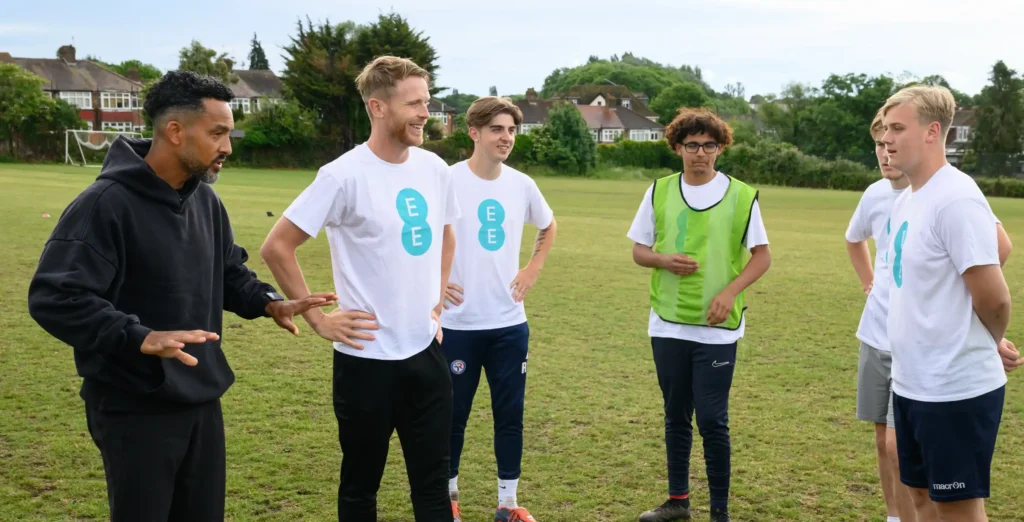
Professor Ben Hine, who teaches applied psychology at the University of West London, says football has quietly become one of the few places boys feel safe enough to talk.
“Sport creates a sense of belonging and community that allows boys to open up in ways they might not elsewhere,” he says.
“The fact that so many boys are speaking to coaches shows they are yearning for positive male role models. The challenge is making sure those role models are there.”
Parents seem to agree. EE’s research found 71% of parents whose sons play sport think a coach holds as much sway over their understanding of masculinity as the internet, or more. Just 14% backed the internet.
The campaign and the famous dad
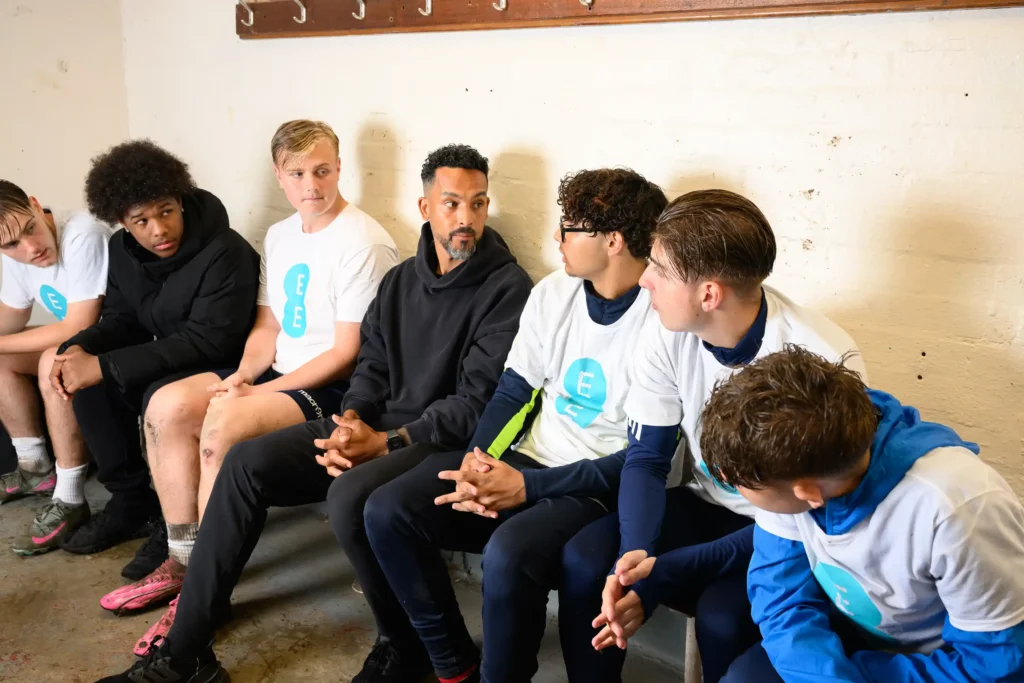
The figures arrive alongside Yes Boys, an EE campaign built around football as a counterweight to harmful online influence.
It comes with a Mentor Badge scheme aimed at giving parents, coaches and young people the tools to handle growing up online.
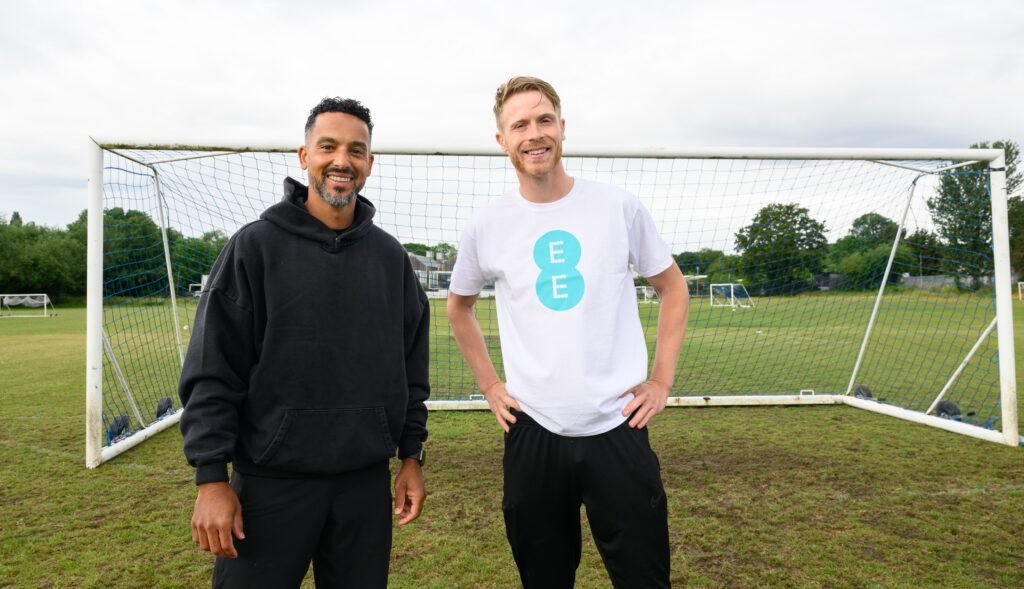
Former England forward Theo Walcott, dad to two young boys, has put his name to it.
“As a dad, I’m even more aware of the pressures boys face, especially online,” he says.
“Football gives boys a space to express themselves, build resilience and learn from positive role models.”
Why It Matters

The story isn’t really about football. It’s about who gets to shape a teenage boy’s idea of himself, and right now that contest pits a volunteer on a cold pitch against a stranger optimised by an algorithm to hold attention.
The influencer economy has spent years working out how to reach exactly this audience.
The people pushing back are largely unpaid and turn up on Saturday mornings.
It lands in a wider reckoning over online masculinity content and the men who profit from selling it to boys, a conversation that has moved from think-pieces into schools, living rooms and now training grounds.
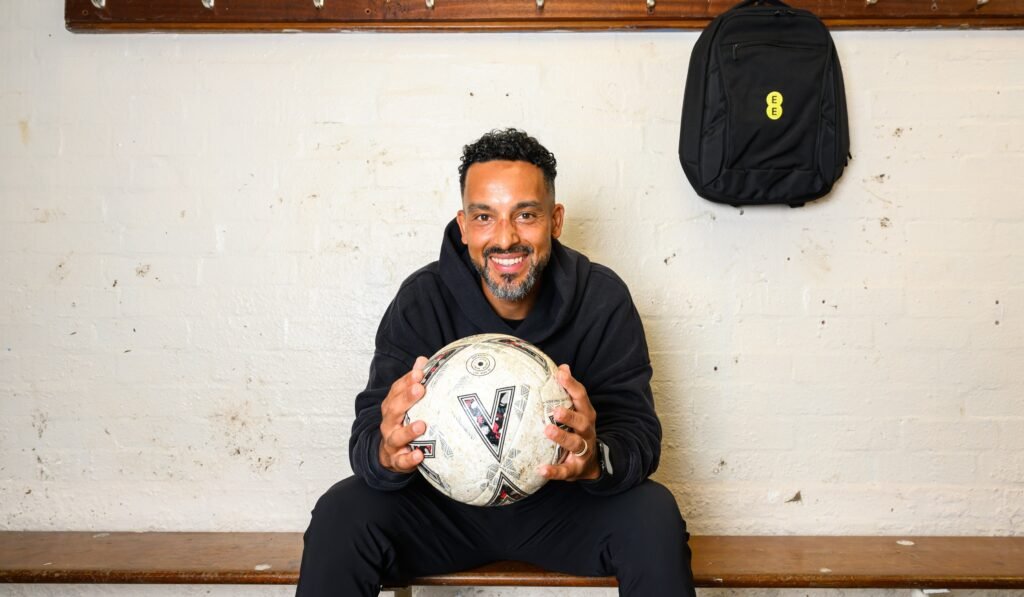
Yes Boys launches before this summer’s tournament across the USA, Canada and Mexico, which kicks off on 11 June, when a lot of boys will be watching football very closely.
Hine, for one, is hoping more people follow Paul onto the touchline.
“You don’t need to be a registered therapist to change a child’s life,” he says.
Most of the time, he reckons, it’s just about showing up.
READ MORE: My Boyfriend Got Dropped from England’s World Cup Squad – I Took Him to Cannes Instead