

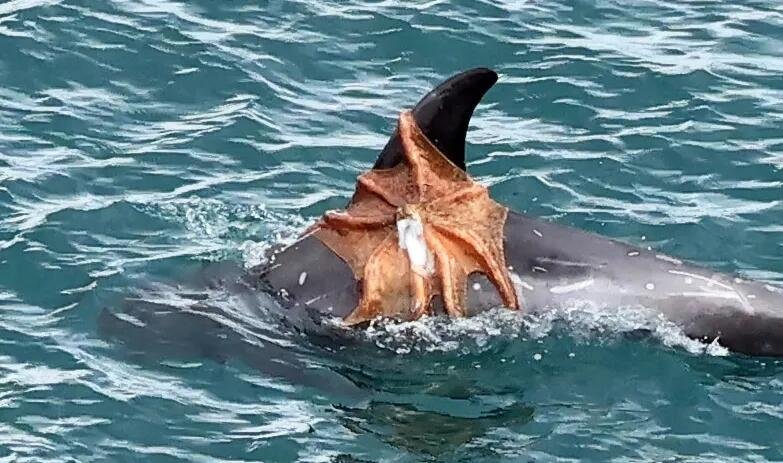

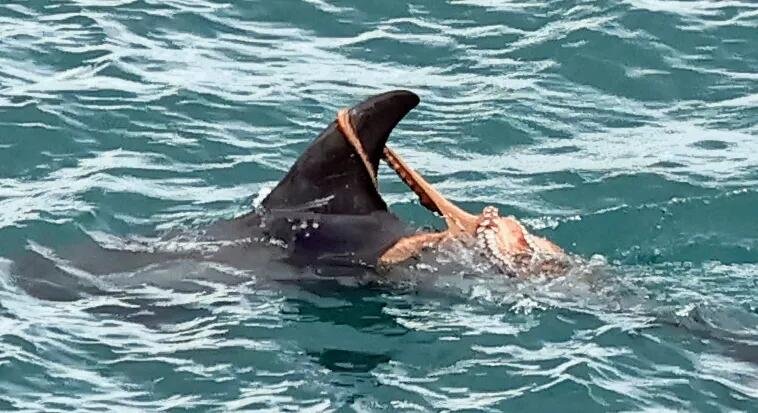
An octopus grabbed a dolphin by the fin off the Devon coast and held on.
The photographs are extraordinary on their own.
They are also a small piece of a much larger puzzle that has kept marine scientists in the Southwest busy for over a year.
The encounter happened off Berry Head.
A common octopus, arms wrapped around the dorsal fin of a Risso’s dolphin, apparently hitching a lift.
Risso’s are among the least understood cetaceans in British waters and they feed mainly on squid and other cephalopods, as reported by Creatorzine.
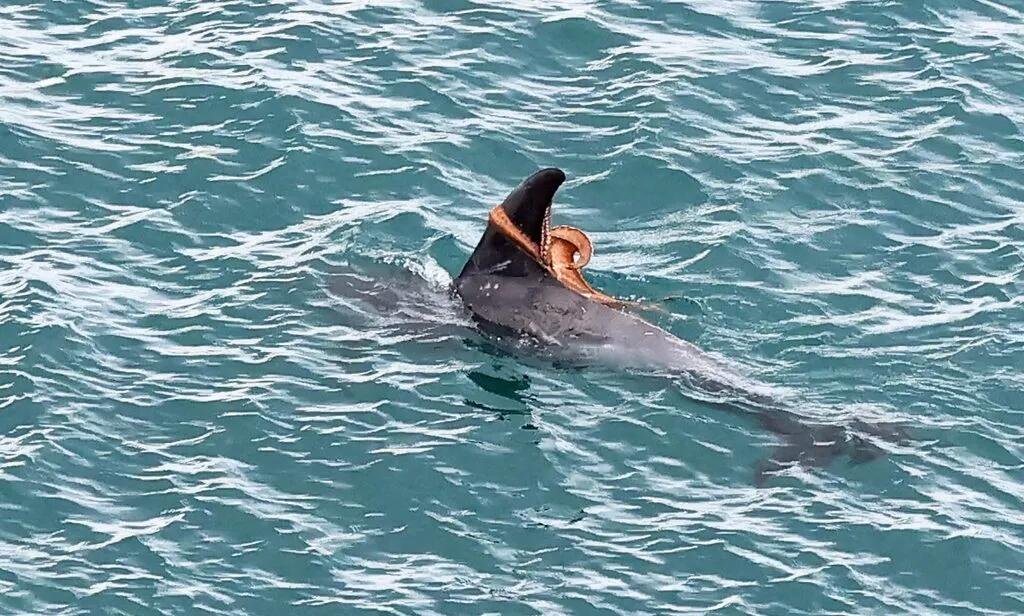
So the octopus may have been doing something braver than commuting.
An octopus bloom nobody saw coming
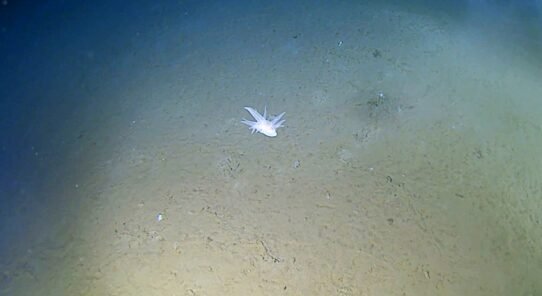
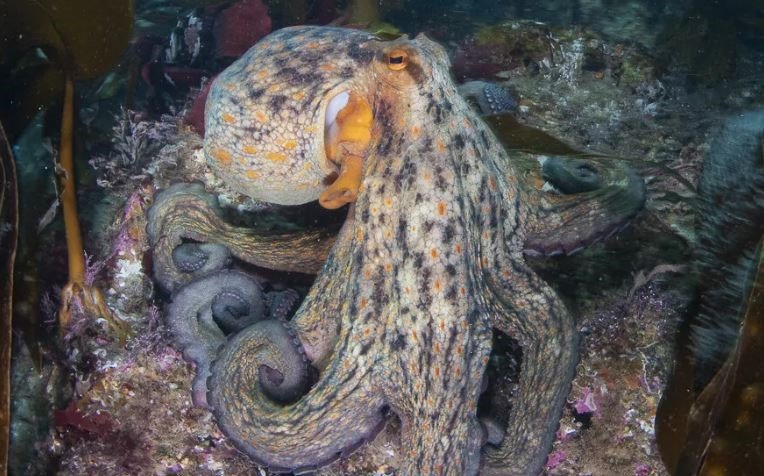
Common octopus belong in UK waters. They are just rarely here in any quantity.
The past year broke that pattern so completely that researchers now describe it as the largest bloom recorded in at least 75 years.
The Marine Biological Association surveyed fishermen, divers and snorkellers and found the 2025 bloom exceptional in both size and geographical spread.
Evidence points to breeding grounds near the Channel Islands and northern France, with currents carrying young octopuses into British waters.
Warmer sea temperatures appear to have done the rest.
Which is the part that worries people. If warm water delivered this bloom, warmer water delivers more of them.
What it means for Britain’s most mysterious dolphin
Researchers are now examining whether the glut of octopus has opened up new feeding opportunities for Risso’s dolphins.
Josh Symes, an MSc researcher at the University of Exeter, runs photo identification work on the population across the region, and the Berry Head images feed straight into it.
“These photographs offer a fascinating glimpse into the feeding ecology of Risso’s dolphins and the changing marine environment around our coasts,” he said.
“Risso’s dolphins are closely associated with cephalopods, and sightings like this help us understand how they are responding to changing prey availability.”
The photographs did not come from a research vessel.
Volunteers along the coast supplied them, and that is now a working part of the method.
“The images also highlight the value of citizen science, as observations from volunteers are helping us build a clearer picture of marine wildlife across the Southwest,” Symes said.
One species moves, everything shifts
Dr Bryce Stewart, Senior Research Fellow at the Marine Biological Association, said the continued octopus reports matter well beyond the octopus.

“Observations of interactions between Risso’s dolphins and common octopus help to demonstrate how shifts in the abundance of a species can ripple through the wider ecosystem,” he said.
“It’s a powerful reminder of how interconnected our marine environment is and why we need to continue studying it.”
The State of South-West Seas in 2025 report, from South-West Marine Ecosystems, called it an exceptional year for change in the region’s marine environment.
It described the common octopus ‘outburst’ as ‘outstanding’ and noted that the numbers had become a significant feature of the Southwest food web.
The same report logged a continuing rise in effort-corrected Risso’s dolphin sightings, probably linked to more cuttlefish and octopus in coastal waters.
The report tied the wider changes to warming seas and marine heatwave conditions, with species shifting their range and inshore fish, seabed and coastal wildlife communities altering alongside them.
Separate research led by University of Exeter visiting fellow Nicola Hodgins, of the marine charity Mara, found that Risso’s dolphins around the British Isles form a single genetically distinct population.
One population, in other words, responding to a food supply that has just been rearranged underneath it.
Why It Matters
The Berry Head photographs exist because someone with a camera was in the right place and thought to pass them on.
That is now infrastructure.
Marine research in the Southwest leans on divers, snorkellers, fishermen and holidaymakers with decent phones, and the resulting images travel considerably further than the papers they end up supporting.
For anyone making content about the natural world, the ceiling has moved.
A single well-timed photograph can feed a genetics project and pull a few million views in the same week, and the second thing is usually what makes anyone care about the first.
Wildlife content has become one of the steadier performers online, and the traffic runs both ways now, with institutions actively courting the amateurs who tend to spot things first.
British marine science, short on boats and long on coastline, has quietly become one of the bigger winners.
Whether the octopus stay is the question everyone is waiting on.
If they do, Risso’s dolphins in the Southwest may become a great deal easier to find, and a great deal less mysterious.
If they don’t, someone with a camera will probably notice that first as well.