

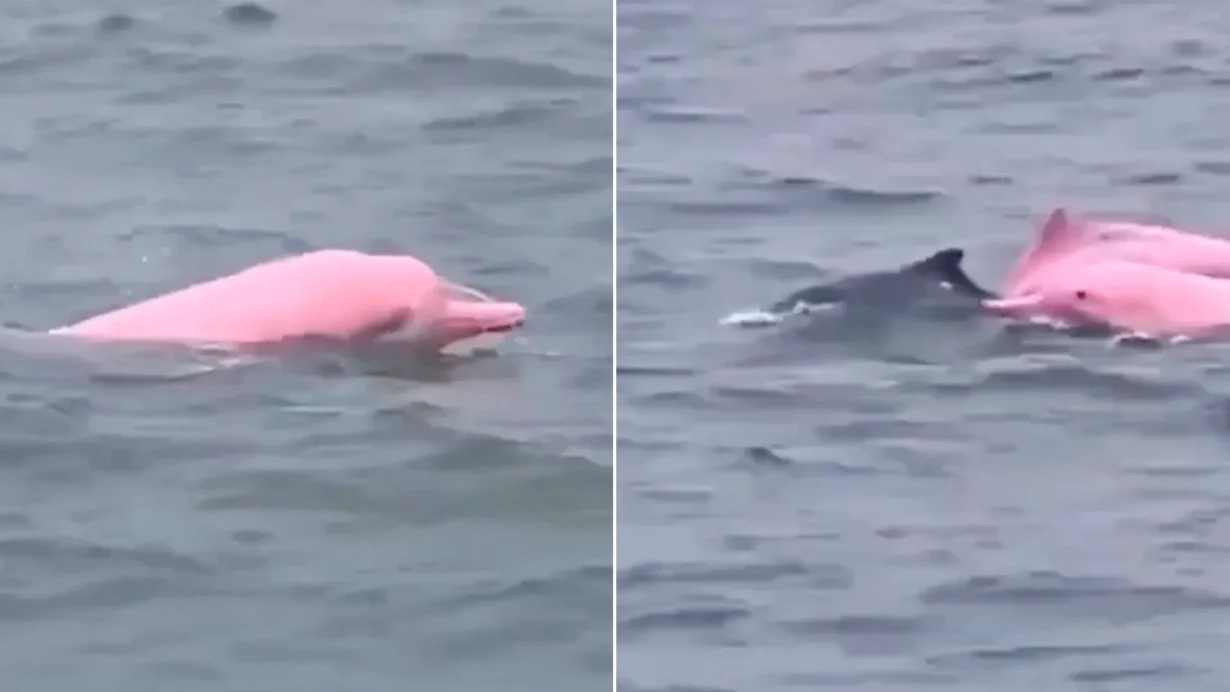

Two dolphins the colour of bubblegum surfaced off a beach in Oman last week, and nobody watching had seen anything like it.
Neither, it turns out, had Oman.
Pink in the pod
The animals appeared off Qantab Beach, near Muscat, on 15 October.
READ MORE: My husband Ethan Klein had a six-month affair – now his own H3 Podcast crew are DISGUSTED
At least two pink dolphins swam close to shore alongside grey members of their pod, surfacing in the shallows while beachgoers filmed from the sand.
The footage spread fast online. Onlookers said the dolphins looked healthy and lively, which is more than can be said for most things that go viral.
Reports suggest it is the first time pink dolphins have appeared in Omani waters, as reported by Creatorzine.
Real footage, real dolphins
Aida al Jabri, a marine environment specialist at Oman’s Environment Authority, confirmed the video is genuine.
A local specialist identified the animals as Risso’s dolphins (Grampus griseus), a species that fades dramatically with age.
Al Jabri said a build-up of scars can leave them pale.
Marine experts still describe the colour as unusual for coastal waters, and nobody has offered a full explanation.
No official statement on the exact cause has followed.
How a dolphin wears its history
Risso’s dolphins start life dark grey or brown.
They lighten over the years until the oldest adults can look almost white.
Most of that comes from scarring. Other Risso’s rake each other with their teeth during social encounters, and squid and other prey leave marks of their own.
The white scars never fade, so the skin becomes a permanent record of every scrap and every dinner.
Scientists use this. The paler and more scarred the animal, the older it probably is.
Not the Amazon
Most people picture pink dolphins in the Amazon, where river dolphins famously wear the shade.
Marine species can turn a similar colour through blood flow, age or genetics.
Spotting it off the Arabian coast is another matter entirely.
Why It Matters
Holidaymakers with phones now handle a fair share of the wildlife documentation that once needed a research vessel.
This clip reached a global audience before any scientist had weighed in, and the explanation arrived second.
For creators, nature footage remains one of the few genres that travels everywhere, though the experts usually turn up afterwards to complicate it.
Unexpected animal encounters filmed by tourists have become a reliable source of viral content, with marine sightings among the most shared.
Whether Oman’s Environment Authority follows up with a formal identification remains to be seen.
For now, the pod is somewhere off Muscat. So are a lot of tourists with their phones out.
READ MORE: I pose in lingerie for 2.1m followers – but I haven’t had sex in SEVEN years