
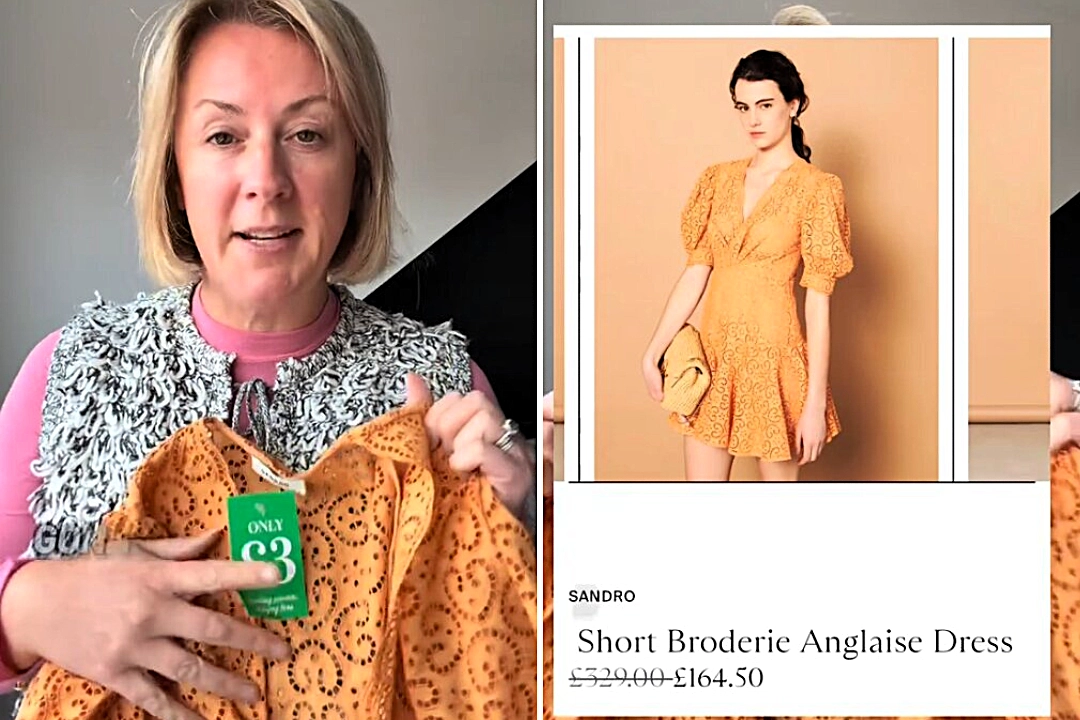

A charity shop dress with a £3 sticker turned out to be Sandro.
Online, the same one sells for £329.
Helen Abbot, 45, found it while browsing her local shop in Worcester.
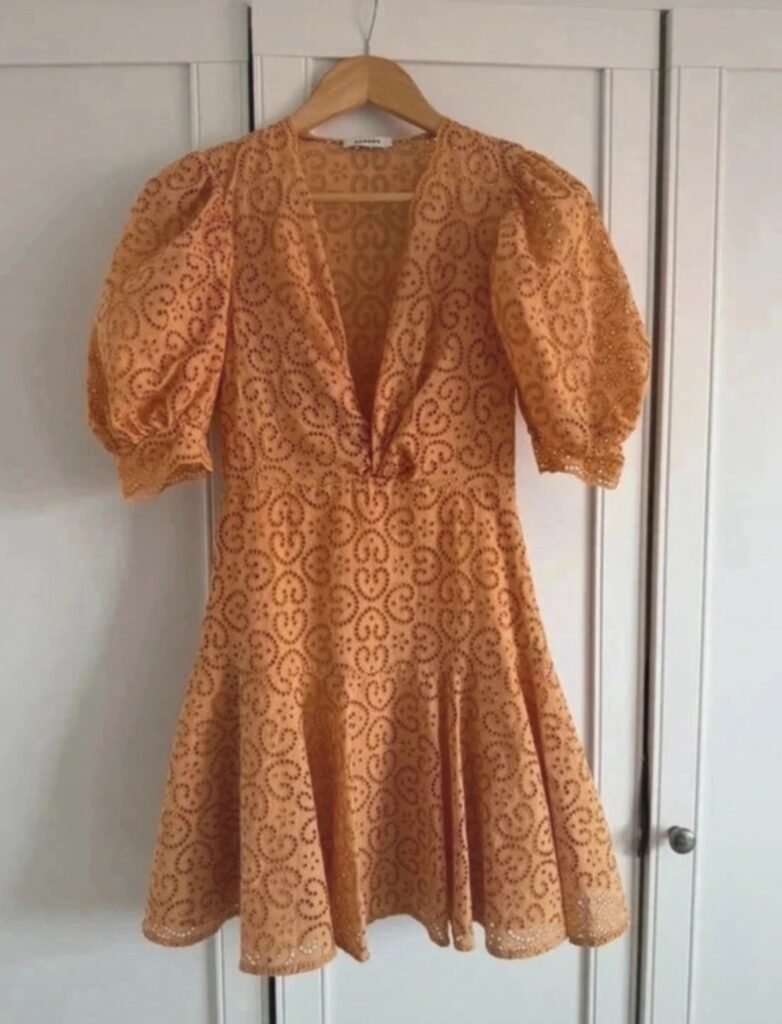
The piece, a Sandro Short Broderie Anglaise Dress in orange, currently goes for £329 on luxury resale sites.
She paid £3.
The £25 haul
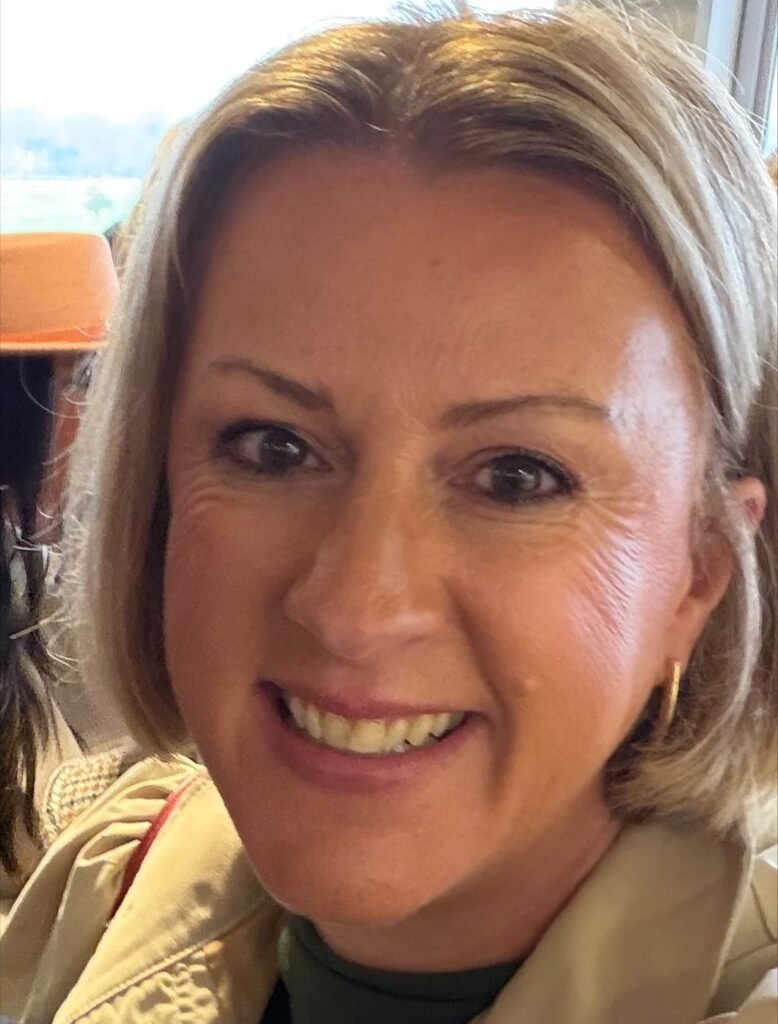
The whole trip came to £25, and Helen filmed it for TikTok, where she regularly posts her charity shop finds.
The clip has passed 1,700 views.
Alongside the Sandro, the haul included pieces from Alice & Olivia, Harley Davidson and New Balance.
“This is a brand I have heard people speak about, never actually seen it in any of the shops where I live,” Helen told Creatorzine.
“It’s a really pretty broderie; orange, a nice summery colour.”
She says part of the thrill was wondering who would donate it in the first place.
“Finding the dress was definitely exciting, especially realizing it was a genuine designer piece.
I was also curious wondering how and who donated such an expensive dress in immaculate condition.”
Helen, a travel agent, called it “an absolute bargain”.
The comments agreed. “Love a charity shop,” wrote one.

Another said: “Those dresses, amazing finds!”
A third went for: “Love the yellow [orange] dress, you’ve got some right bargains.”

This isn’t her first lucky grab. She previously picked up a designer dress worth almost £1,000 for £7.
How to spot a designer label
Helen says the trick is in the label itself.
“Designer or higher-end brands often have labels that look very different from typical high-street ones,” she said.
“For example, they may be more minimal in design, use higher-quality fabric, or be attached with only a small stitch in each corner, rather than being stitched all the way around.”
High street labels, she adds, are usually fully stitched and standardised. Designer ones aren’t.
Why it matters
Charity shop hauls have become one of the most reliable corners of TikTok.
Creators who can spot what’s actually worth grabbing, and explain how they did it, are holding audiences that bigger fashion accounts often can’t.
It feeds a wider shift. As resale platforms grow and second-hand becomes the default for younger shoppers, the people who know what to look for become genuinely useful.
Helen is one of them. The next haul could be a £7 dress or a £700 one. That’s sort of the point.