
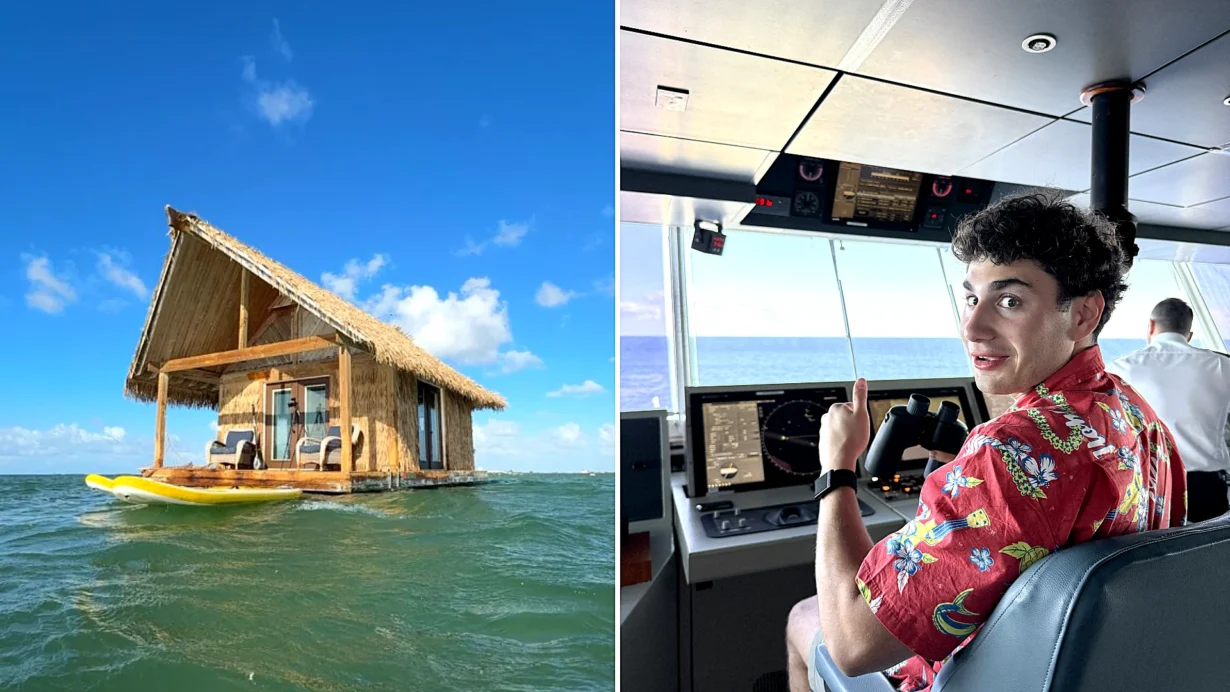

Rubén Holgado flew ten hours from Barcelona to Miami, drove five more to Key West, then boarded a boat to a one-room box anchored alone in the open sea.
The captain who dropped him off left him with one piece of advice.
Watch out for the sharks.
Closer to Cuba than to Miami
The 23-year-old Spanish content creator calls it “the most isolated hotel in the world,” and on the evidence he might be right.
The place is Tiki Suites, anchored less than an hour by boat from Key West, the southernmost point of the continental United States.
“We are closer to Cuba than to Miami right now, literally in the middle of nowhere,” he says in the clip.
He has 376,000 TikTok followers. His video of the stay pulled 3.6 million views.
The hotel that’s legally a boat
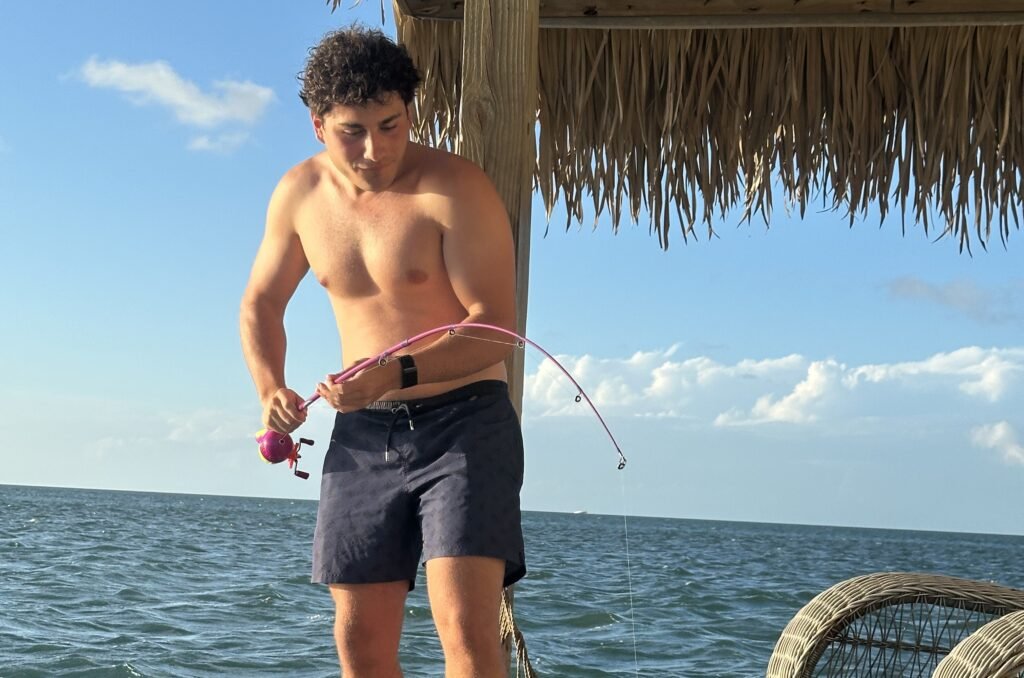
Guests climb a small ladder to board. The structure doubles as a boat, motor and all, and it shifts gently with the wind, so the 360-degree view never quite settles.
Inside there’s a large bed facing the ocean and a bathroom barely big enough to turn around in, with a generator and air conditioning doing the heavy lifting.
The paperwork surprised him. Because the rental counts legally as a vessel rather than a building, he had to get a boating licence before the trip and sign documents accepting the risks of staying somewhere this remote.
Getting there left no room for improvisation.
“Swimming there would have been completely unrealistic because I was travelling with camera equipment, luggage and fishing gear,” he told Creatorzine.
The sharks, and a copy of Titanic
The captain’s warning was not only about wildlife.
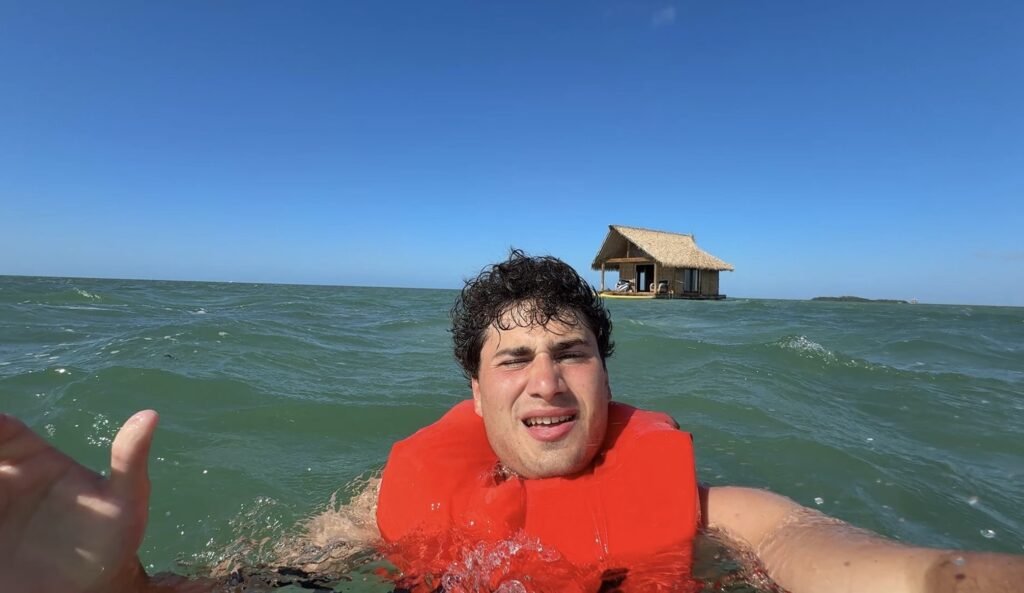
He told Rubén to stay close because the sea was rough and the wind was high, and, in his words, “it would not have been the first time someone needed rescuing.”
“He also warned me about the sharks,” Rubén says.
“Key West is known for having a large shark population, which definitely added to the feeling of adventure.”
For all the remoteness, the place is more comfortable than it looks.
There’s air conditioning and decent facilities, and a TV loaded with a DVD of Titanic.
“Which I found quite funny,” he says, “given that you’re surrounded by open water.”
Boats pass in the distance through the day.
Pelicans and other seabirds drop in. It is not cheap, either.
“It costs a kidney,” he jokes.
The night the storm came
Daily life out here bears little resemblance to a normal hotel.
You arrive with your own food and supplies, and you sort yourself out.
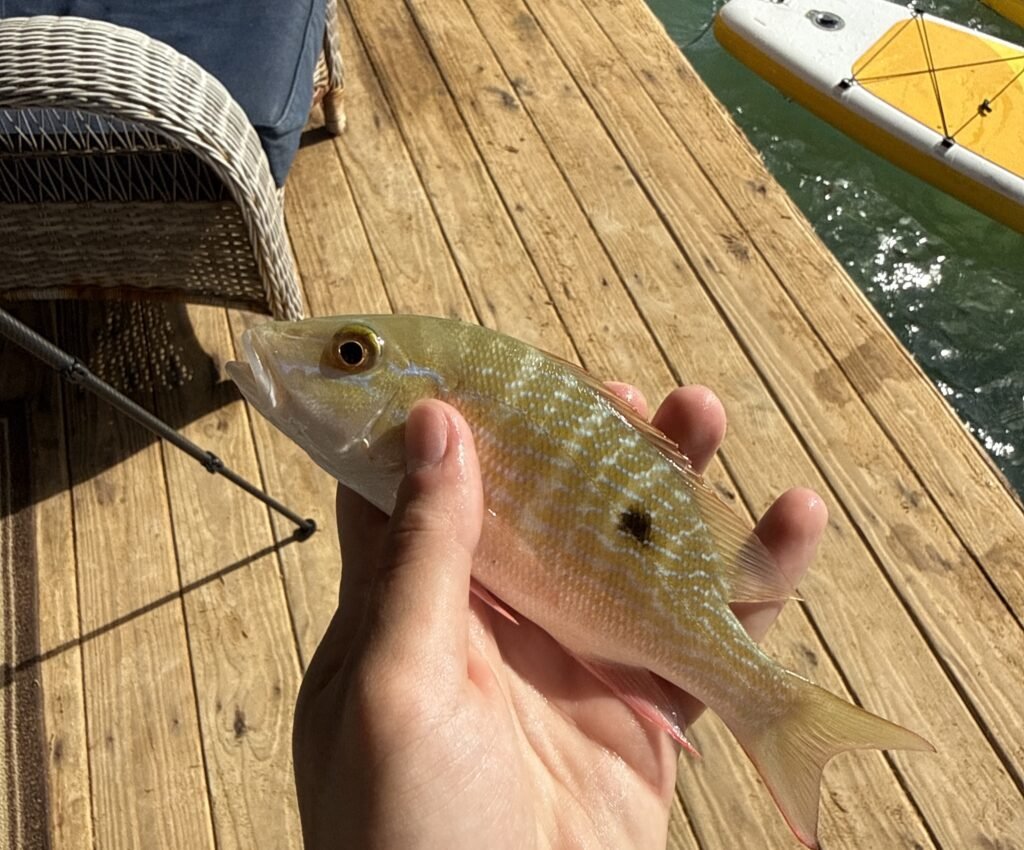
By day there was fishing, swimming, the slow business of exploring an ocean with nothing else in it.
One night he went into the water with a flashlight, partly to face his thalassophobia, the fear of deep, dark water, and partly to see if he could spot a shark.
He does not say whether he did.
The sunset, he says, was one of the best he has ever seen.
Then the weather turned.
“A tropical storm rolled in and for a while I started questioning whether staying alone in the middle of the ocean was such a good idea,” he says.
Nothing came of it. He had walkie-talkies for a real emergency, and the night passed.
“The experience felt peaceful, adventurous and slightly intimidating all at the same time,” he says.
He would recommend it, with a caveat.
“It is probably best suited to adventurous people who enjoy unusual destinations and being away from civilisation for a while.”
Why It Matters
Travel content used to run on pretty.
Now it runs on rare. Creators like Rubén compete less on how beautiful a place looks and more on how few people have been mad enough to go there.
“Most isolated hotel in the world” is a headline before it’s a holiday, and 3.6 million views suggest the maths works.
The risk is part of the product. Sharks, storms and a signed liability waiver aren’t the downside of the trip.
They’re the reason it travels.
Extreme and novelty travel has carved out its own corner of the creator economy, with the algorithm rewarding the unusual and creators pushing further out to stay ahead of it.
Whether Rubén tops a night alone in the ocean is its own question.
The format demands escalation, and there is only so far out you can go before the next storm stops being a viral moment.