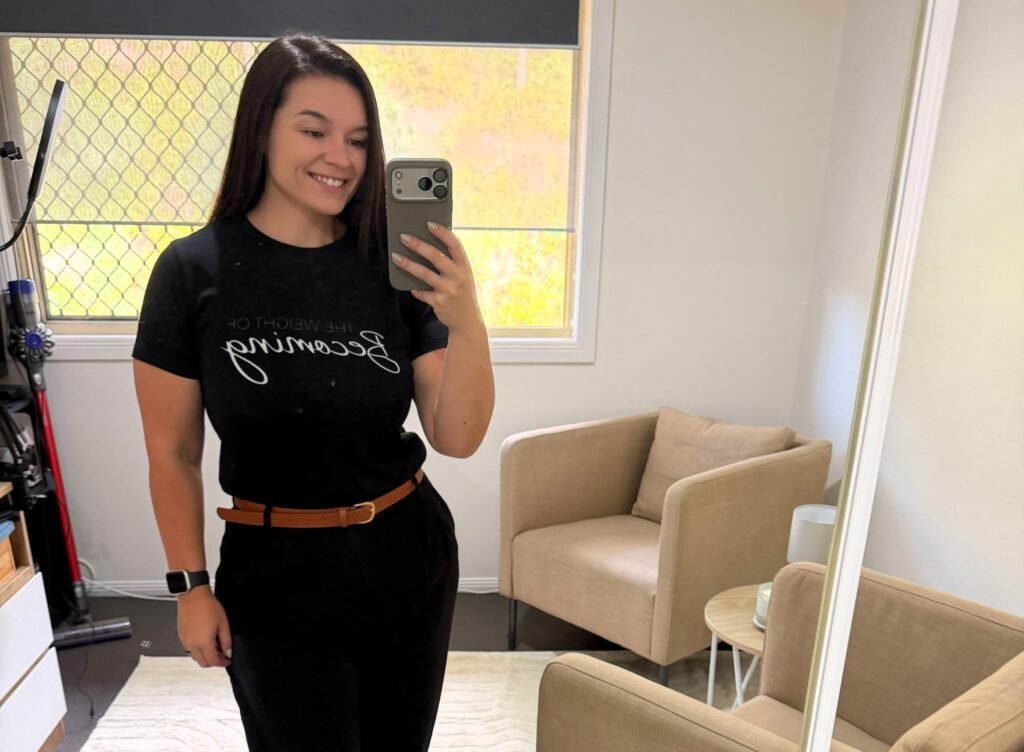

Codie McGovern had spent four years losing half her body weight.
Then she sat in her car and wept.
The quote for skin removal surgery had just come back at $100,000.
She was carrying 26lbs of excess skin that was affecting her sleep, her training, and her ability to move freely – and the one solution available to her in Australia was financially out of reach.
READ MORE: I was 500lbs at 19 and doctors said I might not see 30 – a £2,600 surgery in Turkey saved my LIFE
“After everything I’d done, it felt impossible,” the 30-year-old from Brisbane said.
The weight loss that changed everything
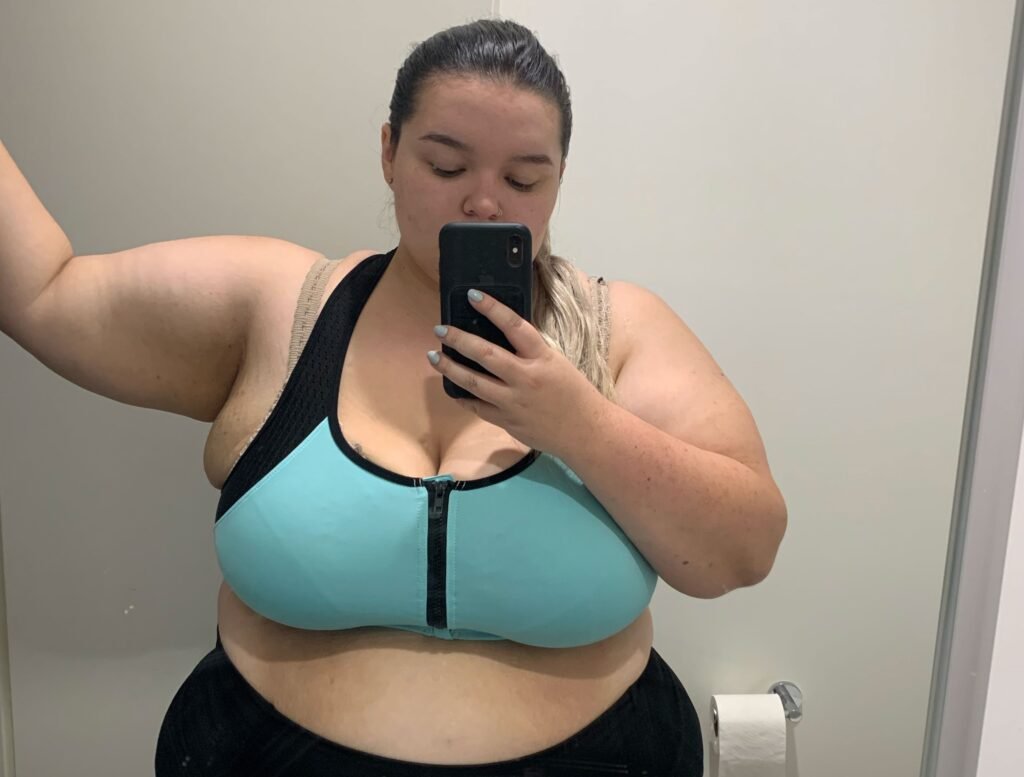
Codie’s journey began when the end of a long-term relationship forced her to take a hard look at where she was.
Her weight had reached 170kg. She joined a gym, rebuilt her relationship with food, and started over.
It wasn’t clean or easy.
“I still remember not being able to finish a class and crying in the bathroom,” she says. “It wasn’t linear.”
In 2021, she had gastric sleeve surgery. Over the following three years, she trained hard, stuck to a strict diet, and kept going.
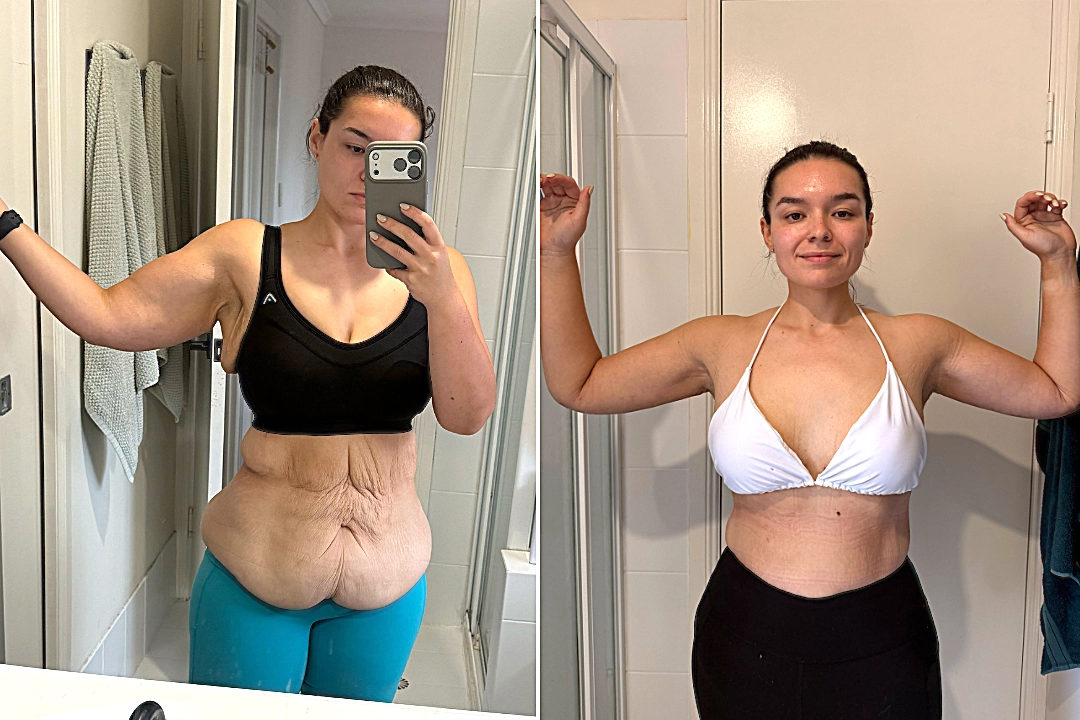
By 2025, she weighed 85kg and was completing triathlons. She had dropped 85kg – 187lbs – in total.
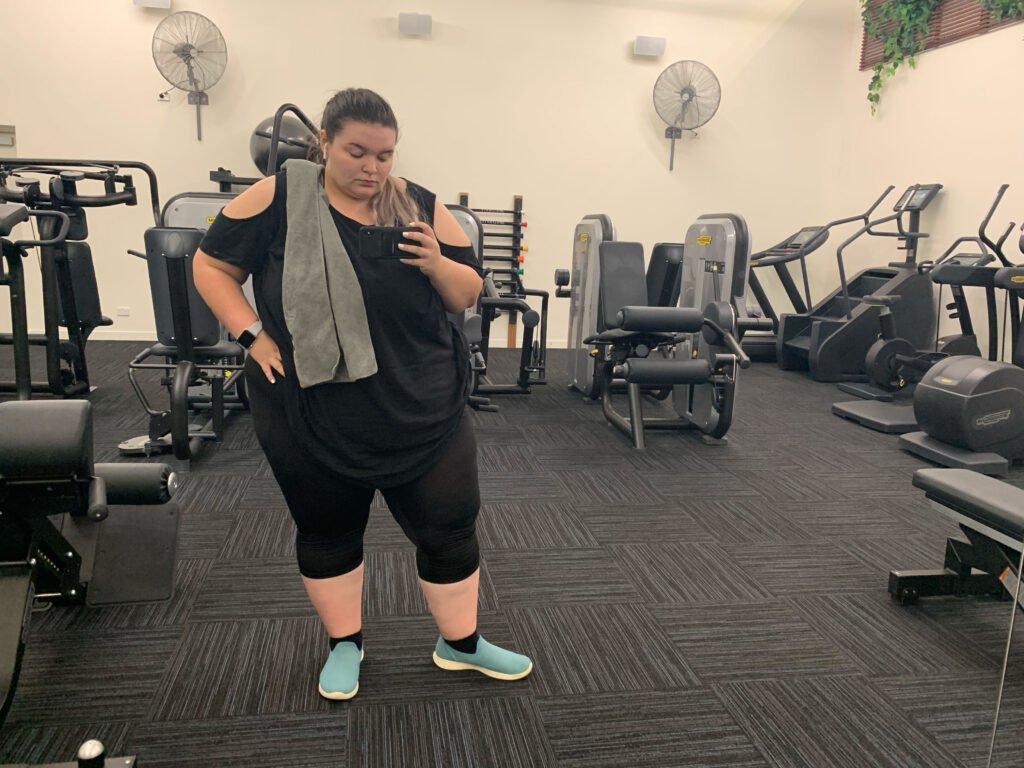
“I didn’t want to enter my 30s still consumed by my weight,” she says. She didn’t.
26lbs of skin that wouldn’t budge
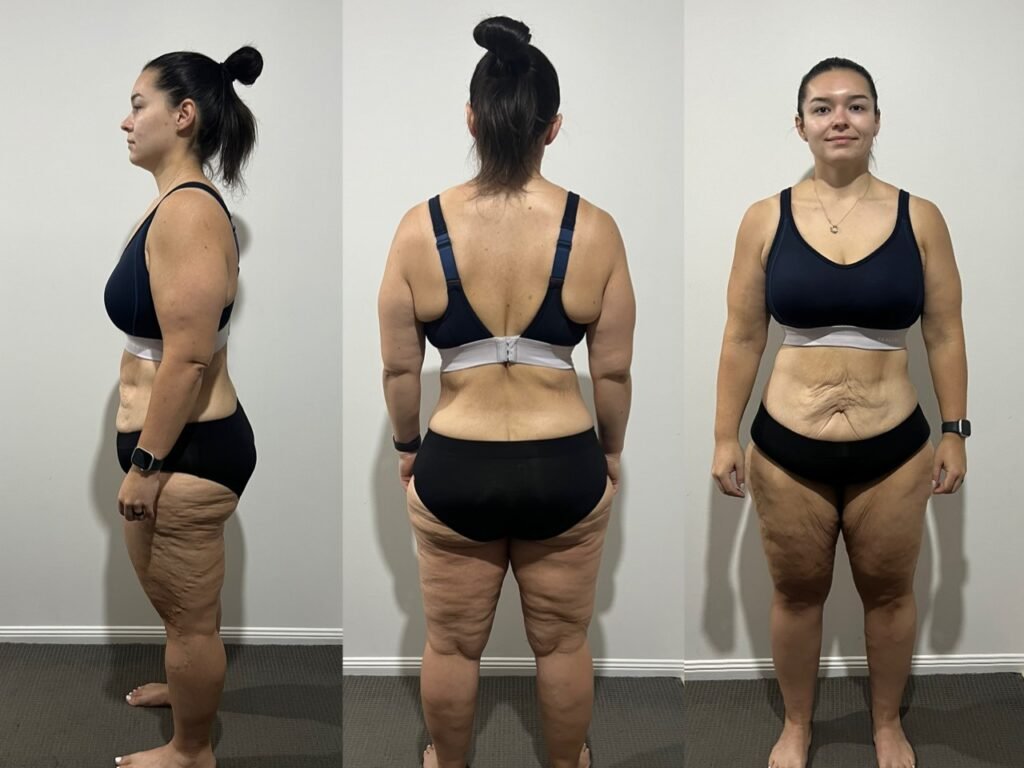
What the gym couldn’t fix was the excess skin – 26lbs of it – left behind by the transformation.
It pulled at her during training, disrupted her sleep, and sat heavily on a confidence she had spent years rebuilding.
“Skin removal wasn’t just about aesthetics,” she says.
“It was about being able to fully live in the body I’d worked so hard for.”
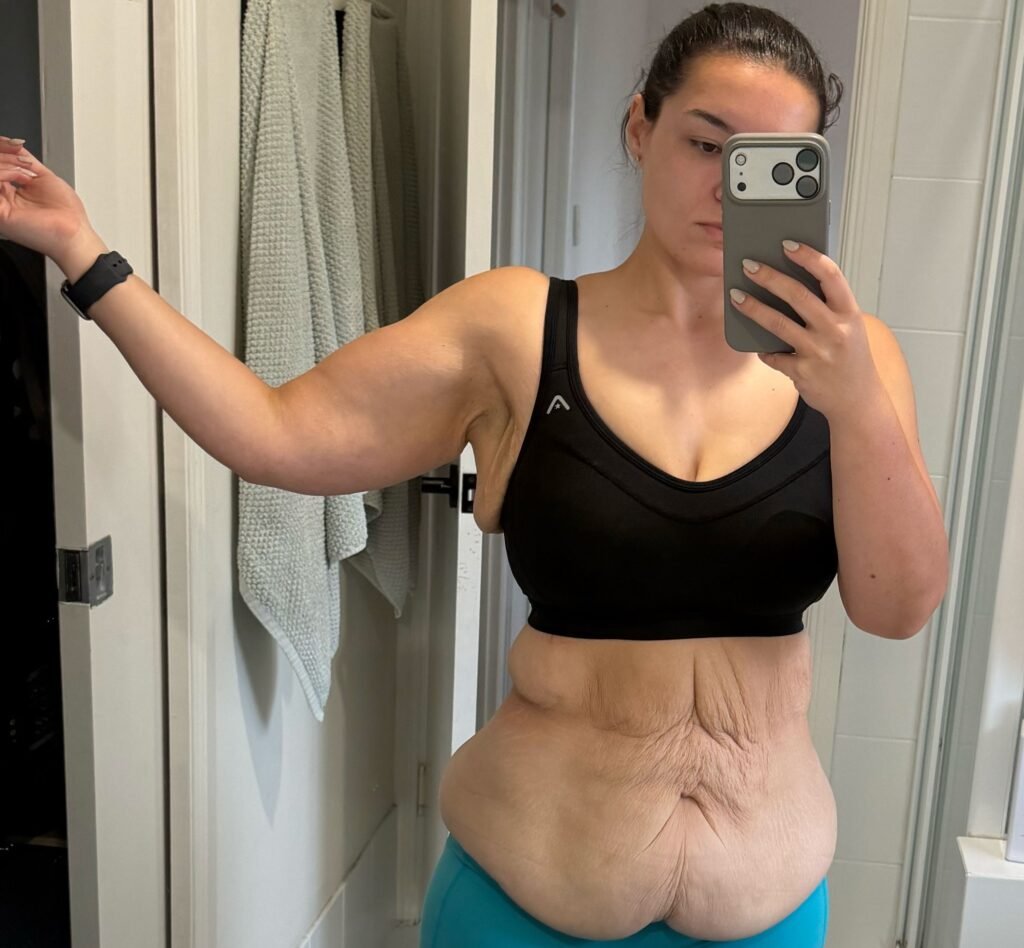
For months, Codie worked through every option: public health programmes, private providers, not-for-profit schemes.
The search was exhausting and the results were bleak.
The $100,000 quote from a local provider was the moment something gave way.
Thailand, $28,000, and a decision that changed the plan
While documenting her search online under the title The Weight of Becoming, Codie was contacted by a Thailand-based surgical provider.
The total cost – flights for herself and her fiancé Zach, 31, plus the surgery – came to $28,000.
A fraction of what she’d been quoted at home.
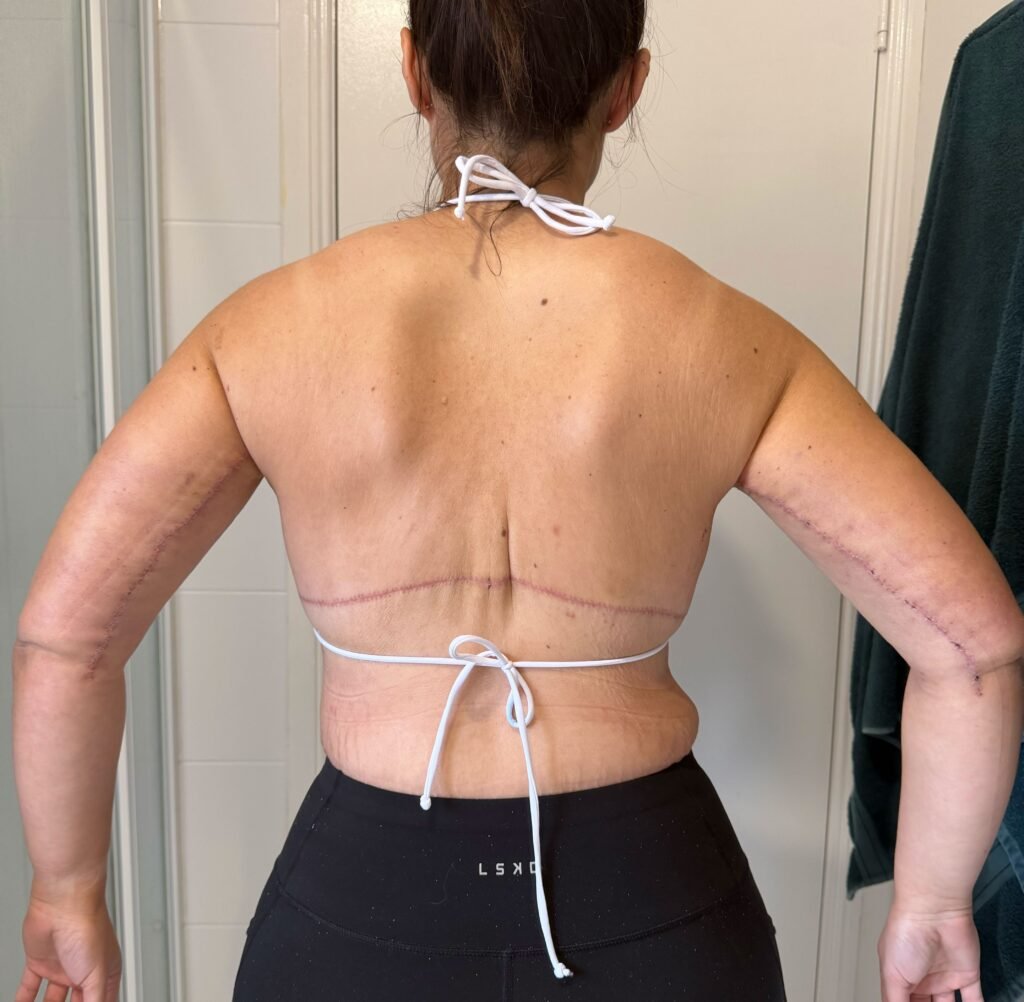
On 11 March this year, she had her first stage of surgery: breasts, back, arms, and sides.
She filmed everything, sharing the process transparently with the audience she’d built.
Zach went with her. “He never judged me, never questioned me,” she says.
“Just supported me because he knew how important it was to me.”
Five weeks into recovery, she says she can already see and feel the difference.
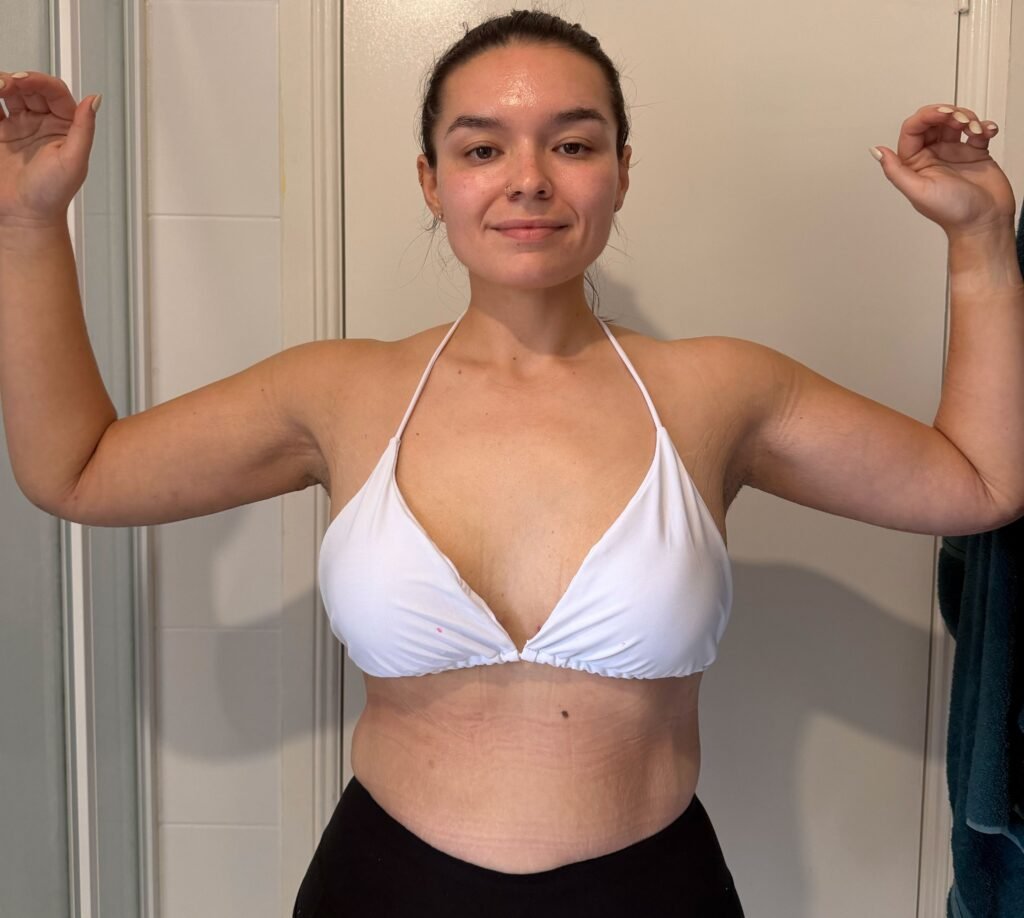
“Now, halfway through skin removal, I can finally see the light at the end of the tunnel,” she says.
“By the end of 2026, I hope to fully step into the confident, strong, athletic person I’ve been working towards becoming.”
Why it matters
Codie’s story reflects a growing pattern: people priced out of medical procedures in Western countries turning to overseas providers – and documenting the entire process publicly to help others facing the same wall.
Medical tourism for post-weight-loss surgery is rising, driven partly by the cost gap and partly by the near-total absence of public funding for procedures still widely classified as cosmetic.
As GLP-1 medications accelerate weight loss for millions more people globally, the demand for skin removal surgery is likely to increase sharply.
The funding question isn’t going away.
Watch her channel. She has one more stage of surgery to go.