

A few bumps woke Mary Kluga from her nap.
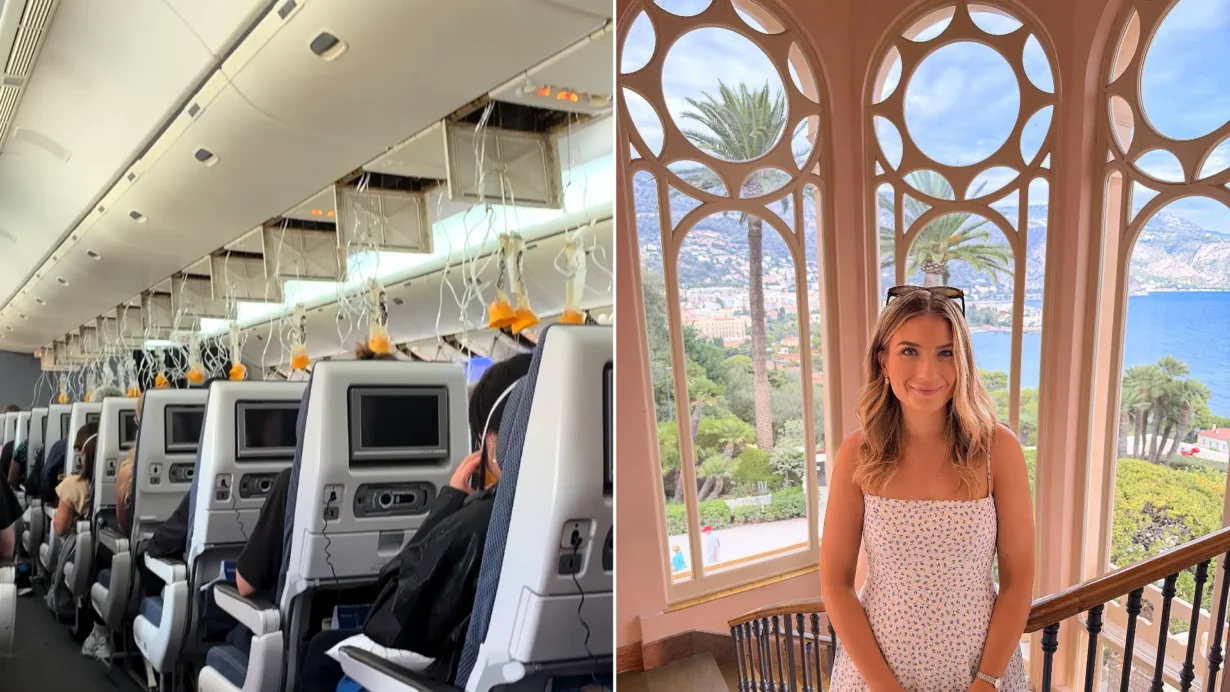
Twenty minutes later she was sitting in silence with an oxygen mask strapped to her face, listening to the same automated warning play on a loop, with no idea why her plane was falling.
The 32-year-old from Chicago was half an hour into a British Airways flight home from Heathrow on 5 October when the aircraft dropped 27,000ft in what passengers described as a few minutes.
READ MORE: I flew to France for LUNCH and was home by midnight – the whole day cost me less than £75
The masks came down. The message repeated. Nobody explained anything.
“I am already terrified of flying, so it was extremely scary for me,” Mary told Creatorzine.

“We were about 30 minutes into our flight from Heathrow to Chicago when a few bumps woke me up from my nap.
Not long after, the oxygen masks suddenly dropped and an automated message told everyone to put them on.”
The recording said: “Attention, grab the nearest oxygen mask and put it over your nose and mouth immediately.”
Twenty minutes of silence at 30,000ft
Cabin pressure had gone, which is why the oxygen was needed.
The passengers did not know that at the time.
“The message played on repeat while we sat there with the masks on for about 20 minutes, mostly in silence but all very scared because we were confused about what was happening,” Mary said.
Then came the part nobody expects. The crew told passengers the plane had to return to Heathrow, but it could not simply turn around. It was too heavy to land.
“The pilot and flight attendants kept updating us and explained that we needed to return to Heathrow, but first had to circle around while getting rid of excess fuel, and even deploy the landing gear to help create drag,” she said.
“This went on for four hours.”
One crew member stayed with her through it.
“One of the flight attendants was so kind and helped calm me down afterward.”
Eight hours out, a night at Heathrow, and a rebooking
Mary had flown to the UK for a family event, an eight-hour trip she was already dreading.
The journey back undid whatever progress she had made with flying.
“We eventually landed back at Heathrow, spent the night there, and were rebooked on different flights. I don’t think I’ll be able to fly again.”
She added: “I doubt I’ll be flying long distances again for a very long time. I was already terrified of flying and dreading the flight so it was a very long, tiring and stressful journey back.”
British Airways said the aircraft landed safely after a technical issue.
A spokesperson said: “We do not underestimate how unsettling this will have been and the safety of our customers and crew is always our top priority.
The aircraft landed safely after our highly-trained pilots returned to Heathrow following a technical issue.
Customers disembarked the aircraft normally and our teams worked hard to support our customers and get their travel plans back on track as quickly as possible.”
Why It Matters
Incidents like this now travel through creators before they travel through airlines.
A rapid descent used to be a story told at arrivals; it is now filmed, posted and dissected by travel accounts within hours, often before the carrier issues a line.
Creators who build audiences on flight content inherit a problem airlines already know well, which is that fear spreads faster than an explanation of pressurisation systems.
Cabin pressure events are rare and the procedure worked exactly as designed.
That rarely survives contact with a timeline.
Mary is due to fly again at some point. She is not planning it.
READ MORE: I spotted a sign at the airport asking if I’d left my oven on – the internet called it INSANE