

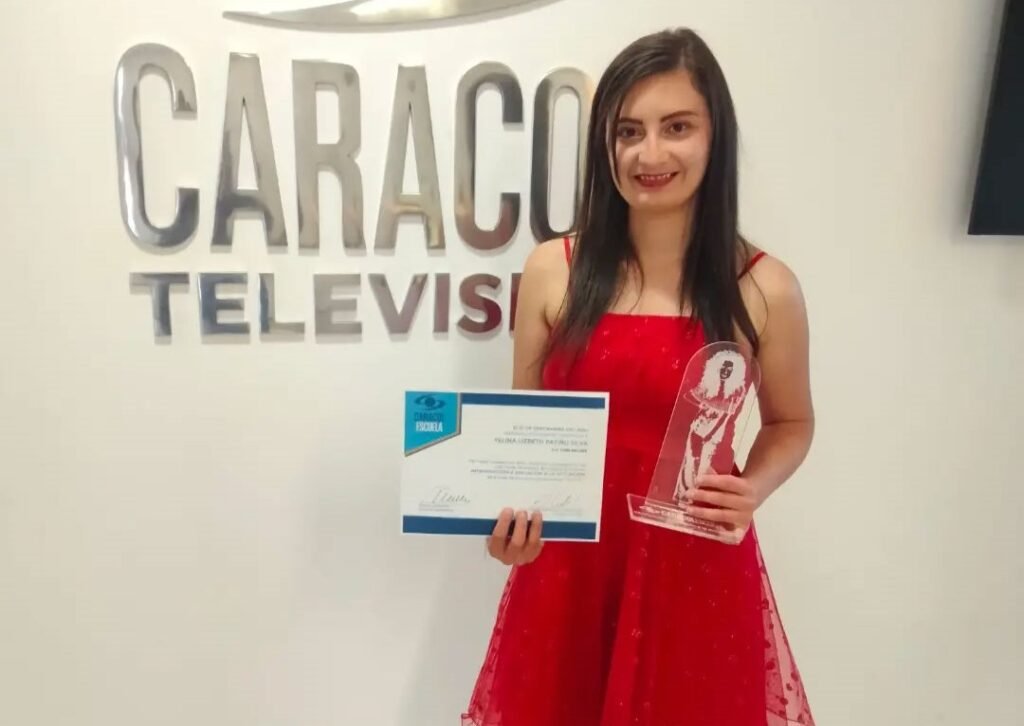
Yeline Lizbeth Patiño took a night job cleaning buses so she could stay close to the one she married.
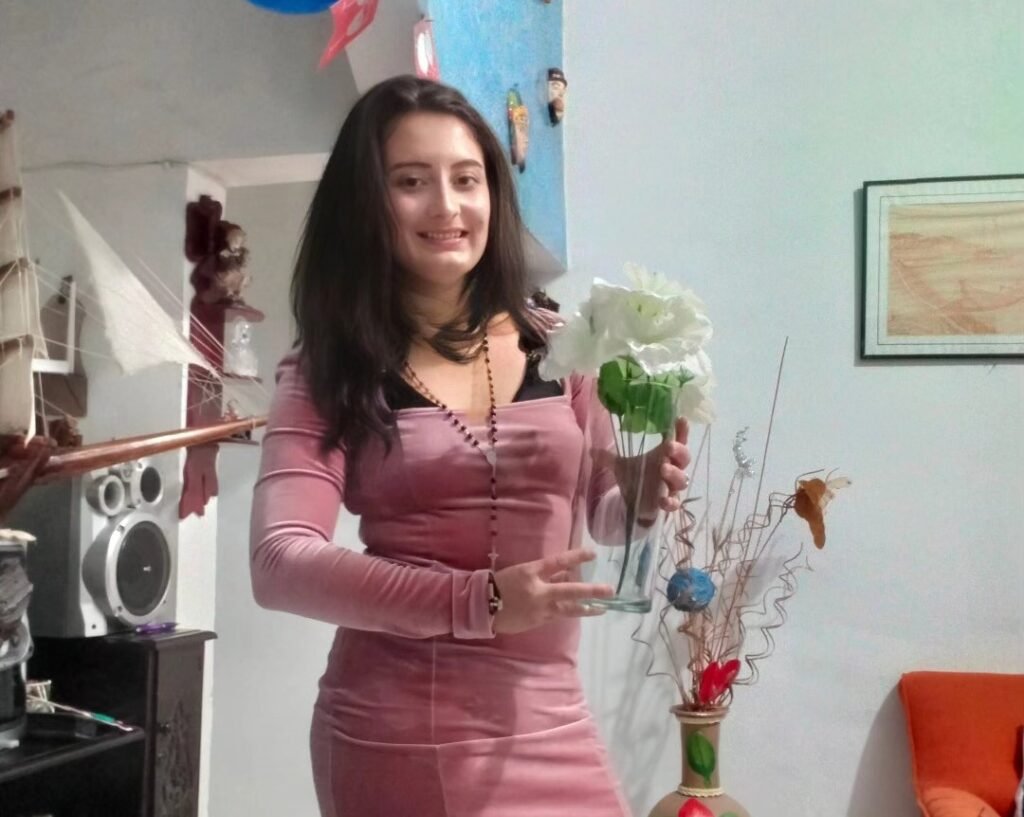
She is 35, a qualified nurse and a singer from Pasto.
She lives in Bogotá. And she says she is married to a bus.
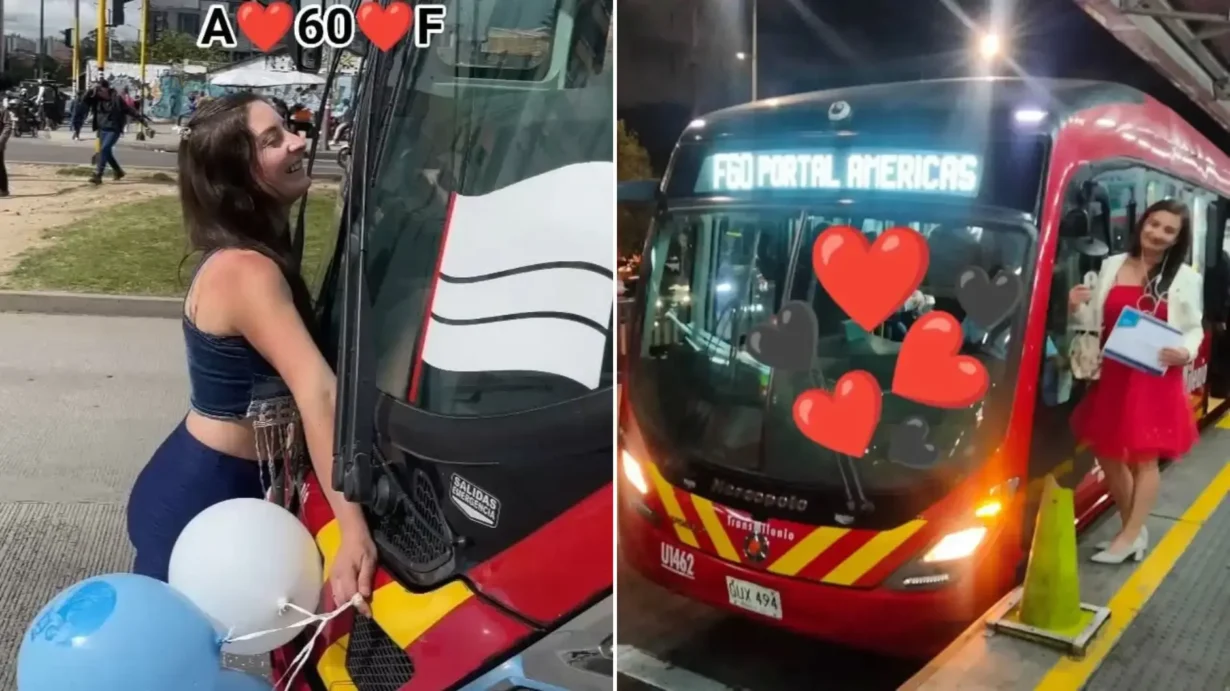
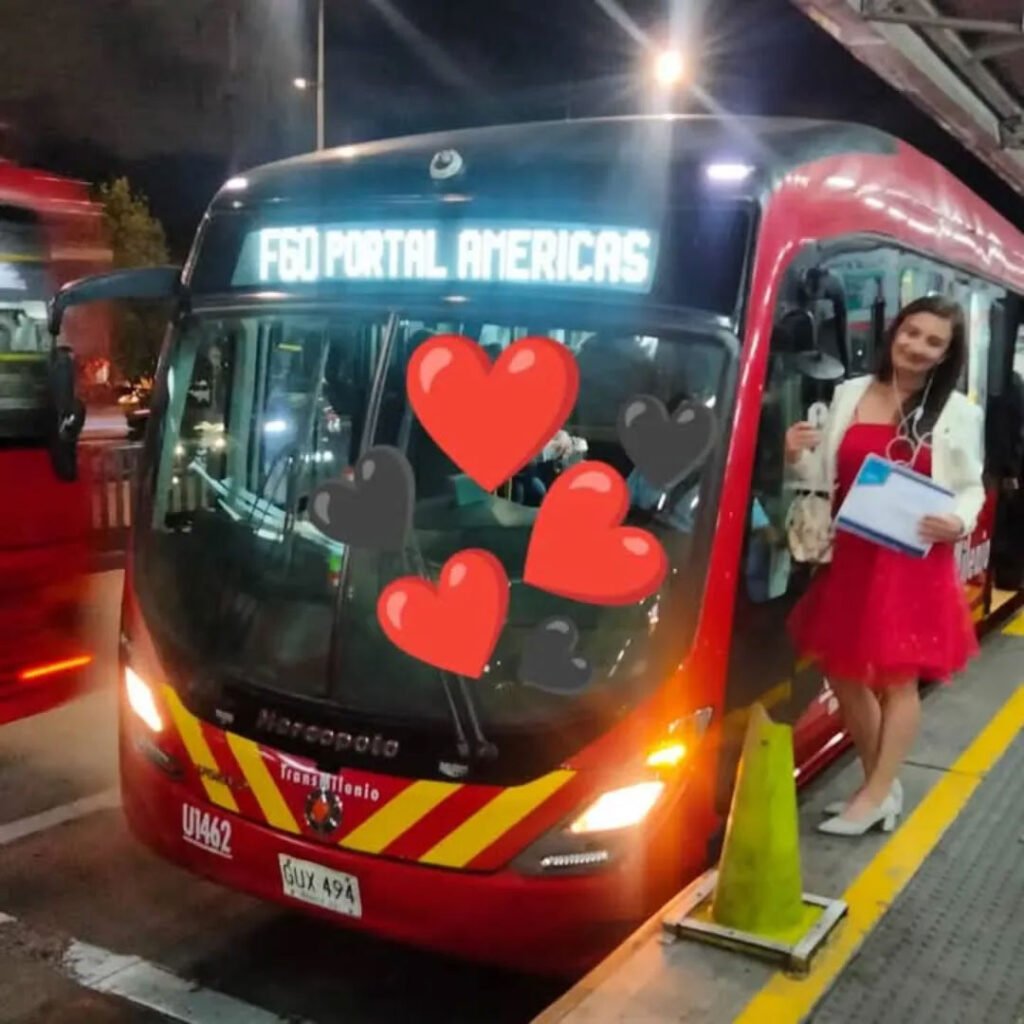
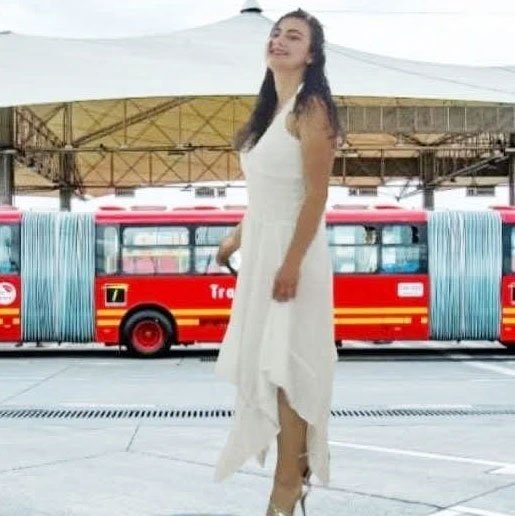
Not one bus. Route 60 on Bogotá’s TransMilenio network: the long red articulated buses that flash A60 heading one way and F60 the other, plus the lit-up number on the front.
READ MORE: Bizarre house on sale for £110,000 – then you spot the toilet in the KITCHEN
“The letters indicate the destination or the path taken,” she told Creatorzine.
“But what truly captivates me is the number 60.”
Swap the chassis and nothing changes for her.
Whichever articulated bus happens to be running that route becomes the thing she loves.
“Through my mechanophilia, I perceive that a bus takes on a distinct identity,” she said.
“And it is that specific entity I love: the articulated TransMilenio bus when it is running the 60 route.”
The screen counts too. She says the glowing 60 is part of the machine.
She was 10 the first time
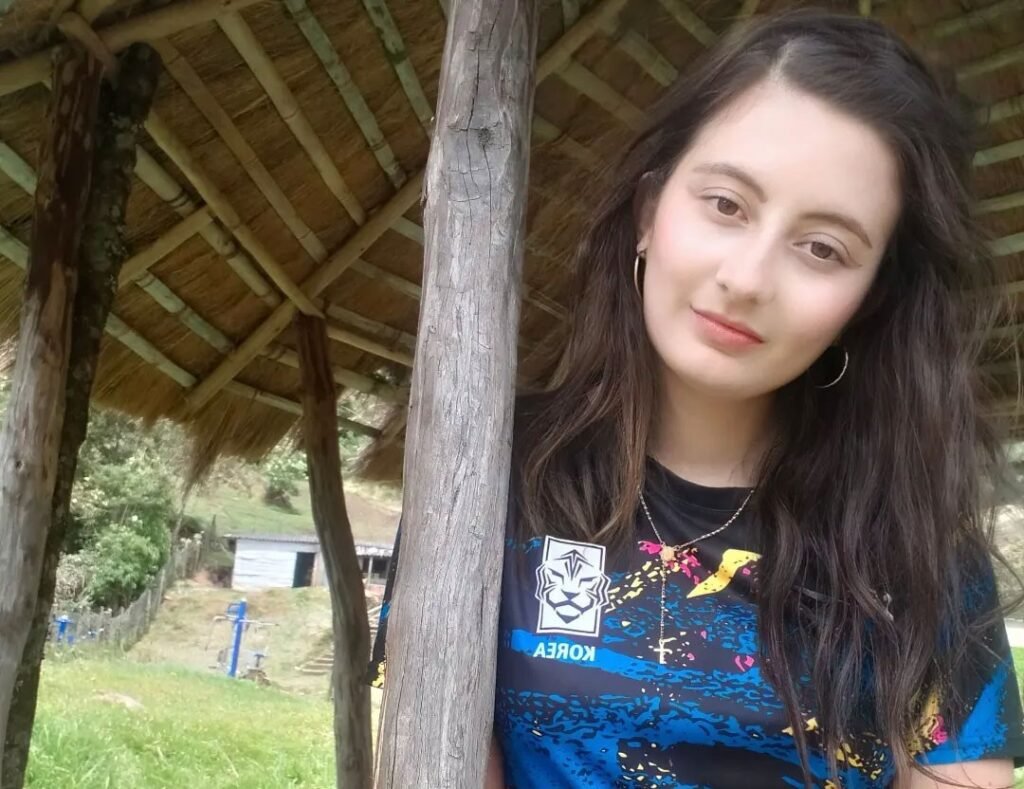
The first one was an intercity Trans Sandoná service, number 2200, running between San Pablo and Pasto.
“My love was deep and genuine,” she said.
“I would cry over it and write it letters.”
TransMilenio launched in Bogotá in 2000, and the red fleet reached her through a television screen.
“Simply seeing them on TV and as toy replicas turned them into my lifelong platonic love.”
At 15 she saw route H60 on television.
“A feeling awakened in me that led me to play-act marrying it in my imagination.”
Then nothing, for years. She dated men. The buses waited.
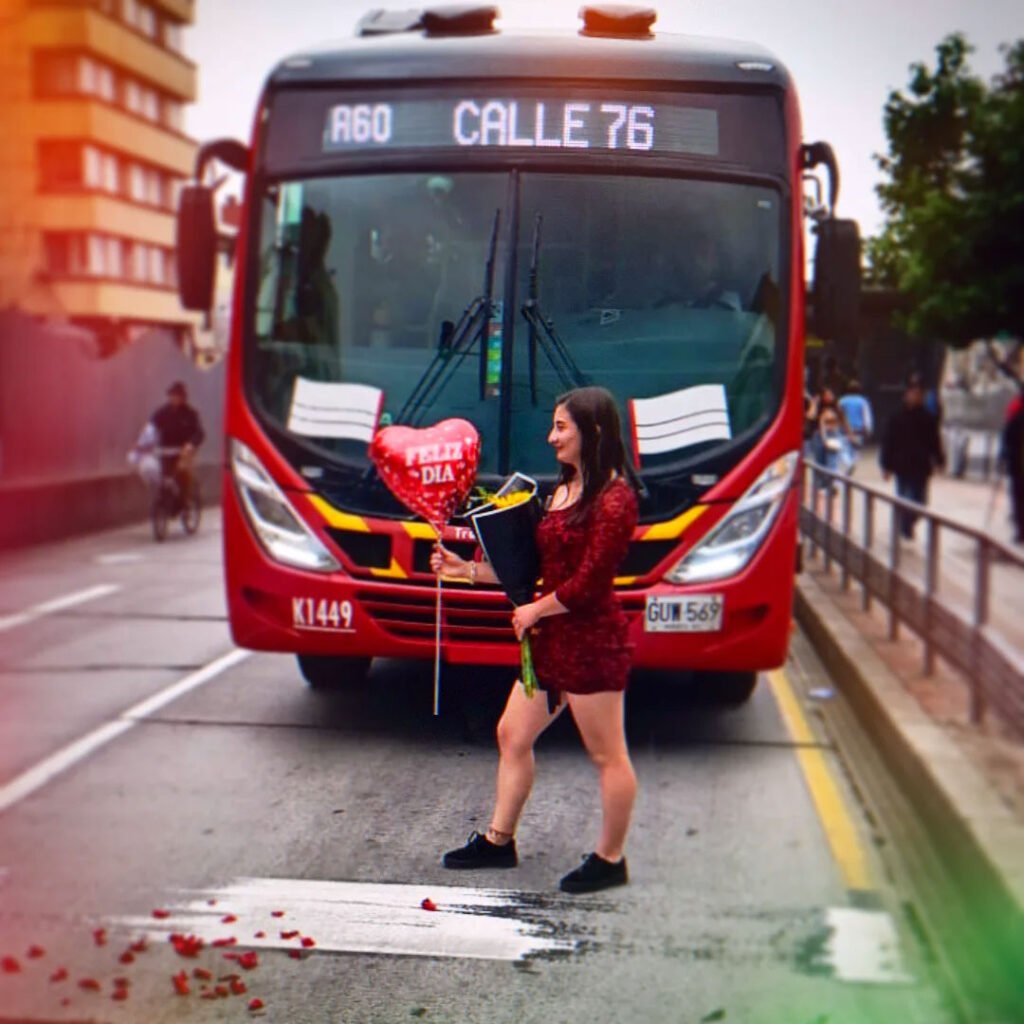
She reached Bogotá for the first time in 2022 and went to see the 60 almost immediately.
“It felt like a real encounter, even though I didn’t realise at the time that my love for it was genuine.”
By 2023 she had moved to the capital.
A white dress, a pearl ring and a paper that certifies it
She married the route in secret, because she didn’t want the world knowing yet.
Friends lent her the dress. There was cake, a party, a pearl ring, one supportive friend and a relative who came along.
“I decided to start a relationship with it and marry it in a ceremony,” she said, describing a bond she reckons has run for nearly 20 years.
A document later set out her wish to marry “TransMilenio route AF60, an articulated bus in Bogotá”.
She calls it a paper that certifies the union.
She visits the depot. She hugs the doors when she can get close enough.
When someone smashed a door on “her” F60, she confronted them, which she describes as a girlfriend’s duty.
The cleaning shifts followed. She washes the fleet at night and says being near it is enough.
Then came the tattoo, running along her torso: the front of an articulated bus, the words “F60 Portal Américas”, and the city’s cathedral.
She marked the first anniversary in October 2025 with a ride between stations and a private ceremony.
She went public because she is frightened
One reason, and she is blunt about it.
“I made this public for one reason only: I am terrified, truly terrified, that TransMilenio will cancel that route,” she said.
“They make so many changes, and honestly, everything I’m doing, risking my reputation, my career, and my life with this news, getting a tattoo of it, writing a song about it that I’m releasing soon, and starting social initiatives, advocacy campaigns, and free events, is all aimed at making the TransMilenio ‘Route 60’ beloved by everyone, so that the company finds it difficult to discontinue the service.”
She says she recently learned the route could disappear inside two years once the metro arrives.
“I feel such a sense of helplessness and pain because TransMilenio knows what this means to me.”
Her ask is small and specific: keep a 60 running on something, anywhere.
“That would be very easy for them to do, yet their attitude has shown me that they might not care about hurting me this way.”
TransMilenio has not commented.
What she wants from everyone else
Lawyers, for a start. Then anyone who identifies as a mechanophile or objectophile, and anyone at an international human rights organisation who will pick up the phone.
She has floated signatures, joint requests, a fan club for the route.
“I am alone here in Colombia, there are no other cases like this, and all I want is inclusion,” she said.
“It is the most immense and beautiful love imaginable.”
She still likes men, has dated them, and hasn’t ruled out a family.
Why It Matters
She kept the marriage private for a year, then spent that privacy on purpose.
The tattoo, the song, the free events and the campaign all exist to make one bus route too loved to delete, and going public was the only lever she had.
Creators run that same calculation in far less strange circumstances, trading privacy for reach because reach is the thing that moves institutions.
She named the price herself: her reputation and her nursing career.
Objectum sexuality tends to surface online every few years as a curiosity, usually wrapped in mockery.
What’s different here is the campaign bolted onto it, structured like any other creator-led pressure effort, complete with a release schedule.
The song is coming. The metro is coming faster.
And somewhere in a depot tonight there is a nurse with a mop, waiting to see what the sign says in the morning.
READ MORE: I said no to Botox and fillers – now a £6 buy has people asking what SURGERY I’ve had