

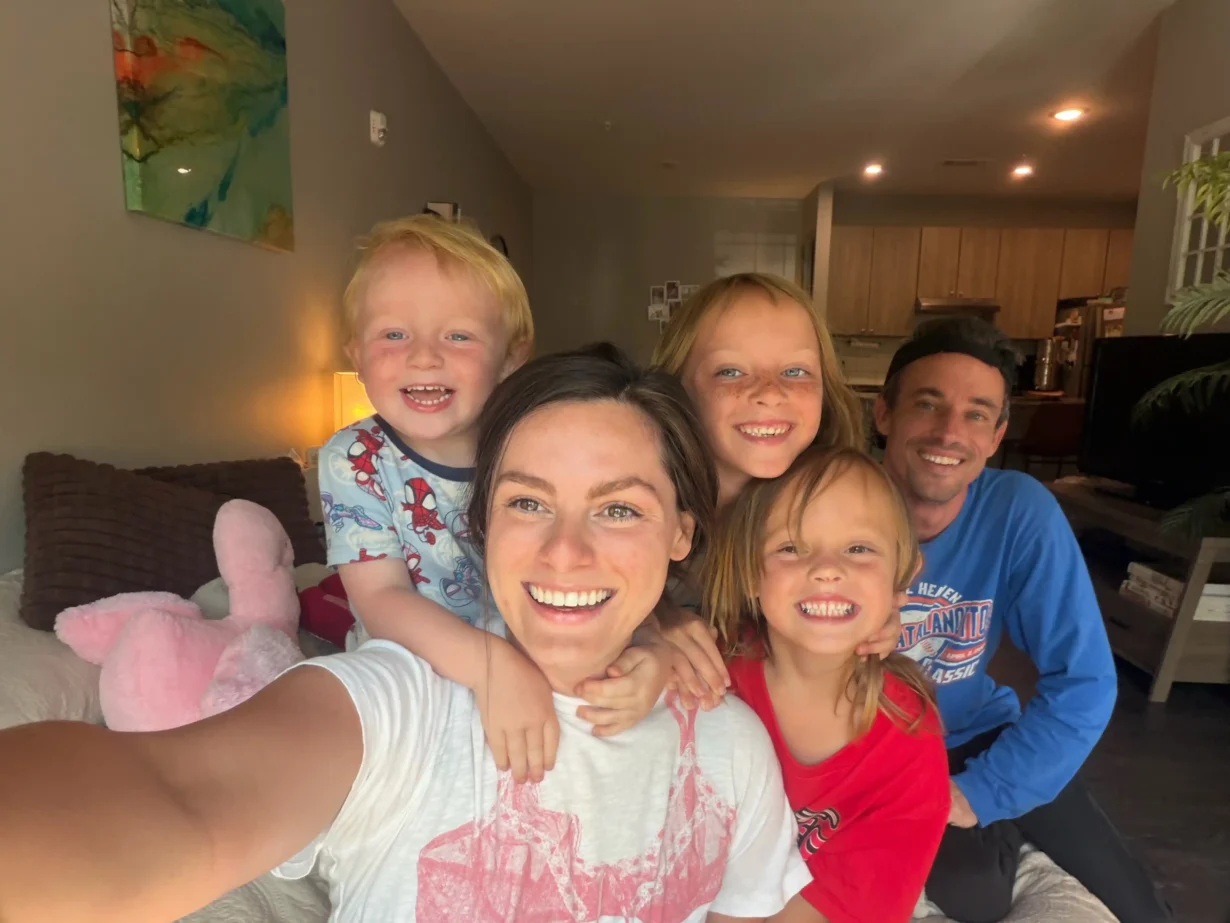

Megan Hawkins woke from brain surgery with the left side of her body refusing to work.
She had to learn to walk again.
The bills arrived regardless.
Two years on, she shares a one-bedroom apartment with her husband and their three children, and says the family now puts away around £700 a month.
The diagnosis that shrank the house
Megan, 35, was diagnosed with an arteriovenous malformation, a tangle of blood vessels in the brain that can rupture without warning.
Surgery saved her. It also left her partially paralysed down one side, facing a recovery measured in months rather than weeks.
The family home stopped adding up somewhere in the middle of that.
Rooms nobody used.
Maintenance that never finished. Money leaving faster than it came in.
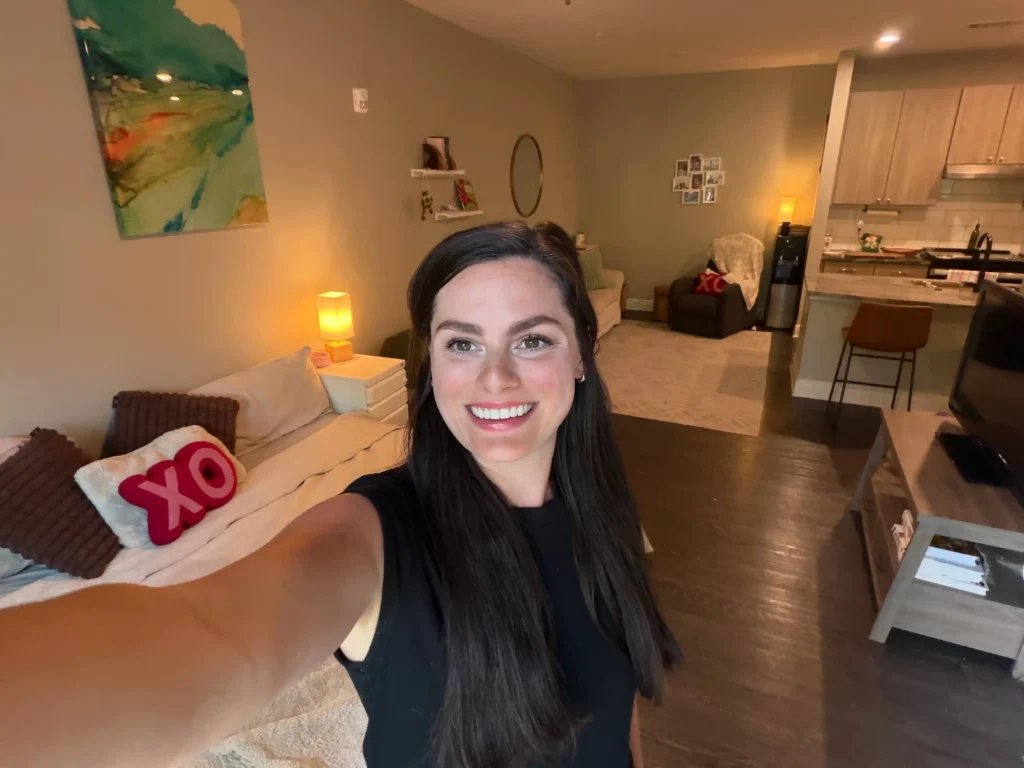
So she and her husband Emmet, 37, who works in insurance, rented the place out and moved into a one-bedroom apartment in North Carolina with three children aged seven, four and one.
“Renting out our home and moving into a one-bedroom apartment was meant to be temporary, just one year to reset financially,” Megan said.
That was almost two years ago.
Bunk beds by night, desk by day
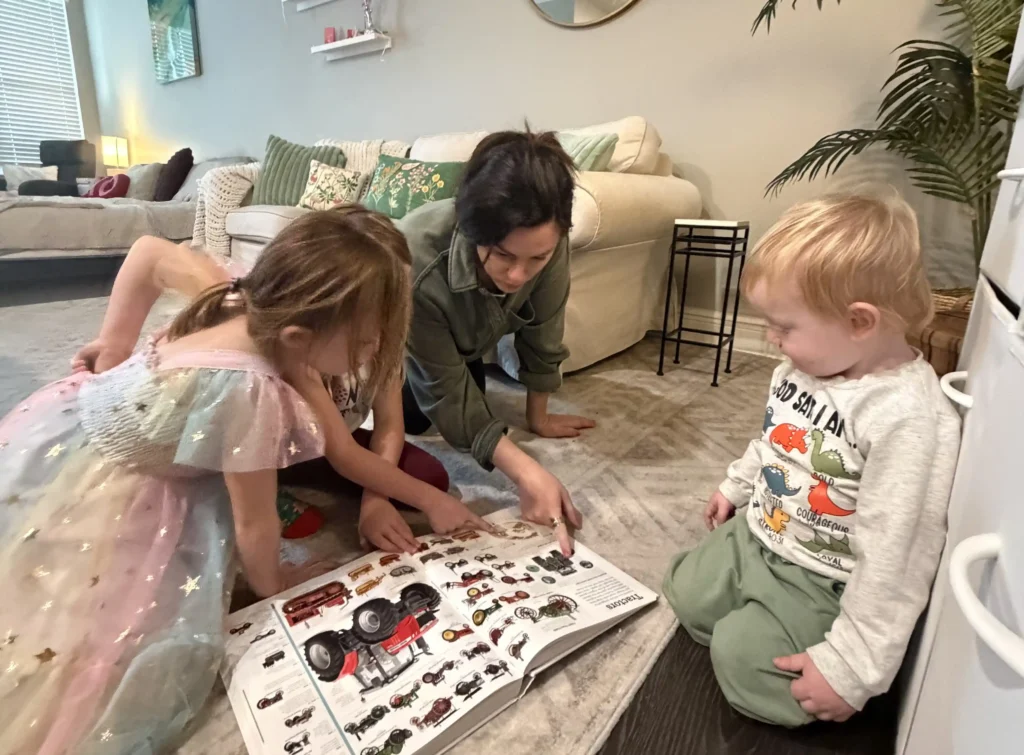
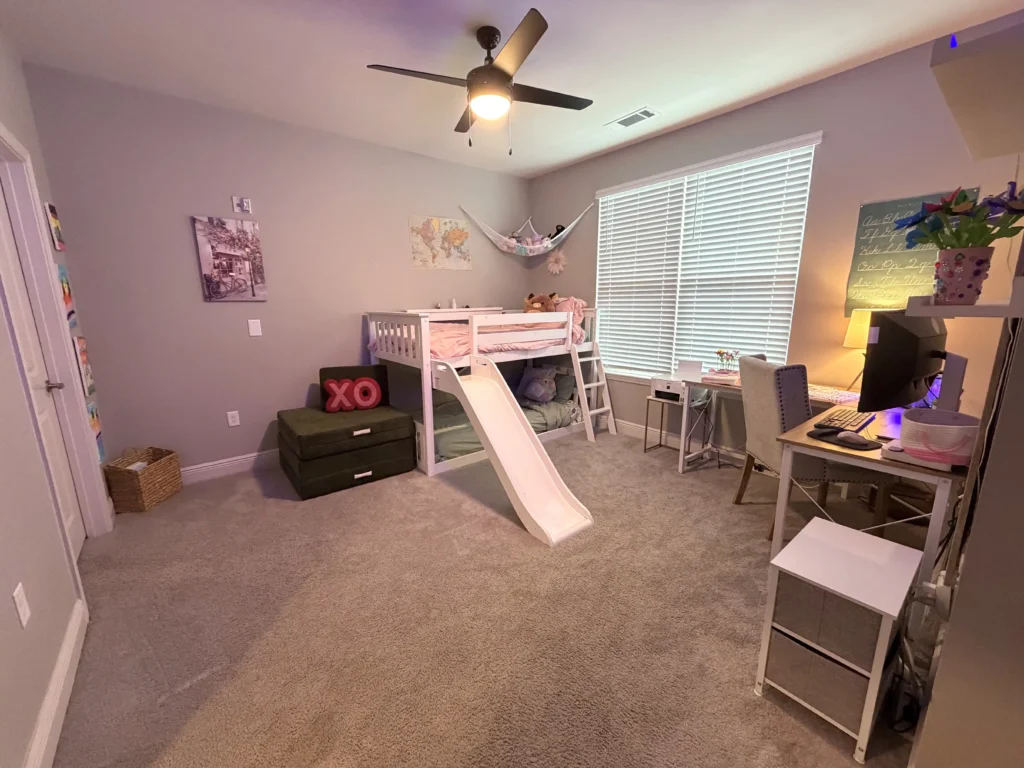
The children have the bedroom. The bunk beds sleep them, then become Emmet’s office when he’s working from home.
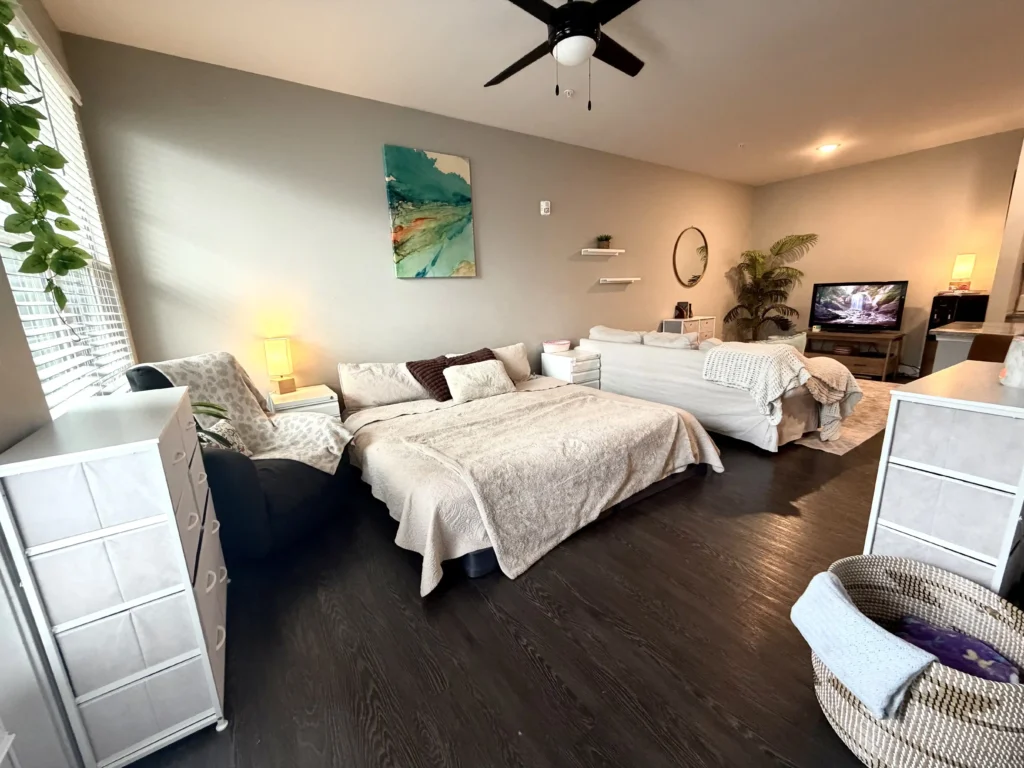
The king-sized bed lives in the living room, which gives the whole place a studio feel.
What’s technically the dining room is where all five of them actually gather.
The one-year-old has the most complicated arrangement of anyone.
“Our one-year-old plays a nightly game of musical beds, rotating between co-sleeping with us and a pull-out bed stored in the utility room,” Megan told Creatorzine.
On Emmet’s work-from-home days she takes the children out.
Library story time, playdates, meet-ups.
Anywhere with somebody else’s walls.
“Making this space work requires creativity and flexibility,” she said.
“It’s not perfect, but it works, and the closeness has brought us together in ways we did not expect.”
What they got back
Fewer rooms to clean. Less to manage. Less, as she puts it, mental clutter.
“That has freed up time and energy for what matters most to us, being together, getting outside, and making memories,” said Megan, who has a master’s in early childhood special education and is currently at home with the children.
Spontaneity got easier too. Last-minute trips don’t have to compete with a house that constantly needs something.
The money went somewhere specific. They’ve bought land, and the plan is a family compound on it.
The children, she says, are fine with all of it. The apartment complex has bike paths, green space and a pool.
“It’s reminded us that kids don’t need more space, they need presence, safety, and joy.”
Winter is the part nobody posts about
“Being indoors with three energetic kids in a small space tests every ounce of patience and creativity we have,” Megan said.
“On those days, even an extra hundred square feet feels like a luxury.”
Everything gets rotated and purged. Toys, clothes, school supplies.
There is, in her words, very little room for spontaneous mess.
The thing she misses isn’t square footage. It’s furniture.
“The one thing we truly miss is a kitchen table. Right now our meals usually happen at the kitchen bar, often with one of us standing, which has become the one downside for us.”
“One person told me we were taking a step backward”
Not everyone approved. That particular comment stung, she says, though most friends and family landed somewhere between supportive and curious.
She’s blunt about the cost of it.
“Living this way is not always sunshine and rainbows. It can be really hard. In fact, some days it is straight-up exhausting.
Small space, big emotions, tight budgets, and zero privacy.”
Then: “Watching other people upgrade while we downsize is hard. But staying stuck forever is harder.”
Why It Matters
Megan now shares small-space advice online, which puts her in one of the fastest-growing corners of the creator economy: people documenting downward mobility as a strategy rather than a failure.
Frugality content used to be tips. It’s now identity.
Audiences have moved past aspirational home tours towards creators showing the ledger, the compromise and the reason for both, and the ones who perform hardship convincingly do worse than the ones who simply have it.
Megan’s material comes with proof attached, which is the only real moat in a category anyone can enter with a phone.
The wider shift is visible across TikTok and Instagram, where cost-of-living content has hardened from budget hacks into full lifestyle documentation, and where creators who once monetised the upgrade now monetise the downgrade.
What happens next depends on the land.
If the compound gets built, she has an ending. If it doesn’t, she has something more useful to a platform that rewards ongoing tension over resolution.
“This lifestyle was never the dream,” she said.
“It’s the sacrifice to get there.”