
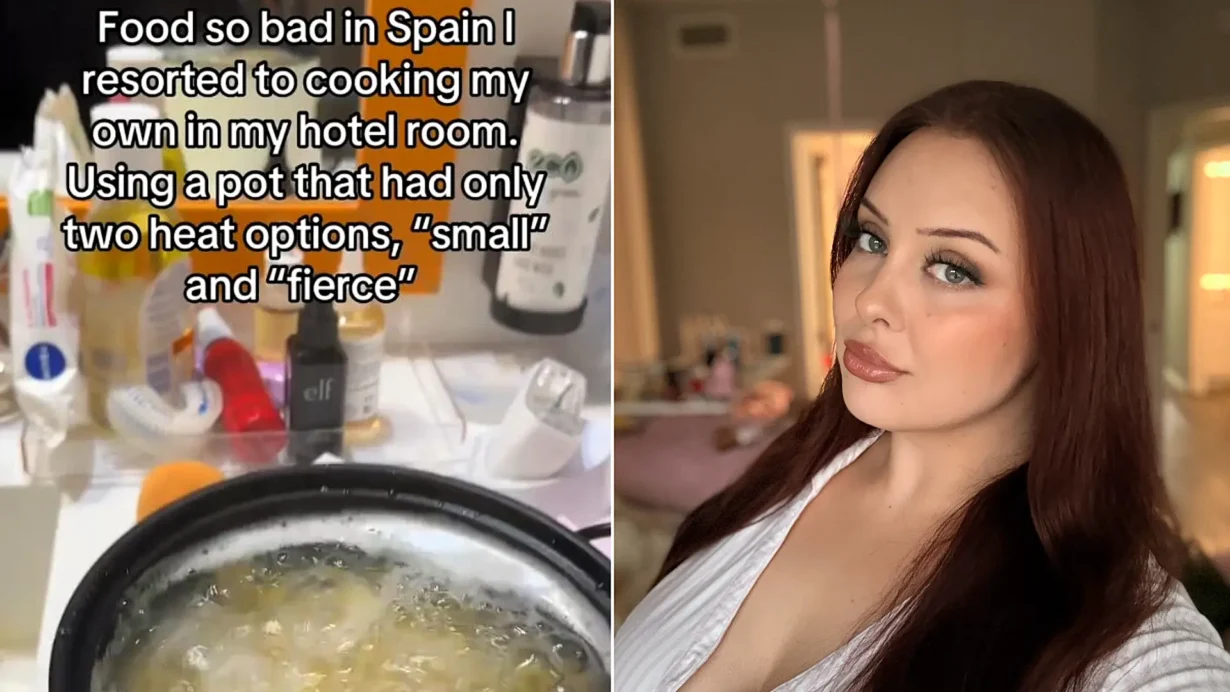

Seven days into her stay in Barcelona, Misty Renn went out and bought a cooking pot.
Not for a flat. For a hotel room ten minutes from the hospital where a surgeon had told her she was close to being paralysed from the neck down.
The 28-year-old from Texas had flown to Spain for surgery. She spent the run-up to it eating in restaurants and getting steadily more annoyed.
READ MORE: I set my alarm for 6.30am to beat the Santorini crowds – there were already THOUSANDS of them
Her verdict on the food went online and collected 5.1 million views, 552,000 likes and more than 9,000 comments, according to figures she has shared.
Most of them disagreed with her.
The seasoning problem

Renn’s complaint was narrow. Not the ingredients. Not the price. The seasoning.
“The thing that caught me by surprise is how little the food is seasoned,” she said.
“I am not someone that likes highly salted foods – I mean fresh or dried herbs, onion and garlic powder if not fresh garlic and onion.”
She said she hit the same wall at restaurants serving other cuisines, and that her friend, who eats meat, found the same.
Renn is vegetarian and mostly avoids dairy, which ruled out a large chunk of traditional Spanish cooking before she’d ordered anything.
By the end of the first week she stopped hoping.
“I was hoping to find restaurants I enjoyed so that while recovering from surgeries my friend and I didn’t have to put energy into looking,” she said.
“About a week into being in Barcelona and disappointed in the vast majority of meals, my friend and I decided buying a pot to cook at the hotel was a good idea, knowing we would be there for a while.”
She stocked up on herbs and spices and tried to rebuild the food she ate at home, the salads and ramen and Vietnamese places she was missing. It didn’t quite work.
“I realised how spoiled I am in the US because of the very wide range of foods stocked in grocery stores,” she said.
“Of course, because I was much more limited, I wasn’t able to recreate anything exact.”
She wasn’t there on holiday
Renn travelled to Barcelona on 22 January after a referral to a specialist surgeon at Teknon Hospital.
She has craniocervical instability, cranial settling and tethered cord syndrome, rare conditions that she says took her from very active to largely bedbound.
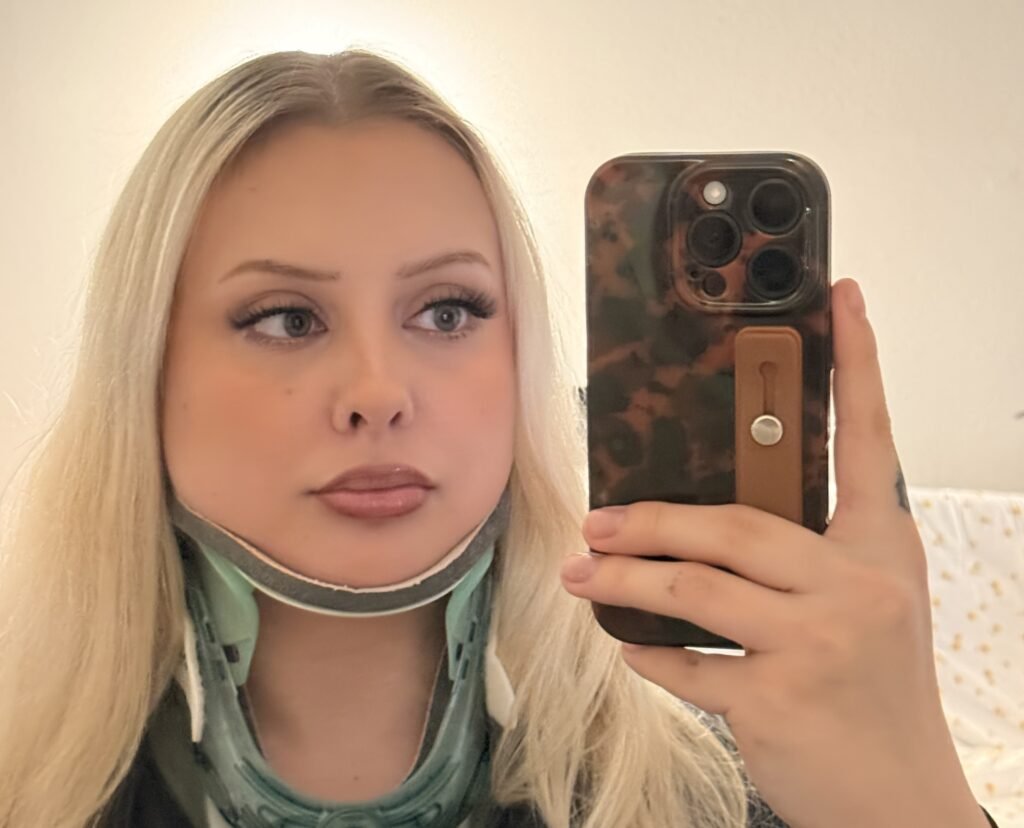
Her surgeon, according to Renn, warned she was close to paralysis from the neck down, or death.
She had surgery on 6 February and stayed until 18 March, when doctors cleared her to fly.
She was recovering the entire time, ordering all her food in and rarely straying more than ten minutes from the hospital.
“I was not travelling for vacation,” she said.
“I was extremely homesick and couldn’t stop talking about how I couldn’t wait to get back home to eat.”
She said she also hoped the video would draw attention to conditions that often go undiagnosed.
That part didn’t travel as far.
5.1 million people had opinions
The comments split roughly along national lines and then got worse.
“Everyone can hate on America all they want, but we are the goats of food,” one wrote.

“I’ve been to Spain twice and it was the best food I’ve ever had, where are you eating?” said another.
A commenter named Amrita wrote: “I’m starting to think that Americans just don’t have the same taste buds of the rest of the world.”
Some sided with her. “Omg thank you!!! I found Spanish food so bland and one note,” one wrote.
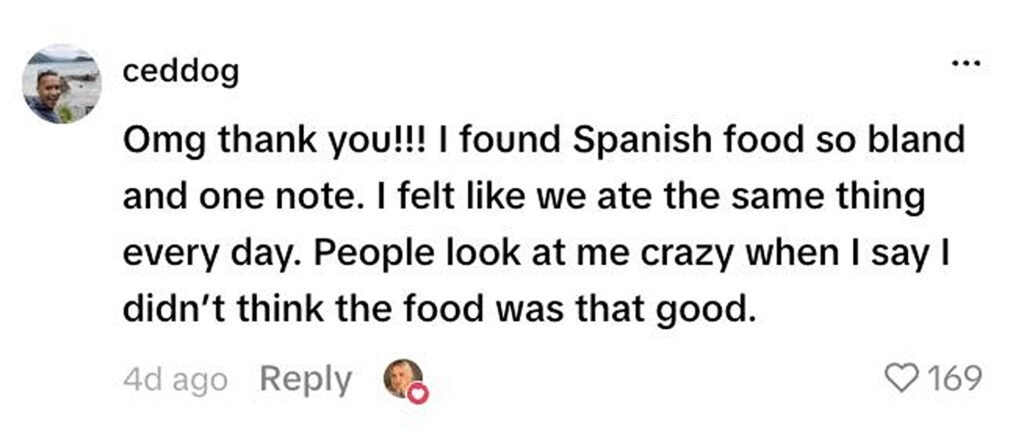
“I felt like we ate the same thing every day. People look at me crazy when I say I didn’t think the food was that good.”
Others accused Americans of over-seasoning everything and told her fresh ingredients don’t need burying under garlic powder.
A few suggested her palate had been trained on McDonald’s and chicken nuggets.
Renn says the opposite is true, listing salads, ramen and fresh Vietnamese and Mexican food among her regulars, and noting that sushi worked well in Barcelona precisely because nobody seasons it heavily.
She did find places she liked. NUDES, Oakberry, UDON and Thai Corner all made the list.
Why It Matters
Renn didn’t set out to make travel content.
She was recovering from spinal surgery in a foreign country and happened to mention the food was disappointing.
That got 5.1 million views. The awareness campaign she actually wanted got considerably less.
Creators keep relearning this one. The algorithm rewards the thing you say in passing, not the thing you planned, and it rewards national grievance faster than almost anything else.
Food takes cost nothing to produce, argue with themselves indefinitely and can’t be fact-checked. Everyone has a mouth.
The bill arrives later. Renn is now the American who cooked in her hotel room in Barcelona, rather than the woman who nearly lost the ability to walk.
American-abroad food discourse has become one of short-form video’s most dependable engines, sitting alongside tipping and portion sizes in a permanent low-grade international row.
Medical travel content is growing too, as patients document treatment abroad for audiences who can’t get it or can’t afford it at home.
Renn’s video landed in both at once.
She says she won’t return to Barcelona as a tourist, and seems sorry about it.
“I hate to say this because the city was so beautiful, people were so kind, and my surgeon saved my life – but because of the food I don’t see myself ever wanting to visit again for a vacation,” she said.
If the surgery brings her back, she has a plan.
“I will absolutely be bringing a lot of seasonings, sauces and foods to cook to make the experience better.”