

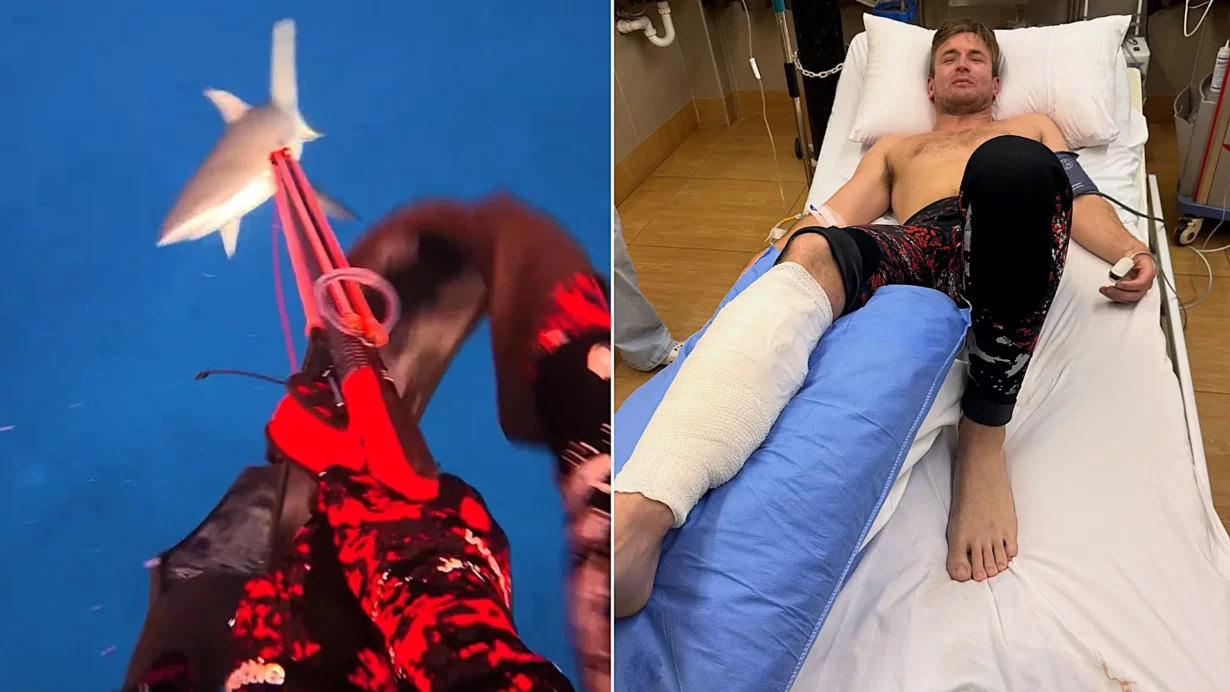

Henry Gibbs’s first dive in Fiji ended with a grey reef shark tearing into his right leg.
The fishing creator needed four surgeries and a skin graft to keep it, and he still insists the animal did nothing wrong.
The New Zealander was spearfishing on 18 July when the shark struck, according to a report by CreatorZine.
His camera caught the moment it darted towards him, though the full clip remains unreleased. Too graphic, apparently.
Fellow divers Colby and Dan hauled him out of the water, dressed the wound and rushed him to hospital.
Four surgeries and one very lucky leg
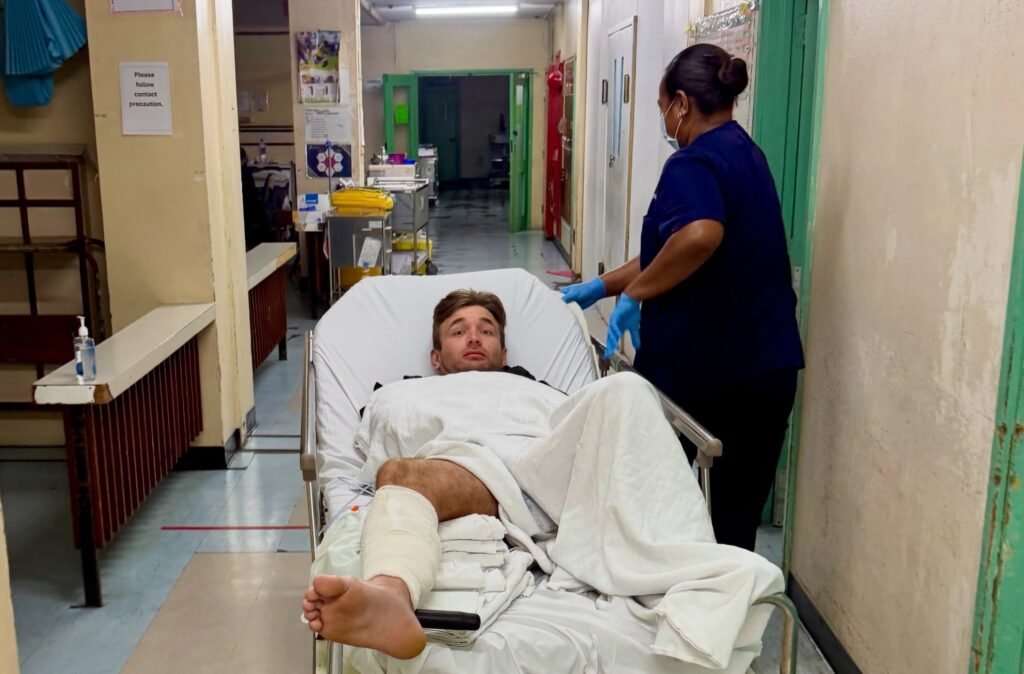
The damage could have been far worse.
Gibbs kept the leg and full use of his foot, which given what a grey reef shark can do to a limb counts as a result.
“First dive in Fiji ended in a pretty nasty shark incident,” he says.
“Feeling incredibly lucky to still have my leg, full use of my foot and to be on the mend. Four surgeries and a skin graft later it’s looking like I’ll make a full recovery, which I’m hugely grateful for.
“No hard feelings towards the shark. I was in its environment hunting its food.
For now, just feeling very lucky and with an even greater appreciation for life.”
He broke the news to his 113,000 followers on 24 July, sharing clips of the encounter alongside the announcement.
The warning signs were circling
Gibbs had spotted several grey reef sharks in the water before one of them turned on him.
What changed, he admits, is anyone’s guess. What he missed is not.
“It’s possible the commotion from the boat, the sounds of our spearguns, and the activity in the water gradually made this shark more interested or excited,” he says.
“I’ll never know exactly what caused the change, but eventually it started making tight semicircles beneath us, became increasingly agitated and even sprinted at the boat.

“Looking back, that should’ve been enough of a sign to call the dive.
I never thought a shark of that size posed much of a threat, and that was a mistake.”
His rules for the next diver
Gibbs has turned the ordeal into advice for anyone sharing water with sharks.
“If a shark’s behaviour starts to change, end the dive and move on,” he says.
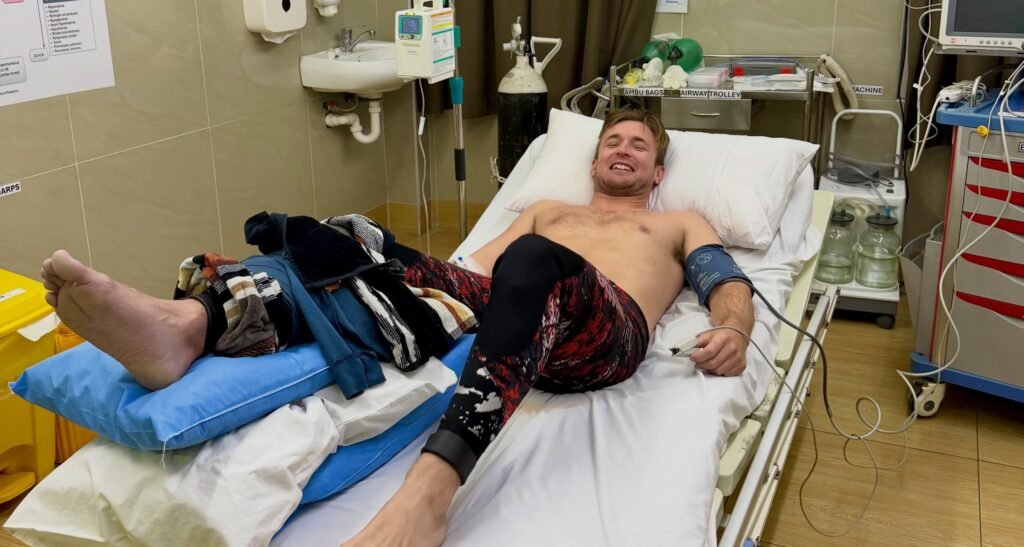
“Stick to plain black wetsuits in the tropics. I’ve since heard of several grey reef shark incidents involving divers wearing camouflage wetsuits.
“If a shark becomes agitated, erratic or increasingly aggressive, don’t ignore it. Don’t judge the risk by the shark’s size.”
Why It Matters
For creators in the adventure and fishing niche, danger is the product, and Gibbs’s story shows how thin the line runs between viral footage and an operating theatre.
It also shows what comes after.
An injury becomes its own content arc: the announcement post, the recovery updates, the hard-won safety advice, all feeding the audience that arrived for the spearfishing.
Notably, Gibbs’s willingness to say he misread the signs will likely buy him more credibility than any highlight reel, in a corner of the internet where creators rarely admit the near-miss was their own fault.
The attack lands amid growing appetite for high-risk outdoor content, with spearfishing and freediving channels among the fastest-growing corners of adventure media.
Whether the full footage ever surfaces is Gibbs’s call.
Whether he gets back in the water probably isn’t in doubt.
READ MORE: They climbed a slippery fountain at 3am to steal a statue’s sword – it wasn’t even REAL